
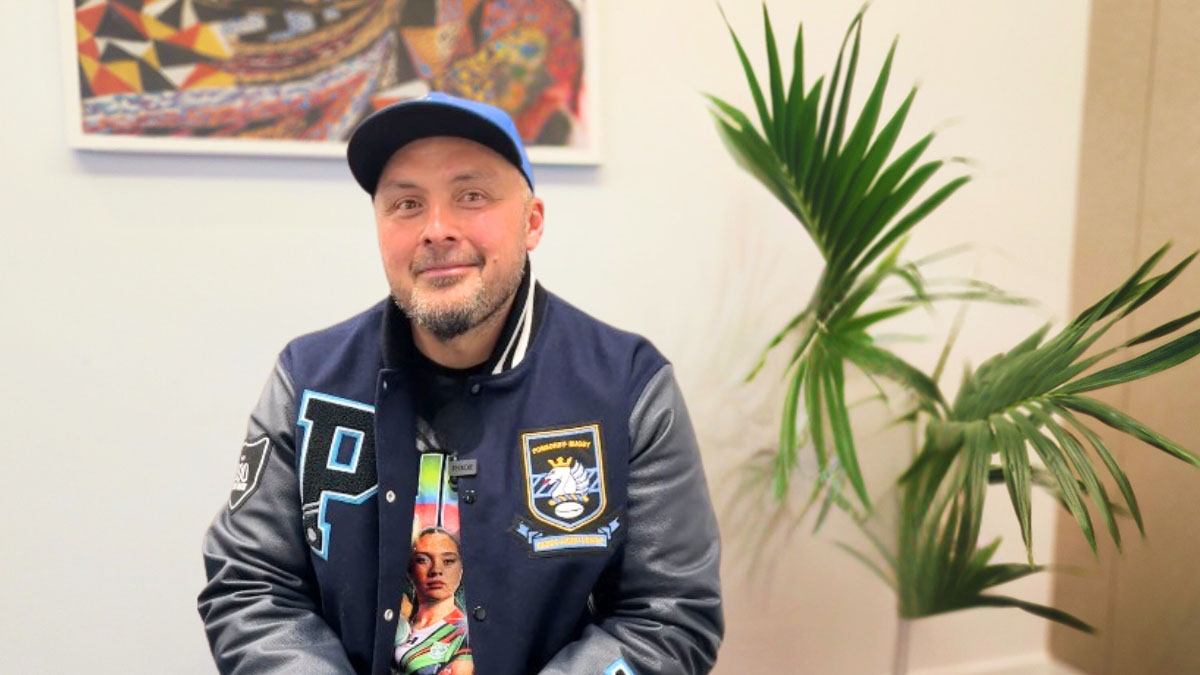
I felt the need to get some knowledge and upskilling around consent and sexual violence and all the things young people go through these days.
Helping teens understand consent as part of respectful relationships motivated Alex Matapo to sign up to be an Atu-Mai Upstander and prevent sexual violence.
“I felt the need to get some knowledge and upskilling around consent and sexual violence and all the things they go through these days, because the landscape is different now to when I was a teenager” he says. “I’m a realist. It is happening, and it is what it is.”
Navigating consent and boundaries
Alex works for Harbour Sports as the Pacific Coordinator and runs school programmes. He also coaches high performance Pasifika rugby players.
In his role as a mentor to girls and boys from intermediate age up to 20 years, Alex is aware that the happier these young ones are off the field, the better they play.
Consent is an issue that comes up often, so learning about what consent is and how best to communicate it to young people has been a huge help in Alex’s mahi.
“For me to be able to navigate conversations with them, I felt like I needed to learn a bit more as I don’t know what kids go through now with digital devices and there’s so many different things and factors that can affect how relationships run, and consent was massive for me.”
Respectful relationships
Alex says he was shocked by what kids as young as intermediate age think is okay to send to each other and post online.
“Because it’s an awkward subject, it’s definitely helped me build strong relationships with the athletes we work with – purely because of what they’re going through currently,” he says.
Some of the young men aged 19 or 20 have got partners now and, with a wide range of viewpoints in society and social media influences, it makes these young men think things are okay that are actually not okay.
“It can be a struggle to change their perspectives,” he says.
Alex says he’s known many of the athletes and their families – including girls he’s coached since Primary school age. For some of the young women, they’re meeting their partners for the first time.
“It was quite a bit awkward at first to bring up the conversation especially as they’d start to come up and talk to me about boyfriends and things like that which they wouldn’t go talk to their own dad about, and it was a bit tricky but we kind of got through that,” he says.
“There’s now a bit of trust there now and that they know I do have a bit of insight into I guess what they are going through.”
Positive impact
As a dad to one daughter and two sons, Alex says the Atu-Mai sexual violence prevention programme has had a significant impact on himself, his family and the young people he helps.
“It’s definitely changed my life for the better and it’s given me great insight into some of things I didn’t even know existed, some of the statistics I remember were quite startling. And it’s made me rethink about what our teens are going through in society and its actually helped me open up some of the conversations with them that’s led to them being more open and trusting with me.”
He says the only thing he’d change is to get the training out to more people.
“I think more people need to hear about what Atu-Mai is teaching and workplaces being supportive by letting people come,” he says. “It would be cool to see more people come through and do it – definitely impactful.”
Alex is back for a second season to be an Atu-Mai Upstander and he’s ready. His advice to others when it comes to learning about sexual violence prevention?
“Do it. Sit through it and make the time. Whether you know it or not, you’ll definitely get impacted in a positive way just not only with connections in the room and with staff, but with what’s being taught. You can hold on to those things and use it in personal life or add it to your life in community or work.”
Reporting abuse and knowing where to get help
If you need to talk to someone now, help is available. Confidential support is available for those feeling unsure and needing to talk to someone about child sexual abuse.
If someone is in danger
If you or someone else is in immediate danger, call the Police on 111.
If you or a young person needs someone to talk to
Safe to talk
Support for those impacted by sexual harm.
Call: 0800 044 334
Text: 4334
Email: support@safetotalk.nz
Live webchat: www.safetotalk.nz
1737
Support from trained counsellors
Call or text: 1737
Youthline
Youth helpline service & face-to-face counselling.
Call: 0800 376 633
Text: 234
Email: talk@youthline.co.nz
If the young person is in an unsafe environment:
Oranga Tamariki
Free call: 0508 326 459
Email: enquiry@ot.govt.nz
Support for those who have experienced sexual abuse:
Victim Support: 0800 842 846
Rape Crisis: 0800 88 33 00
HELP: Call: 24/7, 0800 623 1700 (24-hour HELPline); Email: gethelp@helpauckland.org.nz; Text: 8236
Survivors Network of those Abused by Priests (SNAP): 022 344 0496