Massive thanks and appreciation for everything Le Va has done to support me to achieve something for my family and for the Pacific community. – Dwaine Faletanoai
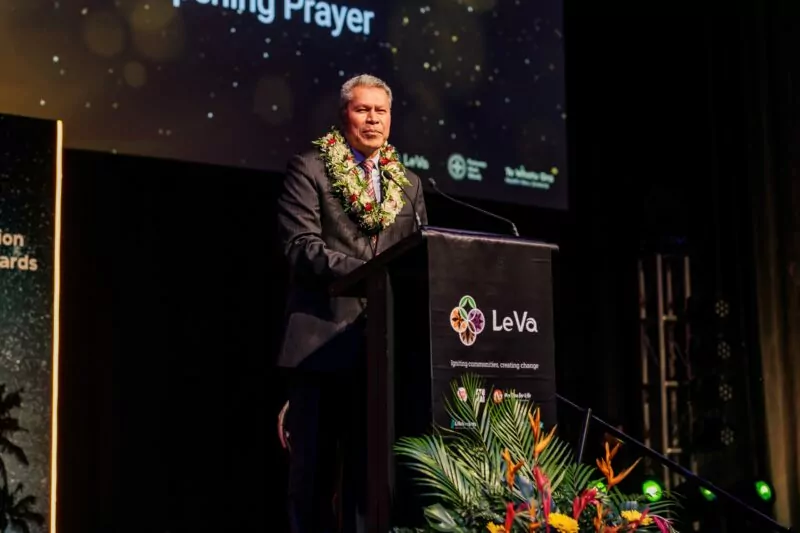
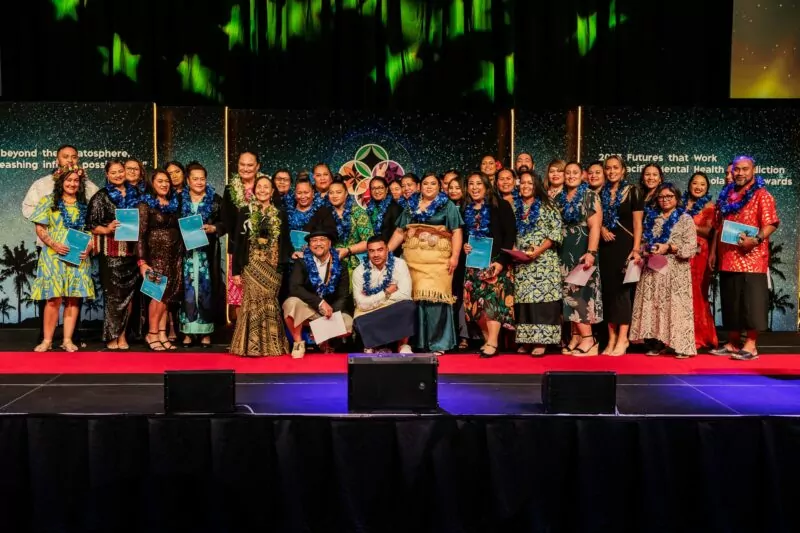
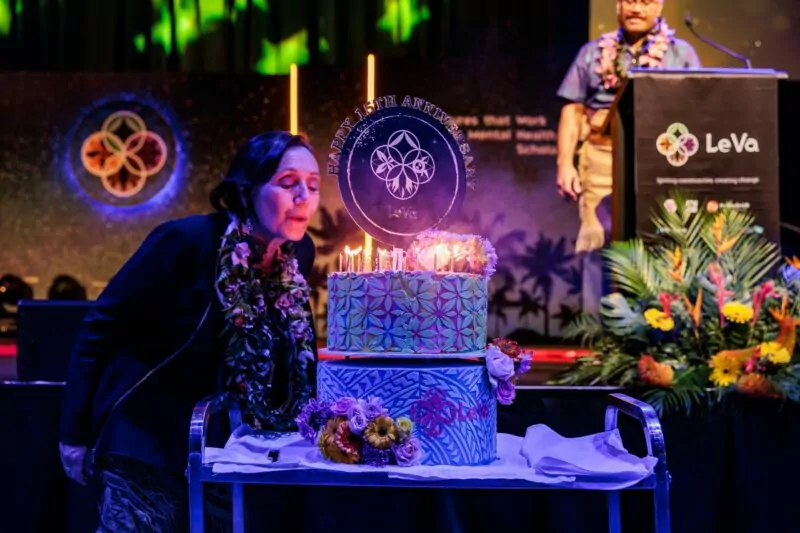
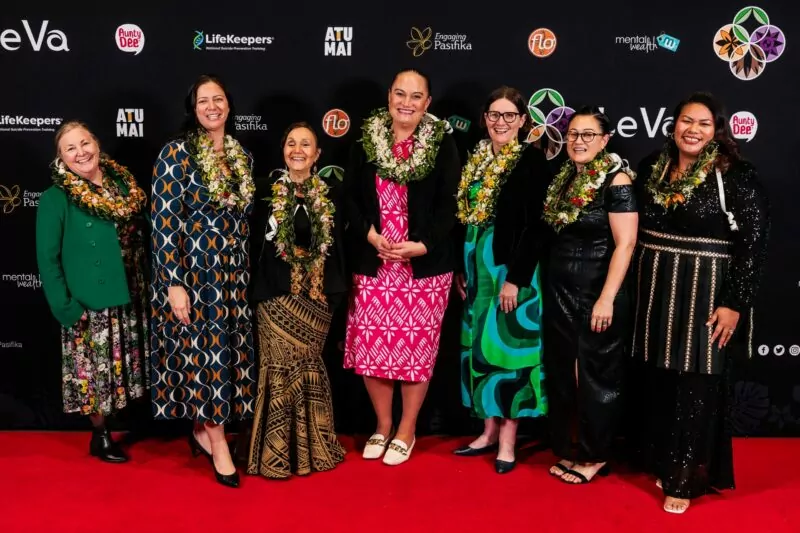
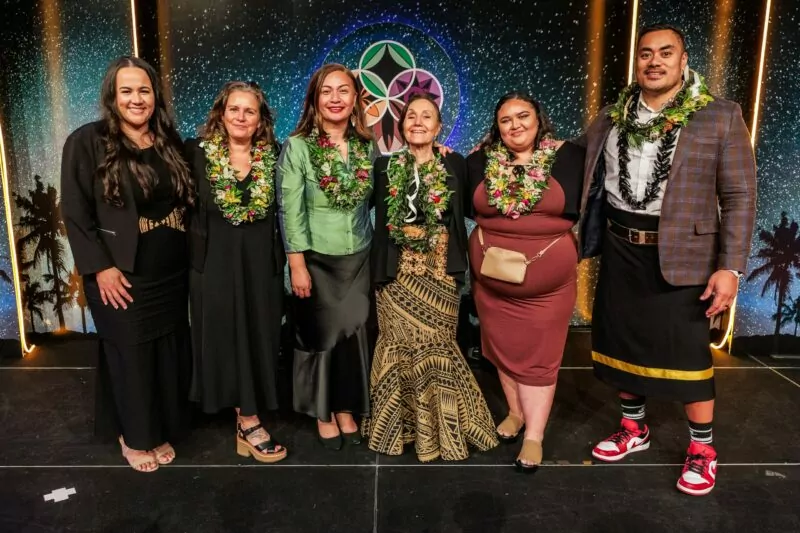
More than 360 guests came together to honour the scholarship recipients and to help Le Va celebrate its 15-year anniversary as an organisation. Le Va is the arm of the Wise Group dedicated to meeting the wellbeing needs of Pacific communities.
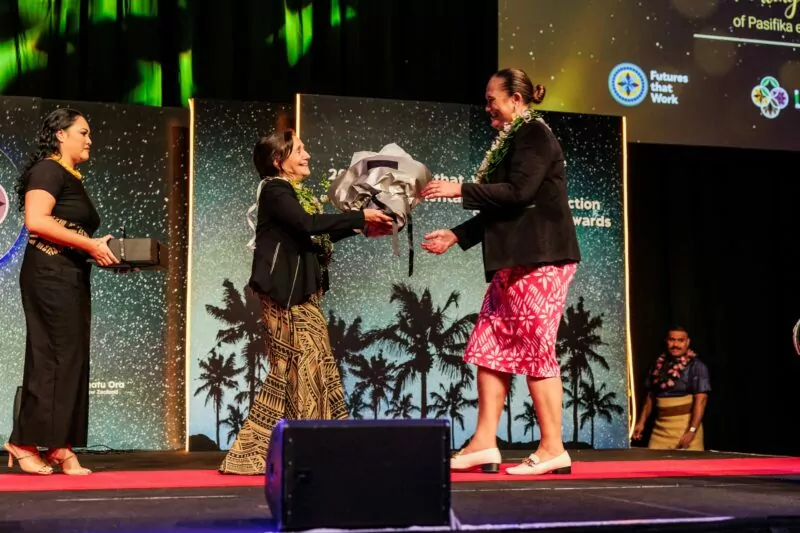
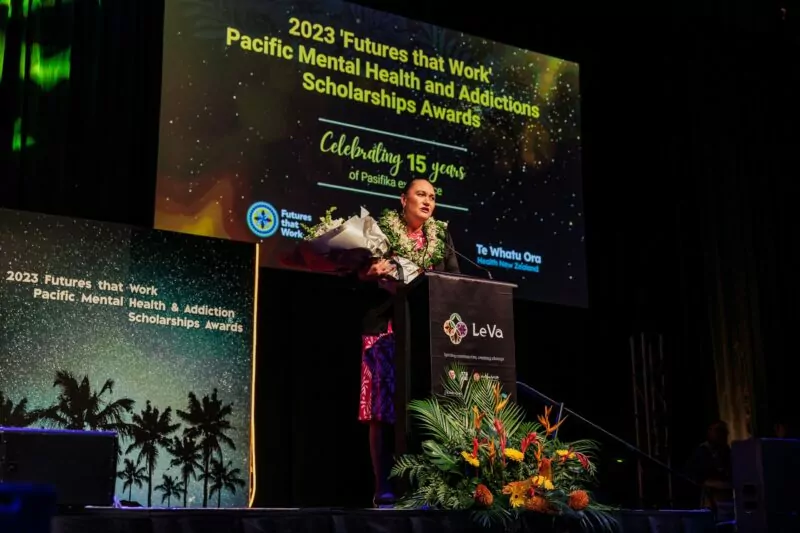
In attendance were guests of honour Deputy Prime Minister Hon Carmel Sepuloni and Hon Marama Davidson, with keynote speakers Reverend Uesifili Unasa, Hon Barbara Edmonds and Fuimaono Karl Pulotu-Endemann.
165 students were awarded Le Va’s Futures that Work scholarships for the Pasifika mental health and addiction workforce in Aotearoa, funded by Te Whatu Ora.
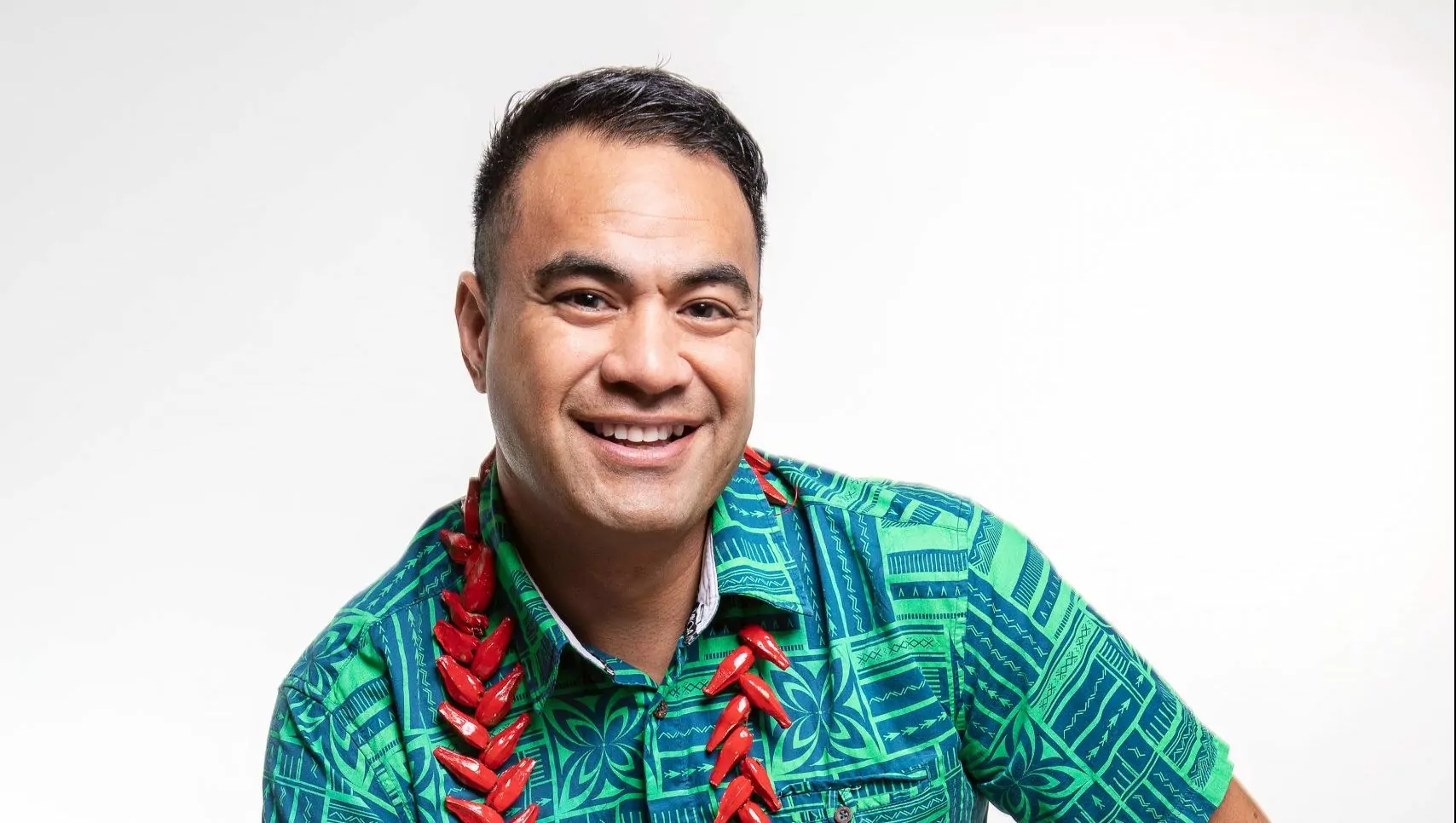
Dwaine Faletanoai, a mental health and addiction manager at Te Whatu Ora
Dwaine Faletanoai, a mental health and addiction manager at Te Whatu Ora, said of the scholarships, “I’ve been blessed to receive six or seven now. They’ve basically funded my whole postgrad study. I’m from a small family – just me, my Mum and my sister. We were state home dwellers growing up, but education was important.
Massive thanks and appreciation for everything Le Va has done to support me to achieve something for my family and for the Pacific community. It’s been a long study journey – a lot of challenges, a lot of joys, a lot of close to tears moments.”
Since 2009, Le Va has administered this important investment into the careers of the psychologists, counsellors, social workers, nurses and other practitioners who will help improve health outcomes for Pacific people.
Successful applicants receive mentorship and pastoral care alongside the financial support, as well as tools to help them complete their studies and achieve their goals.
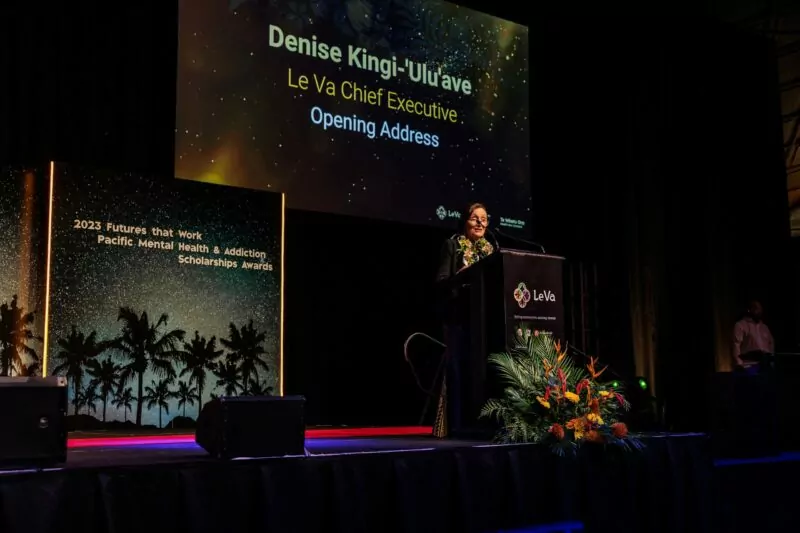
Denise Kingi-‘Ulu’ave, Chief Executive of Le Va, said to the students, “Education is the key that unlocks a world of opportunities. By completing your studies, you equip yourself with the knowledge, skills, and confidence to pursue your dreams.
Embrace the joy of learning, for it broadens your horizons and empowers you to make a positive impact. Your education is an investment in yourself that will open doors, inspire others, and lead you to a fulfilling and successful life of service.”
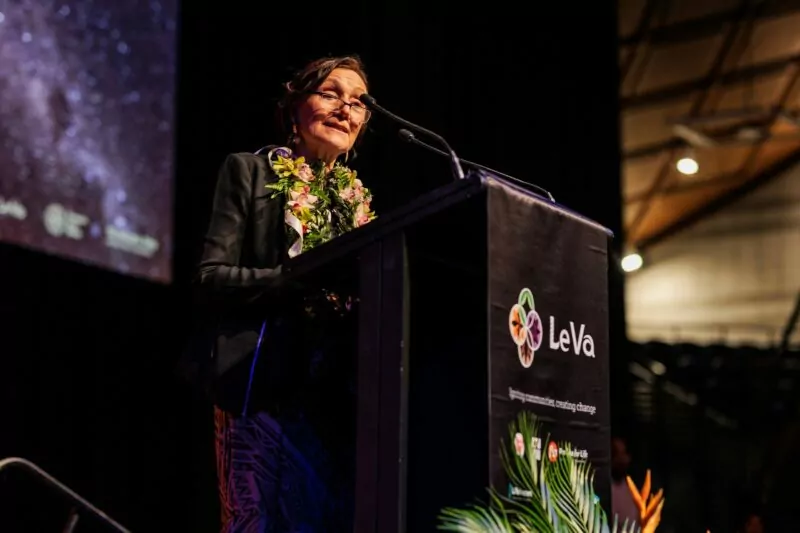
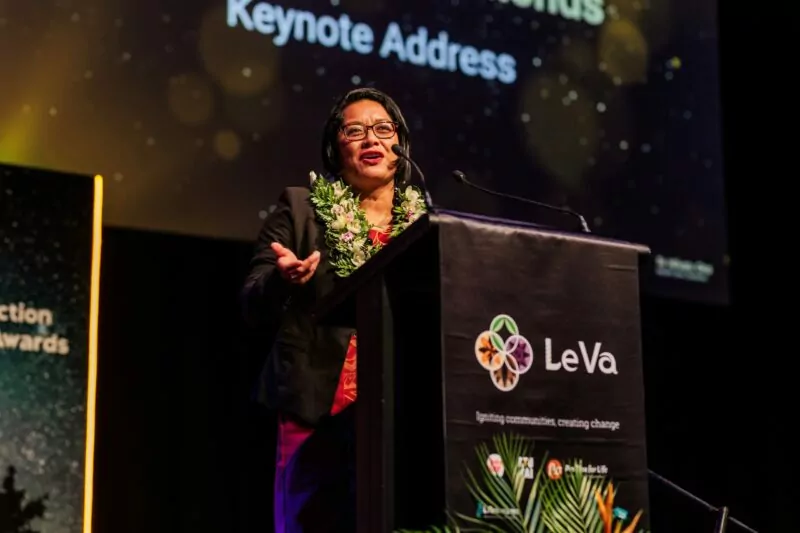
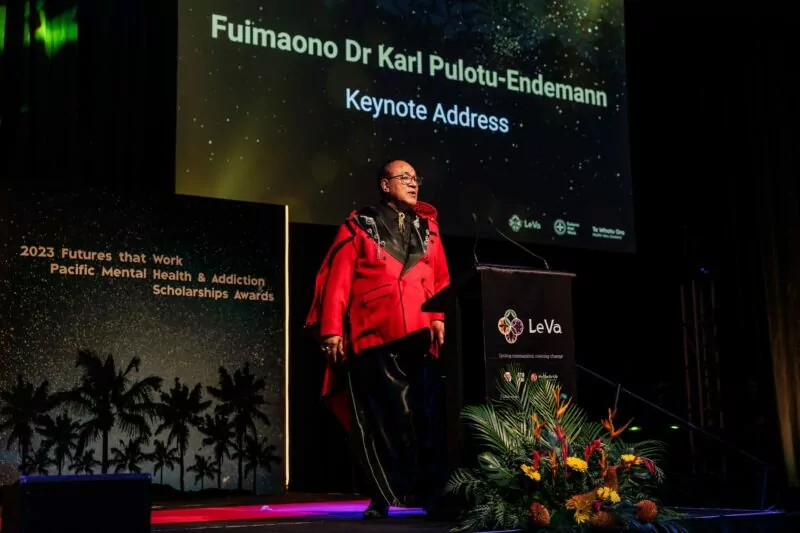
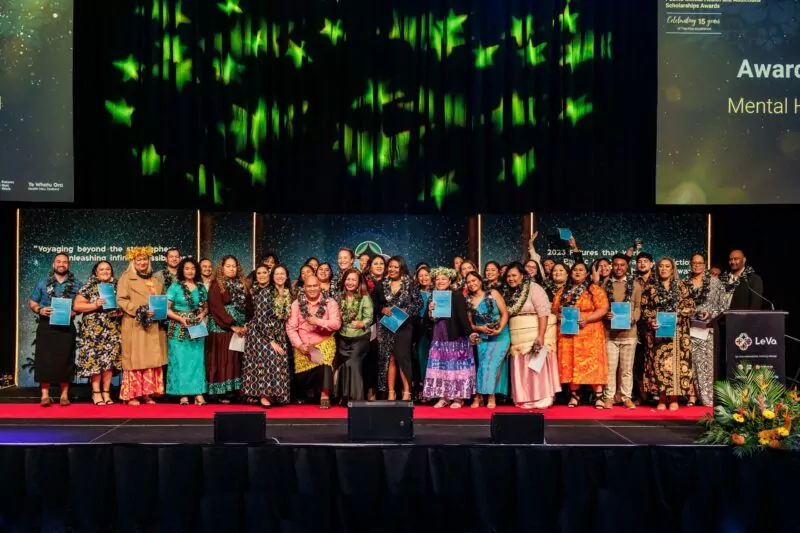
Nicholas Cao, Clinical Lead at Le Va, spoke about the state and trends of Pasifika mental health and addiction (MHA) service delivery in Aotearoa New Zealand. Driving home the message of health equity and accessibility, and the need to improve the representation of Pasifika within the workforce, Nicholas spoke about our Futures that Work scholarships programme to grow the size and skills of the MHA workforce. Together with Engaging Pasifika, Le Va’s cultural competency programme, health services that are connected through culture and care will improve the quality of services, resulting in better health outcomes for all.
Jim To’o Filiva’a Stretton, Project Coordinator for Le Va, spoke about Niu Wave, a youth specific programme that supports 240 school students with their mental health and wellbeing. In partnership with the Ministry of Pacific Peoples, Le Va delivers a holistic wellbeing programme to students across Aotearoa New zealand who are studying STEAM subjects (science, technology, engineering, arts and mathematics). Our Pasifika youth are being equipped with useful knowledge and skills to better navigate their world.
Jim and Nicholas were also honoured to be on a panel discussion alongside Dr Kiri Prentice, Consultant Psychiatrist, Te Whatu Ora Waitematā and Deputy Clinical Director Māori, Te Whatu Ora Counties Manukau, and Grace Ryu, Asian MHA Workstream Lead, Te Whatu Ora Waitematā. Together with other delegates they had the opportunity to discuss ways in which their practice can improve to support delivery of equity in the MHA system.
Being a leader is creating space for others to also thrive and be leaders themselves too. It’s not an individual journey but a collective one where you collaborate with your team and also empower them.
– Le Tautua participant
The year 2022 marked 14 years of Le Va’s Le Tautua emerging leader programme and the first year the programme focused exclusively of youth leadership and growing emerging youth leaders. We received high interest in this year’s programme double the number of applicants from previous years. 26 youth leaders working in youth mental health and addictions, youth work disability, public health, peer support and Pasifika wellbeing, from across Aotearoa New Zealand were invited to attend the two-day programme in Auckland.
Day 1 of Le Tautua Emerging Youth Leadership programme included an opening address from Denise Kingi-Uluave, Le Va CE, and an inspirational Keynote Speech from Arizona Leger who told participants: “The actions you take today, impact the Ancestor you become tomorrow… Be brave, back yourself and go together. Every time you choose to be brave, you are choosing to step into your leadership.”
Le Va’s Niu Wave ran an interactive workshop on Leadership as Pasifika and challenged participants to identify leaders who inspire them. “We follow leaders who resonate with something inside of us. Recall those leaders, write down how they made you feel, why you followed them and how they inspired you. You will need this, because as your rise up into your leadership roles, you will have moments where you will need to draw back from their words, and remember why you are in the positions you are in.”
Our Panel guests: Apollo Taito, Laura Tongalea-Nolan and Pela Hokai shared some rich talanoa about “being confident and owning your space! it’s YOUR story, YOUR narrative. It is our Pasifika values that make us unique.” And finally, our Le Tautua participants described leadership in their own words as being about sacrifice; love and service with the ability to acknowledge your wrongs, having a purpose and a responsibility to be honest, lead from the back with compassion and integrity. All while embracing failure, listening with empathy, and having commitment to the journey ahead.
Following on form an evening of networking, connection, spoken word poetry, song and dance, Day 2 of Le Tautua Emerging Youth Leadership programme opened with a personal address from Dr Elizabeth Mati who shared the highs and the lows of her personal leadership journey and the importance of our voice and how we communicate. To understand our voices and to be secure within ourselves in order to empower others.
Speakers Josiah Tualamali’i and Benji Timu shared an inspirational tale of youth leadership and how they petitioned the government to apologise for the Dawn Raids and enable education in Aotearoa about them.
Closing speakers Aigagalefili Fepulea’i-Tapua’I reminded participants that leadership is embedded within them, is why they are at Le Tautua and that their ancestors have entered the room and they are not alone even when it feels like it at times. Phylesha Brown Acton taught participants that it is okay to close the door when the noise gets loud to rejuvenate and reflect so that they can come back to their purpose and remember their whys!
Le Tautua for the participants provided a space to look after the self, as a leader amongst other emerging young leaders. Quoted from one participant “I’m finding my purpose and my purpose is finding me”.
Our young Pasifika population is the key to our future. At Le Va we want to unleash our Pasifika youth and community’s full potential to achieve the best health and wellbeing outcomes. The Le Tautua Leadership programme can help us do this.
In recognition for Samoan language week, “Fa’aauau le folauga I le va’a o tautai” -Continue to voyage with competent wayfinders of the ocean, the challenge that was laid down to our Pasifika leaders was to be the wayfinders but don’t just be competent, be exceptional. Saili le Malo!
#youthleadership #leadership #letautua2022 #leva #Leadingintimesofsignificantchange
“Oh man, it was such a relief,” says Tu’uta Maue of the moment he received confirmation he had been awarded a Futures that Work scholarship,
“Telling my wife, sharing the news with my family, I was so over the moon,” says Tu’uta, who is of Tongan descent from the villages of Tokomololo and ‘Ofu, Vavau. Tu’uta also has lineage back to the village of Fasitootai in Samoa. “I have family responsibilities, a mortgage, young kids… knowing I would receive financial help – that alleviated a lot of stress. It really impacted positively on my family.”
Tu’uta is in his second year of a Bachelor of Nursing Studies at the Manukau Institute of Technology (MIT), funded in part by the Le Va Futures that Work scholarship and mentoring programme. A dedicated family man, Tu’uta is studying – and working – full-time. “This journey isn’t an individual one, it’s been a real collective journey for me and my family,” Tu’uta says.
A space in which to give back
It was family that inspired Tu’uta to choose a career dedicated to helping Pasifika people. When he was called to support his father through ill health, Tu’uta felt passionately about giving back to his community.
Building on more than a decade of experience working at the Mason Clinic, a dedicated service in Tamaki Makaurau providing Forensic Mental Health Services, Tu’uta enrolled at MIT. And the insight he has gained into the health sector to date, has reinforced Tu’uta’s desire to support Pasifika mental health and addiction.
“Forensic mental health is the one for me,” Tu’uta says. “It’s my bread and butter, it’s what I’ve been gifted with. Helping people and families.”
Mentoring makes a difference
Tu’uta may have found his calling, but he’s still a minority in forensic mental health services, something he hopes will change in the coming years. “Community services have a lot more of our people, but in forensic mental health, there is still a real need for Pasifika in this space,” he says.
Tu’uta has been supported through his studies, not just by his family, work colleagues and his manager, but by the Le Va team and the Futures that Work mentoring programme. Monthly mentoring workshops enabled Tu’uta to interact with other Futures that Work programme recipients, sharing experiences and cultural narratives he’s able to take back to his own community.
“A lot of good stuff comes out of the networking opportunities that Le Va provides,” Tu’uta says. “There have been topics we’ve discussed that have really stayed with me. I’ve taken them to work in the evenings and shared them with my colleagues. It’s a really encouraging environment, being exposed to people who are all seeking higher learning.
“And it’s awesome to see that even though Pasifika are a minority, one day some of those people that were in the same room I am, will be out there making a real difference,” he says.
The benefit of knowledge and education
Having experienced the benefits of Le Va’s Futures that Work programme, Tu’uta is quick to encourage others to spend the time going through the application.
“If someone is thinking of applying, I’d first say to them, don’t be shy or feel ashamed about actively seeking the financial assistance that is on offer.”
“And secondly, if they’re stuck on that thought, I’d ask them, why wouldn’t you apply? There’s no harm in trying. If it’s on offer and you’re successful, you’ll be grateful for it, and so many people will benefit from your application.”
Tu’uta retells the story of a friend he encouraged to apply to the programme. “I kept telling the old mate to apply. We’d be kicking him up the backside saying he just had to do it. And when he heard he’d been successful in getting on the programme, man there were some tears.”
“Through knowledge and education we’re better equipped to deal with and educate our people. Sit down for 30minutes and complete that application form. Do it for your family, your community, your church… do it for our people.”
Applications for the 2022 Le Va Futures that Work scholarship and mentoring programme are now open. Apply at https://www.leva.co.nz/scholarships-funding/futures-that-work-scholarship/
Laura Tongalea Nolan has a simple message for Pasifika considering study in the Mental Health and Addiction space. “Get on that scholarship train,” she says. To be more precise, Le Va’s Futures that Work scholarship and mentoring programme.
A five-time recipient of Le Va’s funding and mentoring support, Laura has experienced first-hand the number of benefits the programme provides. Today, as she continues her study towards a Master of Health Practice, Laura is living and working her dream.
“From the outset my dream was to work where I could service Pasifika people,” the Pasifika Clinical Practice Lead for Odyssey Trust says. “And when I first applied for Le Va’s Futures that Work programme, the application process really prompted me to think about what I wanted to do with my career.”
A pathway for Pasifika support
Laura came across the Futures that Work scholarship in 2014. “I was looking at doing further study, but didn’t want to take out a student loan,” she recalls. “When I found the Futures that Work scholarship, I put an application together and was successful.”
At the time of her first application, Laura reflects on being young and new to the workforce, which made completing parts of the application challenging. However, that challenge proved to be a formative experience in Laura’s career.
“The application asked ‘what am I contributing to the community and how will my studies enhance those contributions’,” Laura says. “That question really prompted me to think about what I wanted to do with my career, and the answer I gave on the first application has guided me on my pathway during my studies and in my work. I’ve stayed true to that direction.”
Pasifika presence helps with programme success
Today, in her role at Odyssey Trust, a drug and alcohol residency and community services provider, Laura develops and implements interventions and programmes for Pasifika clients. “Pacific people are over-represented in mental health and addiction-related problems,” she says. “Only about 10% of Pacific people struggling with mental health and addiction make it into treatment, and of those, only about one third are completing it.”
Laura says the more Pasifika people who work in mental health and addiction, the more success programmes will have. “We’ve got to add to the masses,” Laura says. “If there’s more of us working in mental health and addictions, we have more of a presence. We’re more visible. If families can see we’re there, they’re more likely to come through our door.
“Being able to practise as a Pacific clinician or practitioner leads to better outcomes for Pacific clients. It’s the single greatest predictor for a successful outcome.”
Contributing to mental health and addiction support
Le Va’s Futures that Work programme is helping to build the Pasifika addiction workforce and Laura says there’s a real need for it. “There is no better way to engage with Pacific people than being able to identify as Pasifika,” says Laura. “We’re natural engagers and in mental health and addiction, success lies in being able to engage with people.”
Laura encourages others with a discipline in the health sector, such as nursing or social work, to consider further study in the area of mental health and addiction. It’s such a rewarding and fulfilling area of work.”
And when it comes to applying for the Futures that Work programme, Laura’s advice is to keep it simple. “What are you doing within your own family? What are you doing to contribute to the wellbeing of your church group?”
“You’ll soon realise you do a lot. We just don’t tend to call it volunteering because it comes naturally to us and we get a lot out of it,” she says. “That’s why Pasifika are so good at working in the mental health and addiction space. So, jump on that scholarship train and go for it. Our people need you to take a seat at the table.”
Applications for the 2022 Le Va Futures that Work scholarship and mentoring programme are now open. Apply at https://www.leva.co.nz/training-education/scholarships/
It is an honour to introduce the PAHANZ tri-chairs, all of them working on our frontline services in our Pasifika communities, and all having a passion for making better and more positive experiences for our Pasifika families and communities accessing and moving through our health systems.

Alexis Cameron (NZRP)
Alexis hails from Ngāti Porou on her dad’s side and Alafua in Western Samoa on her mums. A physiotherapist by profession, Alexis has been employed at Auckland DHB since 2005 working in various roles across Allied Health Services and Human Resources. Currently her role is centred on Māori workforce development and building whole workforce capability to dismantle racism, eliminate inequities and building culturally safe practice.
Alexis is passionate about social justice particularly within the health and education sectors and seeks opportunities to improve processes and systems not conducive with equitable health and educational outcomes for our Māori and Pasifika communities.
“PAHANZ provides a great opportunity to connect into all things Pacific Allied Health. PAHANZ is committed to achieving Pacific Health Equity and Pacific Allied Health workforce development. Our committee continues to further develop and iterate how we do things for better effectiveness and efficiency, and we welcome and encourage Pacific Allied Health Practitioners to join us.”

Eti Televave
Born and raised in Otara, South Auckland. Both of my parents were born and raised in Samoa – villages of Nofoali’i and Vailu’utai on the main island of Upolu. I studied at the University of Otago, class of 2008. My whole Physiotherapy career has been at Middlemore Hospital, Counties Manukau DHB – spending my first 3 years as a rotational physiotherapist with different teams and areas of the hospital, before becoming a senior/experienced physiotherapist in Orthopaedics, working also in the emergency department, HDU and ICU. My main area of interest for physiotherapy practice is in acute care. I also hold a BHSc from the University of Auckland as well as three postgraduate certificates: Mental health development, health professional education, and management.
I will be pursuing a Masters in Indigenous leadership in the near future. I have been the clinical centre leader for Counties Manukau DHB since 2016, working as a member of the people and professional development team to also provide support to allied health new graduates, welcome new staff to the organisation, and provide education and training to DHB employees. My main area of interest in this role is in working towards achieving health equity.
Outside of work most of my time is spent with my wife, immediate and extended family, playing or watching sports usually cricket, rugby league, or rugby union.
Fred Fata
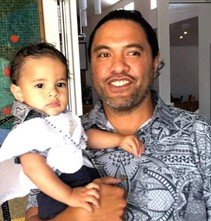
Soifua manuia maua ma le lagi e ma. My name is Fred Fata and I’m a Samoan, first generation born and raised in New Zealand (Glen Innes, Auckland) from a devout Catholic family of migrant parents who relocated here from the villages of Sa’asa’ai and Safata. I live in Henderson with my wife, and our two-year-old son, and have been a proud Westie now for the past 16 years. I have been a social worker for the same amount of time and my background in social work was with Oranga Tamariki, formerly Child Youth and Family.
I moved to the ADHB in 2010 to join Pacific community mental health (Lotofale) and have been here since, in 2017 I left for the WDHB to work a year as a forensic inpatient social worker in a secure unit at the Mason Clinic, and then another year in the forensic prison team at the Auckland Regional Women’s Corrections Facility. As soon as our son was born in 2019, I returned to Lotofale, as well as working last year (part time) in the Family Centre at Odyssey House, drug & alcohol residential rehabilitation programme.
I joined the PAHANZ committee when I started back at Lotofale and have been so privileged to be a part of such an endearing support group of Pasifika brothers and sisters from diverse fields in health, who I genuinely regard as friends now. I know the safety and affirmation I receive from the PAHANZ environment is uniquely, and naturally Pasifika. I’m excited to see our potential realised so that the underpinning culture of our association can be experienced by as many other likeminded Pasifika in allied health throughout Aotearoa New Zealand as possible.
These three make up the co-chairs of PAHANZ alongside a group of PAHANZ governance committee. If there are any queries and questions feel free to email to admin@leva.co.nz, please do place in the subject line PAHANZ. This will ensure it goes straight to the appropriate people to connect with you.
Manuia
PAHANZ
O le ala i le pule o le tautua – the pathway to leadership is through service
Dr Ashley Bloomfield was on the lineup at Le Va’s Le Tautua Leadership Programme last week, supporting Pasifika leaders to develop their unique leadership perspectives and enhance their management skills. Sharing his insights with the cohort of 16 participants, Director General of Health Dr Bloomfield said: “People will trust us if we lead with authenticity, kindness, humility and compassion”.
Building a robust Pacific health workforce can have a positive impact on Pacific health outcomes, according to Le Va chief executive Denise Kingi-U’lu’ave. But to do this, leadership is required. “Our intention is to grow champions for Pasifika workforce development, improve models of service delivery and enhance access rates to services for Pasifika communities,” she explained.
Programme participants also heard from Karen Orsborn, chief executive of the Mental Health and Wellbeing Commission, who encouraged them to take every opportunity that will come their way and to be diverse in their networks.
The programme paid respect to Pasifika health leaders past, present and future. The speaker lineup also included Josiah Tualamali’I, Andre Afamasaga, Monique Faleafa, Rachel Karalus, Epenesa Olo-Whaanga, Shana Malio and Hon. Aupito William Sio.
The culturally-centred Le Tautua programme focused on the contemporary execution of traditional values and in clinical, cultural, and community contexts. Running over three workshops, it concentrated on six intended outcomes:
• strengthening authenticity as Pasifika leaders
• increasing cultural knowledge relevant to leadership and management
• improving strategies for self-awareness, self-care and resilience
• strengthening positive relationships required for leadership
• enhancing purpose and career pathways
• increasing awareness of leading with compassion, wisdom and empathy.
Le Tautua has continued for 13 years with over 100 Pasifika Alumni, and is run by Le Va. For more information about Le Va, visit www.leva.co.nz.
Note: Le Tautua literally means ‘the service’, deriving from a famous Samoan proverb: ‘O le ala i le pule, o le tautua’. The pathway to authority is through service. The concept of Tautua includes the notion that: in order to lead, one must first serve. This is the characteristic of not just Samoan but many Pacific leadership styles, where it is not necessarily about leading from the front but about the paradox of status through service.
O le ala i le pule o le tautua – the pathway to leadership is through service
The Le Va Futures that Work Awards are an investment, not only in each individual, but also in the future of our country, Aotearoa New Zealand.
2021 marks the 13th year the Ministry of Health, through Le Va, has funded and supported the development of our Pasifika mental health and addiction workforce in Aotearoa New Zealand. To-date we have provided 765 awards to 583 of our Pasifika people.
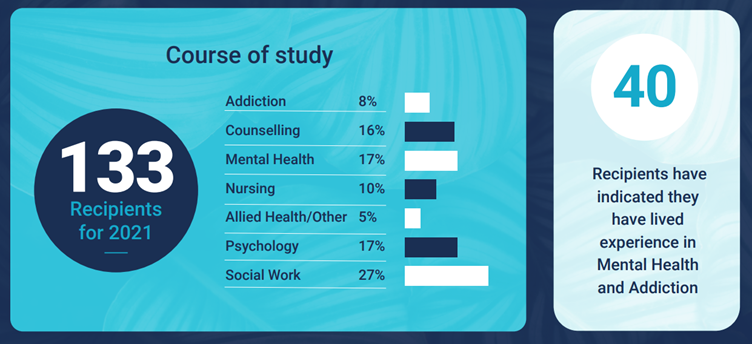
When we first started out with Futures that Work we awarded only 30 recipients. 2021 we are honoured to award 133 recipients. For a minority people in Aotearoa that is a huge achievement for our Pasifika mental health and addiction workforce. We know that our people still have a way to go with improving our health outcomes. However, we know having Pasifika in our mental health and addiction people in the services as nurses, social workers, occupational therapists, clinical psychologists and doctors makes a big difference.

These awards also recognise that each recipient has the potential to feature among the best and to be leaders in the mental health and addiction sector. New Zealand and Pasifika communities need high calibre professionals working in the mental health and addiction sectors. Here at Le Va we believe that our families, communities and New Zealand deserve nothing less than the best. The 2021 recipients represent our journey, as a people, towards better outcomes in the mental health and addictions sector.
We believe that the acknowledgement of Pacific cultures plays an important part in addressing health issues for Pasifika. It is good to see that Pasifika cultural aspects are being incorporated more into health services. This approach is reflected in the Awards Pacific programme, which supports each recipient during their studies.
It is always an honour for Le Va to address a gathering of Pasifika from our many different cultures that are achieving in their field of endeavour. Our hope of the Futures that Work awards are to celebrate and treat our recipients as the heroes they are.
We also want to acknowledge this year’s award winners for their commitment in answering the call to serve their communities and to help ease the health burdens facing Pasifika in Aotearoa New Zealand. Just as important we must congratulate the Ministry of Health for investing in Pasifika and for entrusting Le Va with this important workforce development work.

Congratulations to the recipients of the Le Va Rebuilding Wellbeing Support Fund. The goal of the Fund is to support existing Pacific Mental Health and Addiction services to deliver community-based Covid-19 psychological response initiatives which ease Covid-19 related psychological, social and physical difficulties for Pasifika.
The recipients are:
- Canterbury Fiji Community Incorporated
- Christian Mission Fellowship International South Island Trust
- Downie Stewart Foundation (Moana House)
- Fungataua Educational & Cultural Trust (FECT)
- KahoaTauleva Christchurch Trust
- Kaute Pasifika
- Mangere East Samoan Catholic Community
- Mapu Maia
- Samoa Society Timaru Incorporated
- South Waikato Pacific Islands Community Services Trust
- Tangata Atumotu Trust
The satellite seminars were born out of feedback to Le Va in 2016, where people mentioned that they would love to see local/regional seminars as opposed to one large conference. The focus of the GPS seminars was Growing Pasifika Solutions for what the Pasifika mental health and addiction workforce would look like for the next 12-18 months, especially in light of Kia Kaha, Kia Māia, Kia Ora Aotearoa – Psychosocial and mental health wellbeing plan (revised edition December 2020). The purpose was:
- To undertake a snapshot of current Pasifika MHA services
- To determine if we have the capacity and capability to effectively meet the current demand and clinical presentations
- To establish what we need to ensure Pasifika are receiving the highest standard of care to meet their cultural and clinical needs.
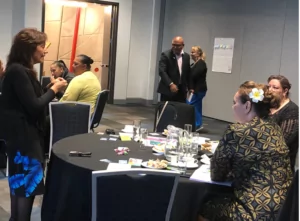
The Ministry of Health has invested a significant amount of funding in the primary care sector. GPS wanted to ‘unpack’ what that Pasifika workforce should look like and the range of skills required to deliver the right responses to the mental wellbeing of our Pasifika communities. The talanoa captured from GPS satellites can be summarised in the following:
- There is ongoing demand and pressure on our mental health and addiction specialist services
- The unmet demand in specialist MHA services by default is being carried by Primary care services
- Our Pasifika workforce, although small, delivers above and beyond their contractual parameters
- We should look at focusing on upskilling our biggest workforce non-regulatory/unregistered community workers
- We should include training/upskilling our largest Pasifika resource families/communities eg suicide prevention training, some sort of brief intervention
- The need for a national accessible list/calendar of Pasifika services and training
- The desire to work collaboratively to respond to the psychosocial needs of our Pasifika families and communities, however, we need a lead or mandate to formalise this
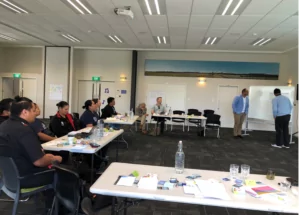
GPS was honoured and privileged to hear the regional voices with a wide range of representatives from Health Improvement Practitioners (HIPs) to CEs and Consultant Psychiatrists. It was humbling to hear of the work our Pasifika workforce deliver with little or no funding but driven with the values of alofa, reciprocity and tautua to our Pasifika families and communities. The GPS team has collated all the talanoa contributions and will draft a summary report for distribution.
A special acknowledgement needs to go to all the participants that attended the GPs satellite sessions and those that contacted Le Va when they were unable to attend in person. Le Va humbly thanks you all for the gift of your valuable time. It was well spent in the company of many wonderful Pasifika and non-Pasifika people.
Le Va is part of the Wise Group. Copyright ©2026
