Le Va is breaking the silence surrounding child sexual abuse (CSA) with new resources to help community upstanders prevent sexual violence in Pasifika communities.
The series of online resources, developed by Le Va’s Atu-Mai violence prevention team, will cover topics such as Pasifika Values, Talanoa to Protect, Protecting our Pasifika Children, Knowing Who is in Your Village, and Be Courageous and Act.
Dr Elizabeth Mati, Le Va’s general manager who is also a clinical psychologist, and Atu-Mai primary prevention manager, Taituuga Mataafa-Komiti, spearheaded a year-long community engagement initiative to explore how we can help prevent CSA within Pasifika communities in Aotearoa.

Dr Elizabeth Mati presenting at the 2024 TOAH-NNEST sexual violence conference
“We need to stop the silence and start talking about child sexual abuse to protect our children. These resources are the first step in our journey towards supporting our families and communities to address child sexual abuse,” Dr Mati said.
“We know these resources will help Pasifika parents in particular to stay vigilant and learn to identify the signs of potential harm to our children.”
For many Pasifika people, topics related to sex or sexual harm are viewed as too taboo to discuss openly. Le Va’s co-development of resources forms part of ongoing efforts to help Pasifika communities identify and stop child sexual abuse.
“Sexual violence is an uncomfortable topic, but it has significant, ongoing impacts on our communities,” said Paul Tupou-Vea, senior manager – violence prevention for the Atu-Mai programme.
“There aren’t enough Pacific-specific resources, so we hope these resources help our communities in a culturally sensitive way.”
The collaborative effort brought together representatives from various sectors and Pasifika community groups, including faith leaders, educators, parents, subject matter experts, youth and members of the Rainbow and disability communities.
All of their insights and contributions helped to shape the development of educational resources for parents and caregivers.
Le Va released the first of these resources in November to coincide with Dr Mati’s presentation – ‘Nurturing our Children: Prevention of Child Sexual Abuse in Pasifika Communities: Insights from the Atu-Mai programme’ – at the 2024 TOAH-NNEST National Sexual Violence Conference in Christchurch.
Learn more about our Nurturing our children resources.

Te Tāmata Tipu – TOAH-NNEST conference
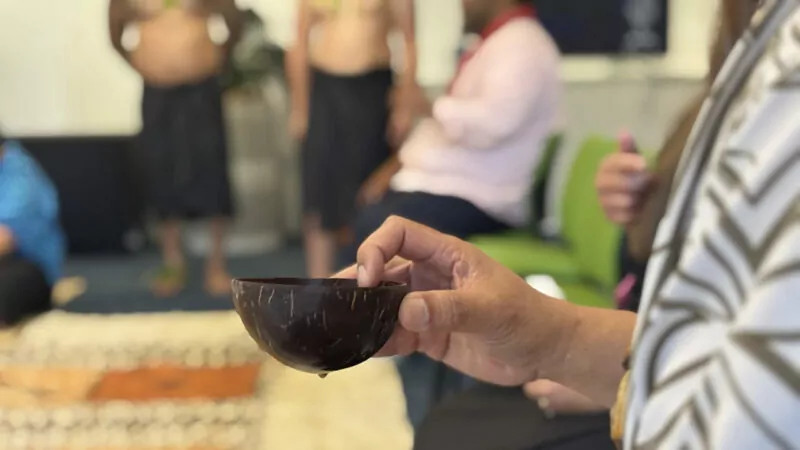
At the end of October, Le Va held a traditional Samoan ‘ava ceremony to warmly welcome 16 visiting professionals and young people working in violence prevention initiatives in Wales.
The Welsh delegation represented Plan International UK, Her Voice Wales, Vale of Glamorgan Council, Greenhill School, Pembrokeshire County Council and Pembrokeshire Youth.
The delegates came to learn about the work being done in the violence prevention sector here in Aotearoa New Zealand. Their visit came about after She Is Not Your Rehab founder, Matt Brown, visited Wales last year.
Dr Elizabeth Mati, Le Va’s general manager, shared about Atu-Mai’s spearhead nationwide violence prevention programme with its focus on Pasifika youth and their families.
Le Va senior manager Paul Tupou-Vea spoke about Atu-Mai’s current community mobilisation approach to sexual violence prevention.
“It was great to share insights about our important work and hear from our visitors. The group are doing some amazing work in Wales, and it was really encouraging to see how involved young people are,” he said.
Youth delegates from Greenhill School felt moved by the conversations and the safe environment created.
One student said, “The group had an incredible day with a really moving emotive day. Thank you, Le Va, for sharing space with us and we look forward to working with you in the future.”
With the support of ACC, Le Va’s Atu-Mai team was glad to share space to enable the exchange of knowledge and insights into violence prevention work with each group’s respective communities.
For Le Va’s learning and evaluation lead, Hidoria Onesemo-Tuilaepa, the visit was uplifting.
“I left our engagement with the Welsh delegates feeling inspired by the various initiatives and projects they are facilitating, especially by the youth! Also inspiring how the Welsh Government has invested in the prioritisation of primary prevention,” she said.
Le Va community engagement lead, Charles Lavea, said it was a prime opportunity to learn.
“It allowed me to connect with people from the other side of the world who share a deep passion for advocacy and community support in violence prevention. I am grateful for the opportunity to share knowledge and experience working in the prevention space.”
ACC’s Dr Hala Nasr reflected that the experience allowed her to learn professionally and fill her cup personally. She added that Charles’ conversation with the group about Atu-Mai’s Father’s Fono programme resonated strongly.
“(Charles) made such an impact on the two young men in the group – the mana and compassion you showed in the small interactions you had with them were so appreciated,” she said.
Wales Programme and Advocacy Manager, Anne-Marie Lawrence, said the group loved their time at Le Va.
“We did a reflection session with the young people before they left to fly home and some of them said the meeting with you was the highlight of the trip. I don’t think accolades come much higher than that,” she said.
“We learnt so much from you and we really enjoyed our time with you, the memories created from such a special day will stay with us for a lifetime. Thank you from the bottom of our hearts.”
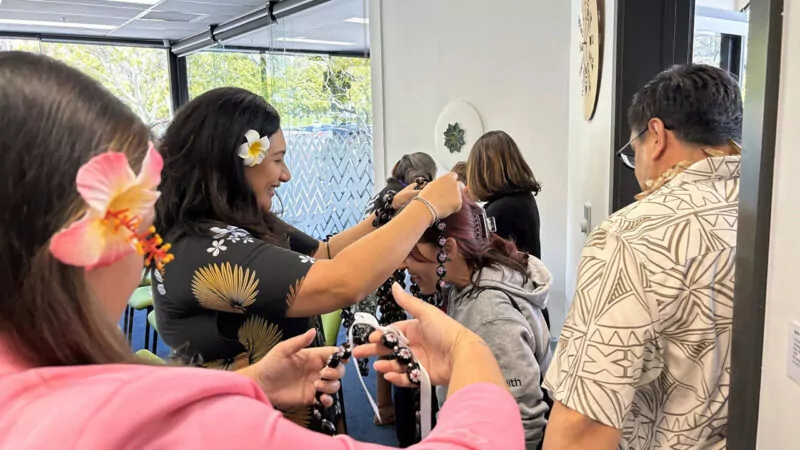
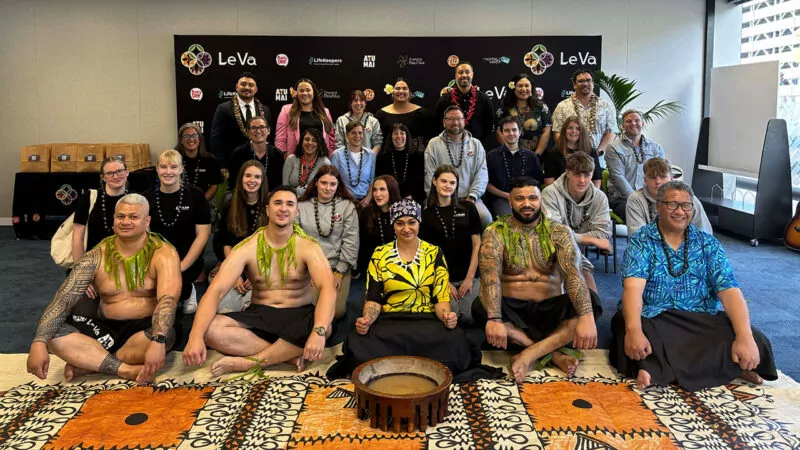
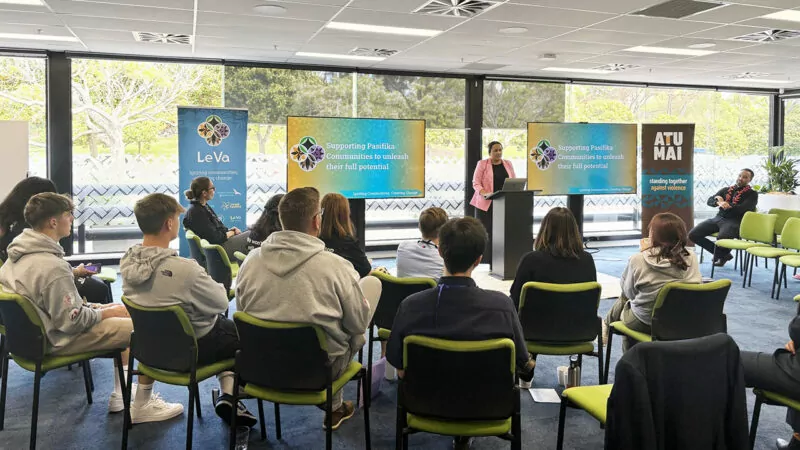
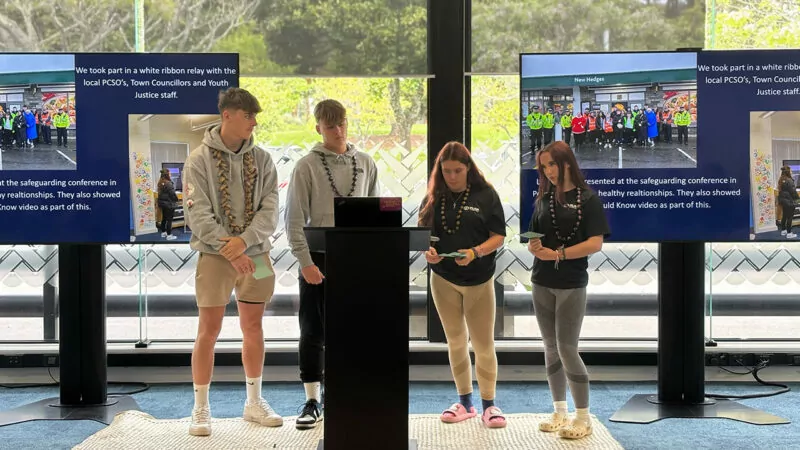
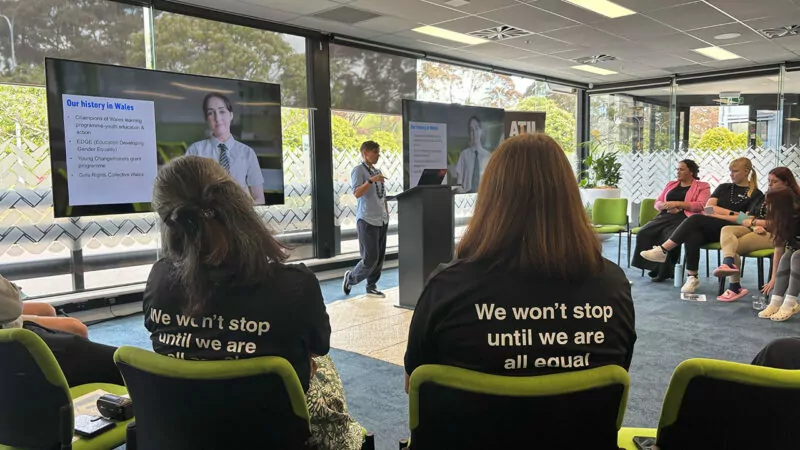
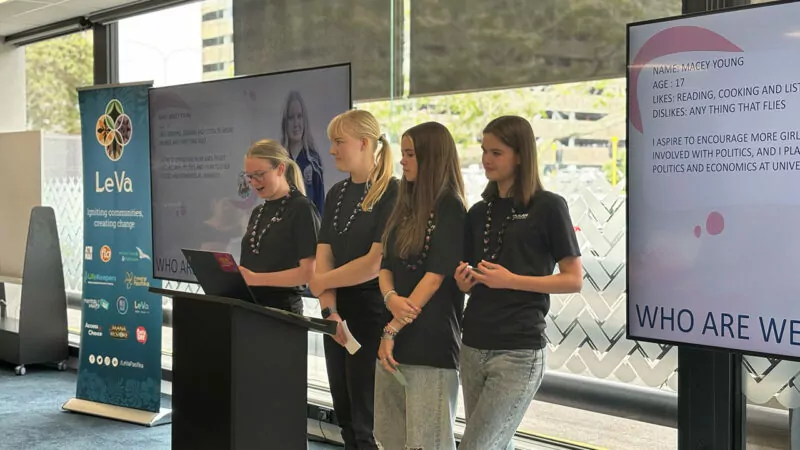
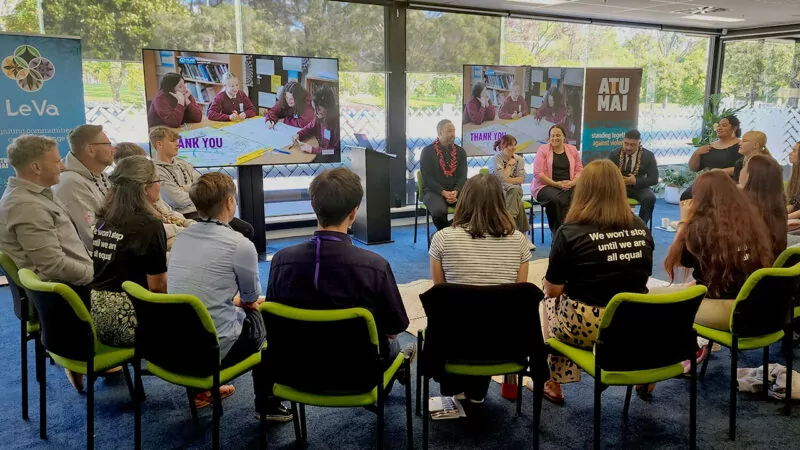
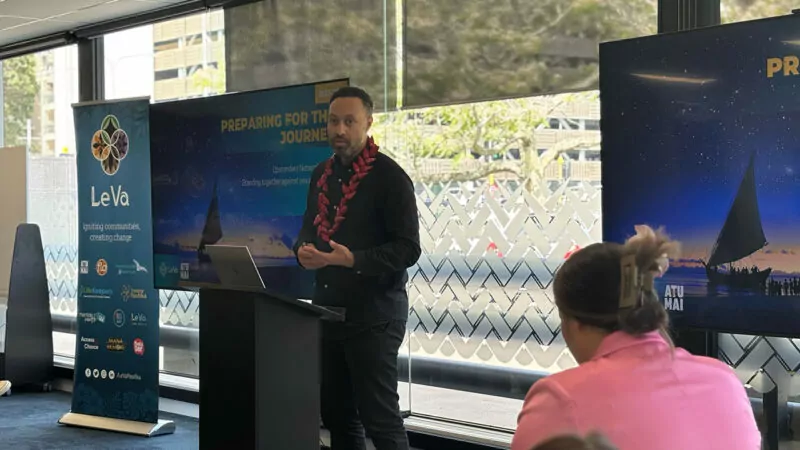
This month, Le Va’s Atu-Mai violence prevention team led four days of intense and rewarding training and workshop sessions to share knowledge about the causes of sexual harm in our communities and how we can work together collectively to prevent it.
“We’ve been moving through different stages of Le Va’s own community mobilisation framework. It has been powerful work, getting to know who is on the vaka with us and building the tools skills and knowledge to prevent sexual violence in our communities,” says senior manager Paul Tupou-Vea.
“We’re fortunate to be joined by so many capable and enthusiastic community leaders as Upstanders who will mobilise prevention initiatives in their communities”, Paul says of the 12 Atu-Mai Upstanders.
One of our Upstanders keen to make a difference is Fale Pasifika Women’s Refuge Sharee Sauni-Kennach, who says learning about the cultural aspects and cultural considerations during the training has been a huge help.
“It is hard for us to open up especially around sexual violence,” she says. “If we can prevent things from happening now, we are creating a safe space for others to grow up in.”
Each of our training sessions sparked some profound and poignant talanoa among the attendees about the realities of sexual violence and child sexual abuse out in the community and learning about the things we can do and say to help prevent it.
One participant highlighted ‘the power of language noting you can break or make trust based on the language you use,’ while another spoke about ‘learning to sit with discomfort.’
Josh Macfarlane of Man Alive attended the men’s group training and noted that there’s no other sexual violence primary prevention training out there, that carefully considers culture as well as best practise.
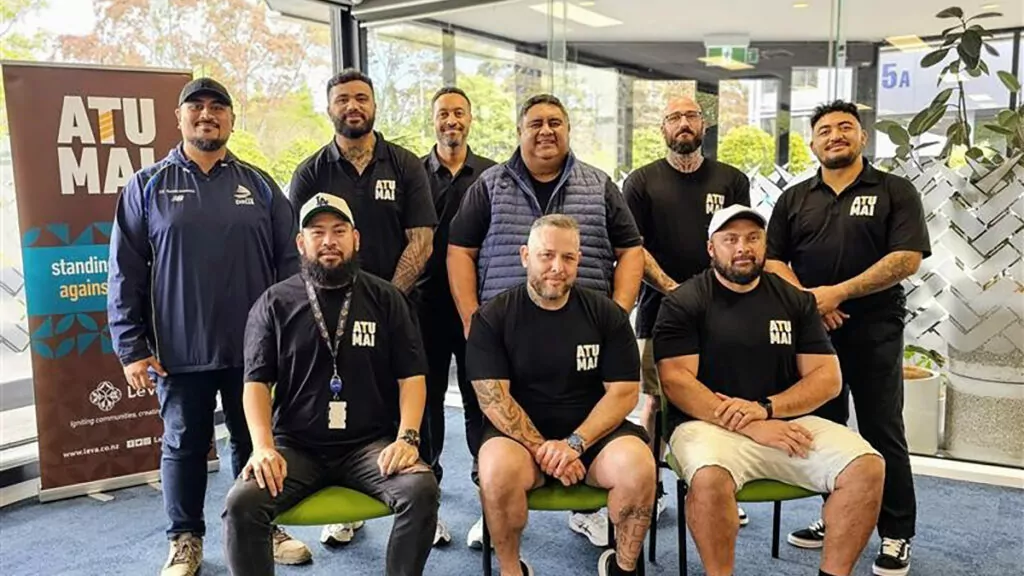
Atu-Mai men’s group
One of our Tongan female participants asked, ‘what does equality really look like in a Pasifika context?’ and “can we address sexual violence without addressing traditional cultural dynamics?”, which resulted in a memorable talanoa about cultural norms, gender, and power structures.
Another trainee said ‘I really liked the integration of cultural approaches to conducting our work. Approaches like talanoa using our Pacific values of alofa, and respect is needed to support our clients and students,’ while another mentioned how ‘this training has given me a lot of insights on how I can weave this into my practice in supporting women and their families. (I’m) Looking forward to more trainings by Atu-Mai on how to prevent sexual violence.’
Atu-Mai’s efforts for sexual violence prevention are continuing to build a community that is informed, empowered and collaborative in efforts against sexual violence. Following the training, Atu-Mai will be supporting their Upstanders to develop and deliver initiatives to promote protective factors in communities.
This month, our Atu-Mai violence prevention senior manager, Paul Tupou-Vea, was invited to the University of Auckland to share knowledge about our work as a guest lecturer for second year Bachelor of Health Science students.
It was an opportunity to link theory to practice, sharing about real-world applications of the social and health sciences
“Despite the early start, students seemed really engaged,” he says. “It was an opportunity to link theory to practice, sharing about real-world applications of the social and health sciences,” he says.
His lecture for the Mental Health Development course was entitled Violence Prevention – Le Va’s response to a community and societal issue.
These students have been learning about the role of theory in designing mental health promotion programmes.
Having Paul come in and demonstrate how that theory can be translated into practice whilst remaining responsive to community-specific needs and aspirations was invaluable.
University of Auckland’s Melissa Reid-Ellis says she found the lecture very inspiring.
“I think we too often focus on responding to violence and other major health issues, when we should be trying to prevent them from occurring in the first place,” she says.
“It’s great to see that we have organisations such as Le Va doing this important mahi for the people of Tāmaki Makaurau and Aotearoa more broadly.”
Atu-Mai is utilising a community mobilisation approach to prevent sexual violence in our communities.
The programme also connects with others in the sector to support workforce development efforts and sharing our knowledge with the sector and across the community is an important way to learn, connect and empower as many parts of the system as possible.
“Sexual violence and its risk factors are complex, so it’s important we are standing together with sector partners and community leaders,” Paul says.
The invitation to guest-lecture came from long-time supporter and advocate, Professor Janet Fanslow, who is a population health scientist specialising in violence prevention and the promotion of mental health.
The Samoan proverb ‘O le tele o sulu e maua ai figota’ – collaboration overcomes challenges – captures the essence of Atu-Mai’s work with community mobilisers.
Le Va’s Atu-Mai community engagement leads, Taeao Napo and Charles Lavea, have been meeting individually with these leaders, each passionate about making a difference.
“Different communities need different strategies; there’s no one-size-fits-all solution,” said Taeao.
Charles added, “Meeting with like-minded leaders reassures us that we’re on the right path. It’s encouraging to see others with a heart for sexual violence prevention.”
He spoke of one mobiliser who shared how sexual violence is still prevalent and a reality but, as a community, we don’t shed light on it. Feedback like this reinforces the Atu-Mai team’s commitment to addressing these issues head on.
Atu-Mai aims to create a ripple effect of positive change by equipping community leaders with the necessary skills and knowledge.
The goal is to build a network of support where positive role models share their stories, important knowledge is passed on and open, honest communication is encouraged.
This fosters a culture of care, respect, and responsibility, aligning perfectly with the meaning of Atu-Mai’s name: love given, love received.

Taeao Napo
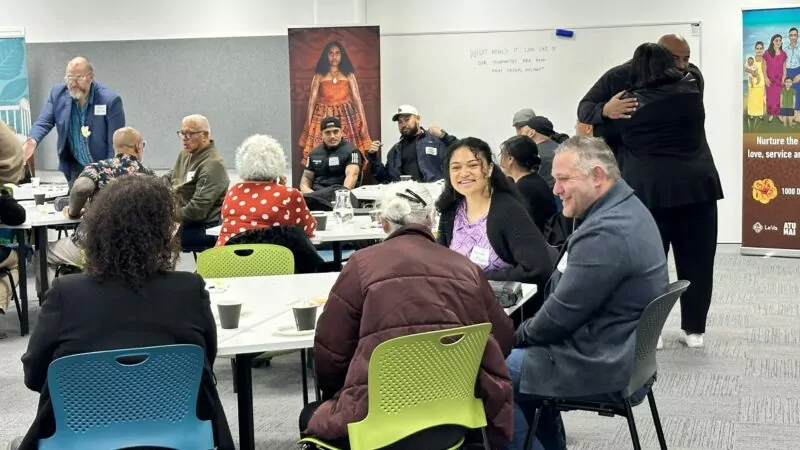
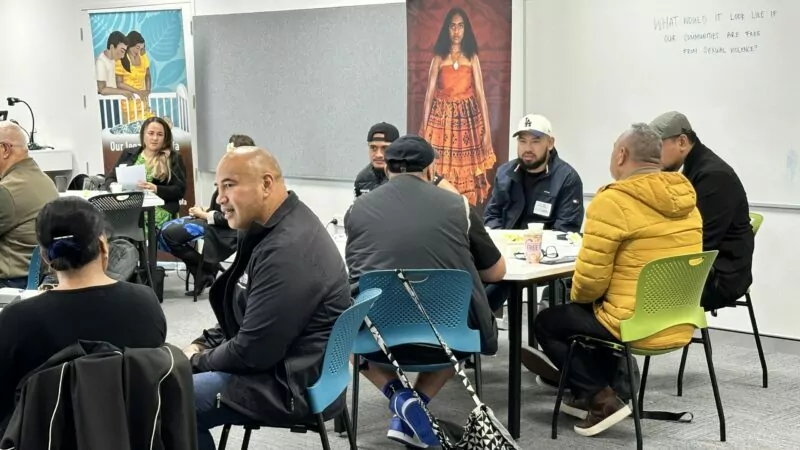
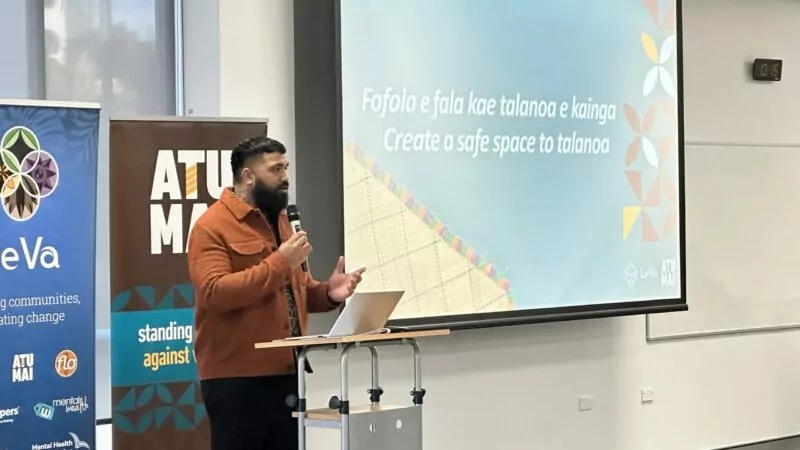
Le Va’s Atu-Mai violence prevention team hosted a Community Mobilisation Fono in a bid to strengthen collective efforts towards stopping sexual violence and child sexual abuse.
The fono (meeting), held in Manukau on 26 June, had ‘Boarding the Vaka’ as its theme, indicating a unified call for community champions to mobilise against sexual violence in our communities.
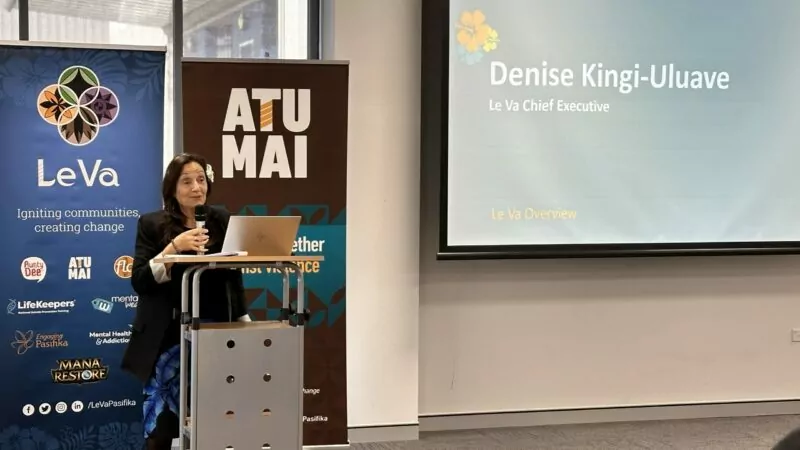
Le Va chief executive, Denise Kingi-’Ulu’ave, thanked everyone for their dedication and commitment towards building safer communities. “We’re about equipping communities with the knowledge, skills and confidence to be able to manage and identify when people are in distress in our communities and families, and to support our workforce.”
Te Puna Aonui chief advisor, Liz Tanielu, praised Le Va’s violence prevention work and the engagement of the community representatives who attended. “Shout out to Le Va, loving their leadership and driving this work programme,” she said. “And the communities – am loving seeing the energy, the different people and the different hats they’re bringing to the space.”
Dr Elizabeth Mati, Le Va General Manager, said when taking a Pasifika values-based lens to the issue, it is clear that violence is not our culture. “Le Va developed the Atu-Mai national violence prevention programme right back in 2018 to equip Pacific young people, families and communities with the knowledge and tools to live violence free,” she said.
Business owner, Anthony Agelu, said he felt humbled and privileged to be involved. “I’m encouraged by the programme and possibly becoming one of the leaders in my community that can help move the initiative forward to hopefully help our people to get above this issue.”
Paul Tupou-Vea, in his role as Le Va’s senior manager for violence prevention, shared the Atu-Mai team’s new work programme and included new insights from a needs analysis looking at increased risk factors for victimisation and unique Pasifika protective factors to prevent child sexual abuse.
Le Va Youth Advisory Group member, Pelea Fruean, said the topic is so important for our community. “Unfortunately, there are a lot of people that are in the dark and suffering from it,” she said. “So, I think it’s important that we should shine some light on them, and I think that it’s good we spread awareness and education as well as creating a safety net for them, and for our people to follow too.”
Nahed Alhaj from the Child Abuse Prevention Foundation agreed the topic is important to communities. “Any kind of abuse or violence, it’s a cycle. So, if we didn’t break it now, it [would] keep going and going like a big snowball. So, it’s important to talk about it now [and] start preventing.”
Reverend Uesifili Unasa said, while it is not easy to talk about sexual violence and child sexual abuse, it is important we do. “It’s a sensitive issue, it’s a difficult issue, it’s a personal issue but we have to engage with these issues questions and challenges with integrity with care and respect,” he said. “Not just for ourselves – but for the people around us, and the community to which we belong.”
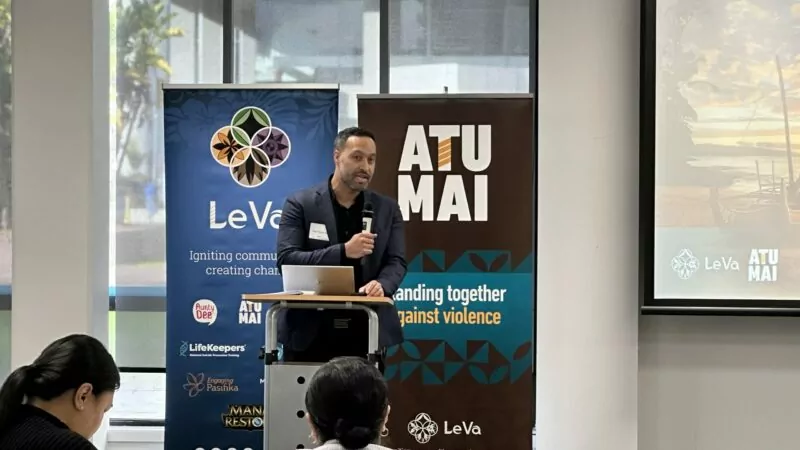
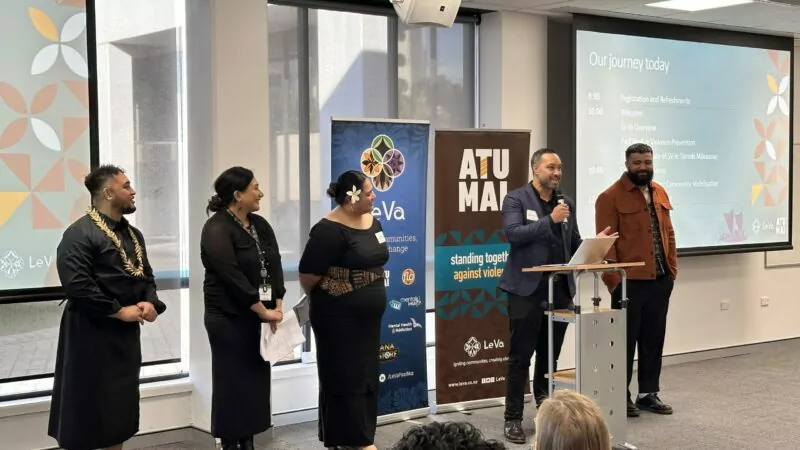
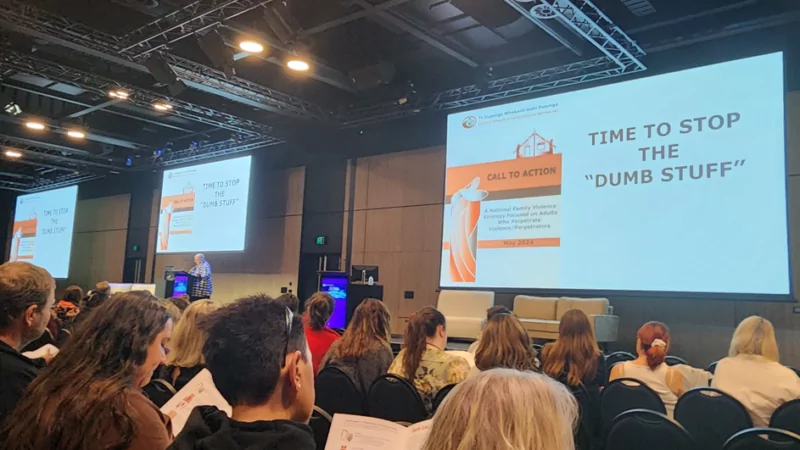
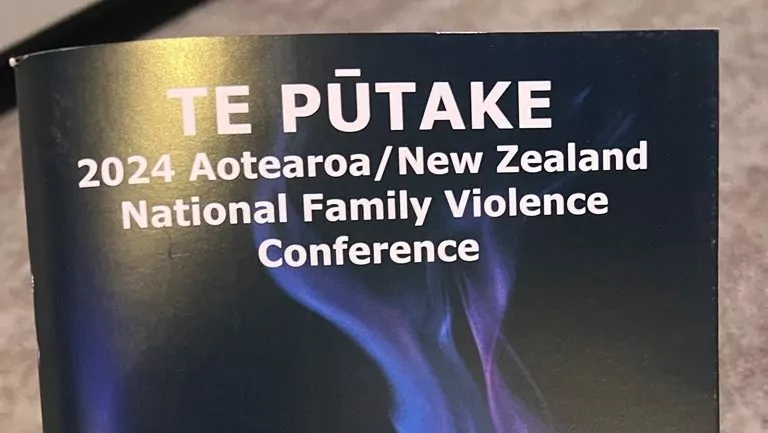
There was a strong call to action asking the government to pour more investment into rehabilitating people who harm at this year’s Te Pūtake 2024 National Family Violence Conference.
The call is for this to sit alongside Te Aorerekura, the National Strategy to Eliminate Family Violence and Sexual Violence, which is a 25-year strategy to drive government action by harnessing public support and community groups too.
The Minister for the Prevention of Family Violence and Sexual Violence of New Zealand, Karen Chhour, officially launched the event and the keynote speakers came from the United States of America.
The Family Peace Initiative’s Dorthy Stucky Halley and Steve Halley shared about the need to understand the different motives of those who perpetrate family violence and the connection to risk and lethality.
More than 400 delegates travelled to Wellington on 29-30 May for the conference organised by Te Kupenga Whakaiti Mahi Patunga, the National Network of Family Violence Services.
There were plenty of opportunities to network, learn about the sector, and consider best practice. Over two days, there were 94 presenters delivering 41 concurrent session papers.
Participants came from overseas and all over the motu, including from universities, community groups, government and not-for-profit organisations.
Sessions covered a variety of topics across the sector, including culture and faith, working with tāne Maori, mana wāhine research, survival based lived experiences, children and young people, workforce development, leadership and change.
While the overarching theme of the conference revolved around family violence, the topics of sexual violence prevention and child sexual abuse prevention were also discussed.
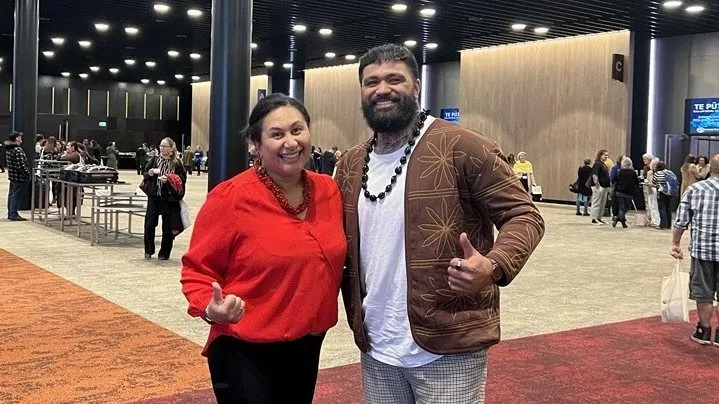
Among the attendees were representatives from Le Va’s Atu-Mai team – Sara Vui-Talitu and Charles Lavea – who attended diverse workshops and sessions to exchange ideas, hear about life experiences, network and gain research insights.
Atu-Mai Community Engagement Lead, Charles Lavea, said it was well worth going and hopefully next time, Le Va can present some of its findings, especially with our work on child sexual abuse.
“I really enjoyed connecting with community and sharing tools and knowledge on how we can better serve our people,” he said.
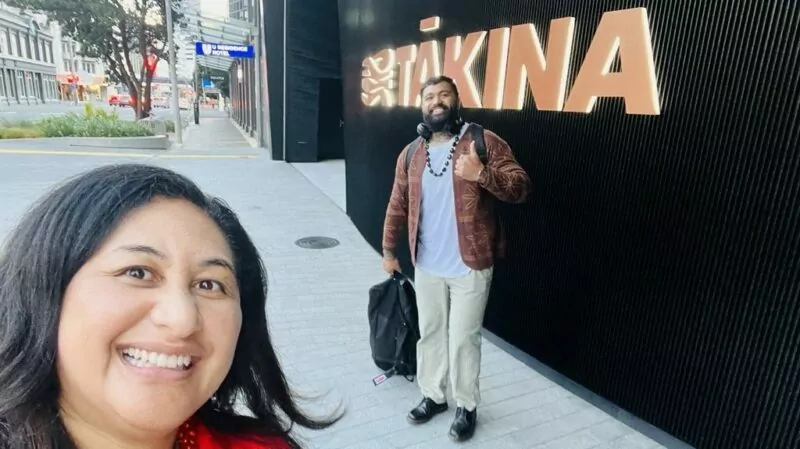
Community mobilisation is a powerful force that can help drive positive change and embodies the principle of collective responsibility plus action.
By empowering communities to take ownership of pressing issues, such as sexual violence prevention, we unlock the transformative potential of collective action, where every individual then becomes an integral part of the solution.
The next phase of work for Atu-Mai – Le Va’s violence prevention programme – will utilise community mobilisation to stand together with community champions against sexual violence.
Community mobilisation efforts must be inclusive and culturally aware and, while Atu-Mai’s work will still focus on Pasifika people, there is also a new focus on tāngata Tiriti in Tāmaki Makaurau Auckland.
“We will be working closely alongside people and organisations active in this sector and looking to bring on board community champions and leaders who can influence change,” says Le Va’s senior manager- violence prevention, Paul Tupou-Vea.
The aim is to find sustainable solutions to violence that require active participation and collaboration with those most affected.
Together, we can address the root causes of violence by promoting education, awareness and dialogue and providing access to appropriate resources that communities can refer to and share.
The Atu-Mai team plans to hold a community mobilisation fono in June. The team looks forward to fostering closer partnerships with government agencies, non-government agencies and other stakeholders, as well as helping communities to leverage collective expertise and resources to drive meaningful change.
Despite ongoing challenges such as limited resources, entrenched social inequalities and resistance to change, we also know that it is often in the face of adversity that the resilience and determination of communities shine the brightest.
Members of Le Va’s Atu-Mai team joined other Pasifika practitioners working in the sexual violence and family violence sectors from all around the country at the one-day fono in Hamilton.
Representatives from Te Puna Aonui, Ministry of Justice, Ministry of Social Development, New Zealand Police, Department of Corrections and other community organisations also attended.
Guest speaker Fuimaono Karl Pulotu-Endemann – a renowned figure in Pacific health – shared valuable insights gained from more than 35 years of experience.
Fuimaono Karl talked about Pasifika cultural frameworks such as Fono-Fale, Sei Tapu: Clinical and Cultural Competency and the Tongan Kalisi Model.
These frameworks and others show the importance of merging clinical and cultural practices and demographic specific approaches to effectively address family violence and sexual violence within Pasifika communities.
Throughout the day, participants shared lived experiences, discussed practitioner wellbeing and presented programme updates within the context of Te Aorerekura – the government’s national strategy to eliminate family violence and sexual violence.
K’aute Pasifika’s fale building provided a safe space for practitioners to reconnect and share knowledge. While Atu-Mai’s focus is on violence prevention, it is important for us to understand the context and issues facing the wider sector.
The value of connecting with others to share knowledge, ideas and experiences helps everyone to work better together so Pasifika communities can thrive.
Learn more about Le Va’s violence prevention programme: Atu-Mai
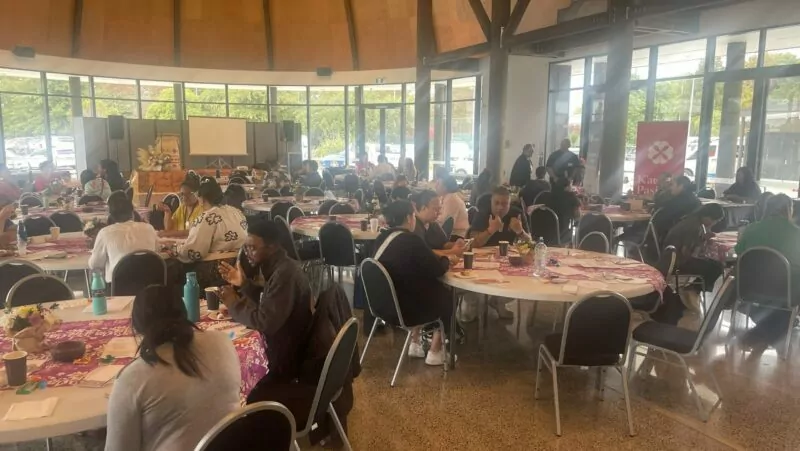
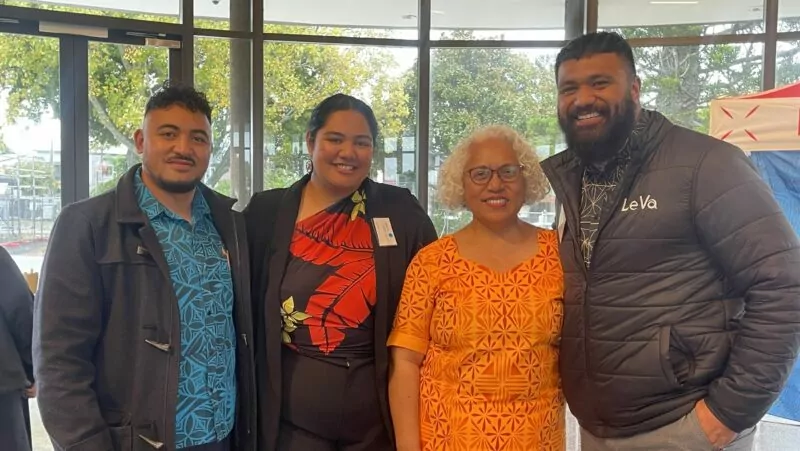
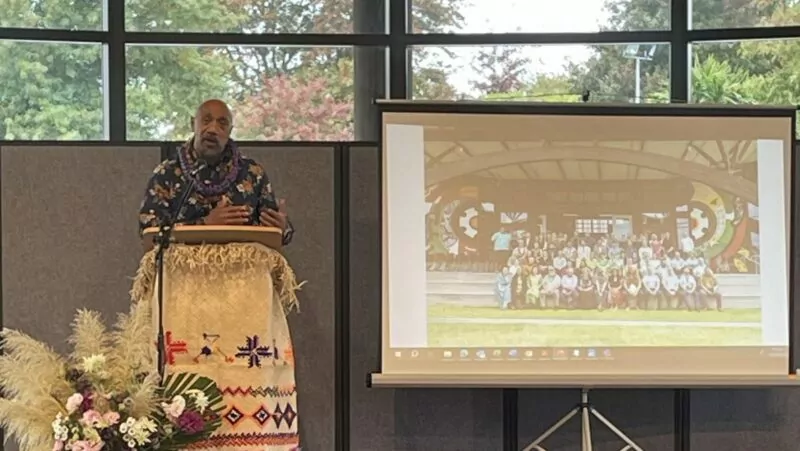
According to United Nations’ statistics, violence against women and girls affects one in three. On 8 March, Le Va’s Atu-Mai team posted on social media for International Women’s Day, and it was inspiring to see how people around the world are choosing to mobilise others to be the change in their own communities.
It was also a reminder that our work in Aotearoa is part of wider global collective efforts to prevent gender violence. Here are a few examples:
- Le Va’s Atu-Mai programme in Aotearoa New Zealand uses community mobilisation to raise awareness, change mindsets, and equip Pasifika and Tangata Tiriti with appropriate resources, knowledge and skills to stand together against violence.
- A Fiji National Plan pioneered efforts in violence prevention against women and girls by taking a country-wide phased approach using five key strategies to address violence with robust monitoring and evaluation in place.
- In Nepal, The Story Kitchen worked to allow women to find their voice and share their narratives.
- Raising Voices in Uganda uses the SASA! Approach to help to mobilise communities.
- In Colombia, Fundación Mundubat focuses on indigenous women in rural and poorer areas to focus on prevention by challenging systems of patriarchy, racism and classism.
- Breakthrough Trust in India enables training on gender and human rights and utilises multimedia and social media interventions.
- Alafia is working to end a harmful widow practice in Togo, West Africa.
- Serbia’s Association Roma Novi Bečej increases public awareness of early and forced marriage.
- World Hope International in Cambodia supports service providers to help victims of gender violence.
- Al Shehab in Egypt focuses on survivors, including medical, legal, and psychological services.
Explore our Atu-Mai violence prevention programme to learn more about standing together against violence.
Le Va is part of the Wise Group. Copyright ©2026
