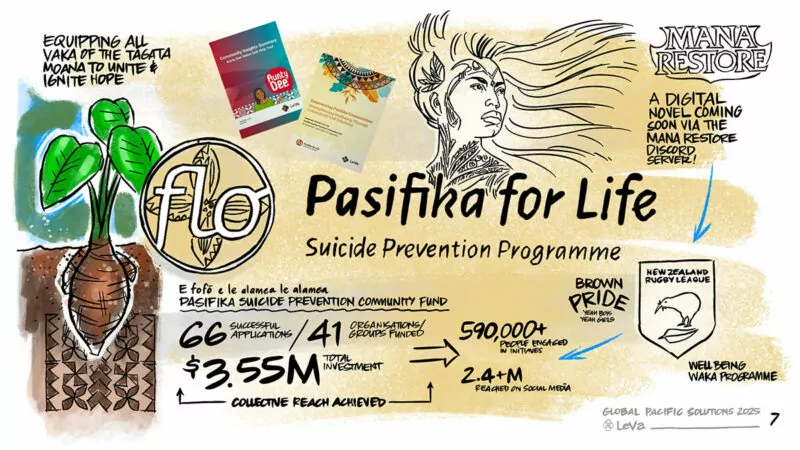
Le Va’s FLO: Pasifika for Life suicide prevention team released two important reports at our Global Pacific Solutions 2025 conference – the Aunty Dee ‘Community Insights Summary’ highlighting this powerful digital support tool, and ‘Empowering Pasifika Communities’ focusing on how community-led solutions can strengthen wellbeing.
Aunty Dee Community Insights Summary report
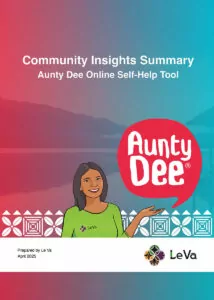
Aunty Dee is a free online self-help tool designed by Le Va primarily for Pasifika young people, guiding users through a process of structured problem solving that is clinically safe, culturally grounded and accessible to all.
The report highlights the transformational journey of the Aunty Dee tool across more than four years, as it has supported thousands of Pasifika people in Aotearoa through tough times.
It focuses on the problem statements of more than 1,500 Pasifika users of the Aunty Dee tool from March 2016 to December 2021, exploring differences between genders and age groups.
From its reach into our communities to insights on how digital tools can bridge support for those less likely to access face-to-face services, the report highlights how innovation, compassion, and culture can work hand in hand to improve mental wellbeing.
It is our intention that this report ensures Aunty Dee users can engage with and reflect on the collective insights gathered. We honour every voice, every user and every champion who helped shape Aunty Dee into a trusted space of hope and clarity.
Empowering Pasifika Communities report
“E fofō e le alamea le alamea” – the solutions for our issues lie within our own communities.
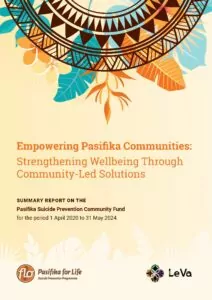
‘Empowering Pasifika Communities: Strengthening Wellbeing Through Community-Led Solutions’ is a report that encompasses the collective wisdom, innovation, dedication and unwavering commitment of our Pasifika communities across Aotearoa.
The report acknowledges their crucial role in advancing suicide prevention efforts through Le Va’s Pasifika Suicide Prevention Community Fund, with $3.55M invested across 41 groups and engaging more than 590,000 people from April 2020 to May 2024.
It celebrates community-led approaches that are culturally grounded, clinically safe, family-centred and sustainable, equipping our Pasifika families and community members with innovative solutions to enhance mental health and wellbeing.
We believe we all have a part to play in suicide prevention and we share this report to acknowledge and uplift the resilience and strength of Pasifika peoples within Aotearoa New Zealand, ensuring that the work done within these communities is recognised and celebrated.
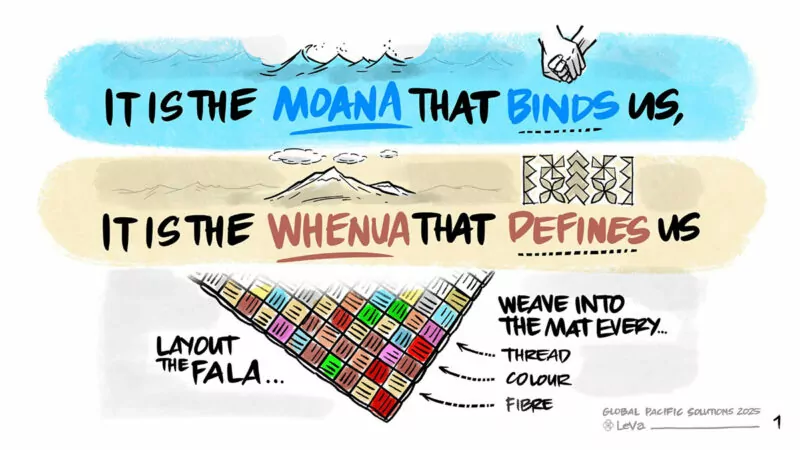
Le Va would like to thank every fund recipient, champion and community member who helped shape this vital work, equipping all vaka of tagata moana to unite and ignite hope using our cultural tools as lifelines.
Day One
In the Roots of Resilience stream our aim was to discover ancestral insights for preventing suicide and to empower and equip Pasifika communities with culturally relevant knowledge and tools to prevent suicide and respond safely and effectively when a suicide occurs.
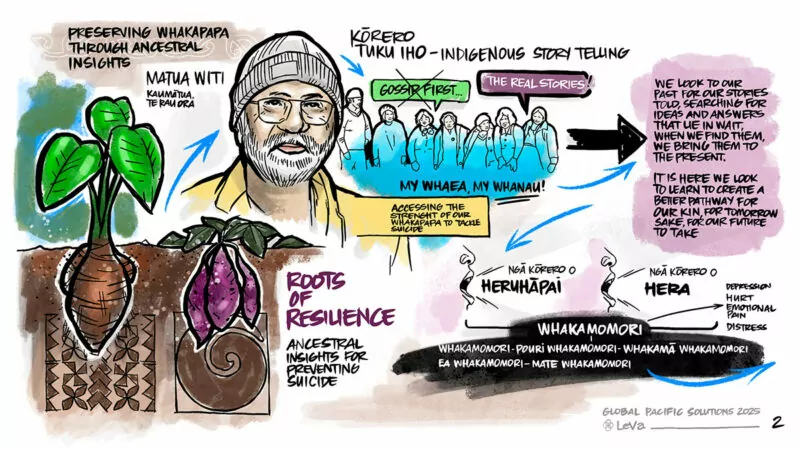
In this talanoa of suicide prevention, the Roots of Resilience stream opened with Matua Witi’s deep reflections on indigenous storytelling.
Matua Witi equipped the audience to explore how indigenous storytelling and whakapapa (genealogy) can strengthen communities to confront and prevent suicide. Matua Witi highlighted how gossip often precedes truth in communal narratives and he emphasised returning to ancestral knowledge to forge better pathways for future generations, using real voices (Heruhāpai and Hera) to surface issues like emotional pain and depression (whakamomori).
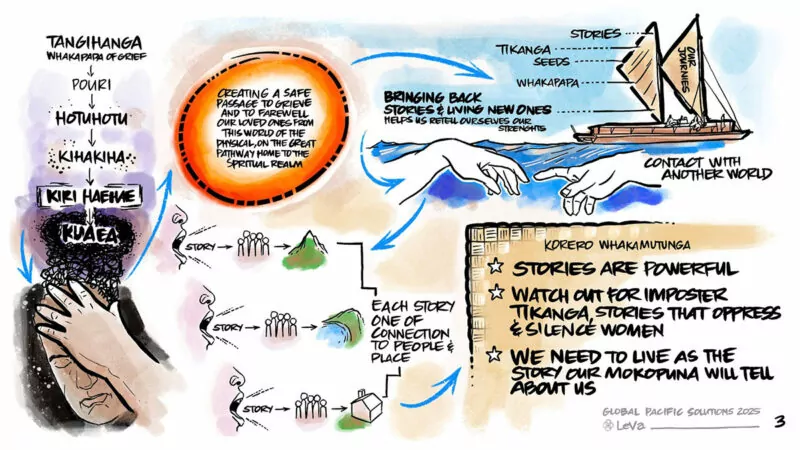
Matua Witi talked to the tangihanga (Māori grieving process), showing how expressions of grief (pouri, hotuhotu, etc.) allow emotional release (kua ea). The transformational power of storytelling, reconnecting with identity through tikanga, and warning against oppressive narratives. Matua Witi advocated living lives worthy of the stories our mokopuna (descendants) will tell about us.
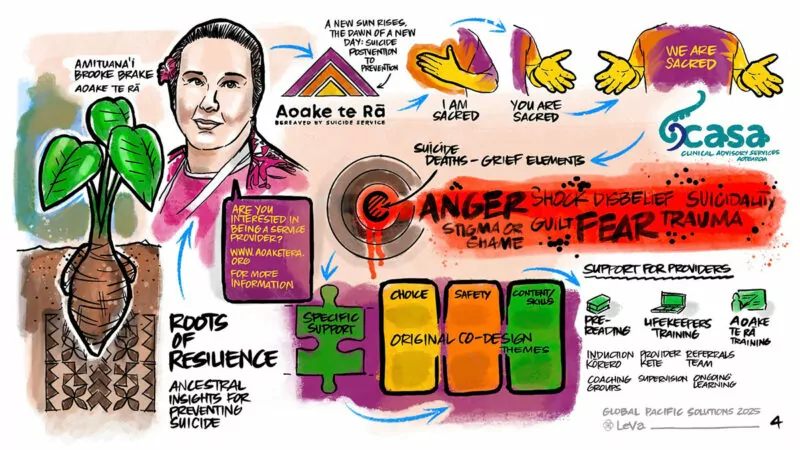
Amituana’i Brooke Brake spoke to the Aoake te Rā suicide postvention service, which honours grief and offers culturally grounded support. Amituana’i Brooke spoke to how emotions like anger, guilt, trauma and fear surface in suicide loss and outlined a framework of co-design themes (choice, safety, content) and provider support (training, coaching, kete) for healing communities and building resilience.
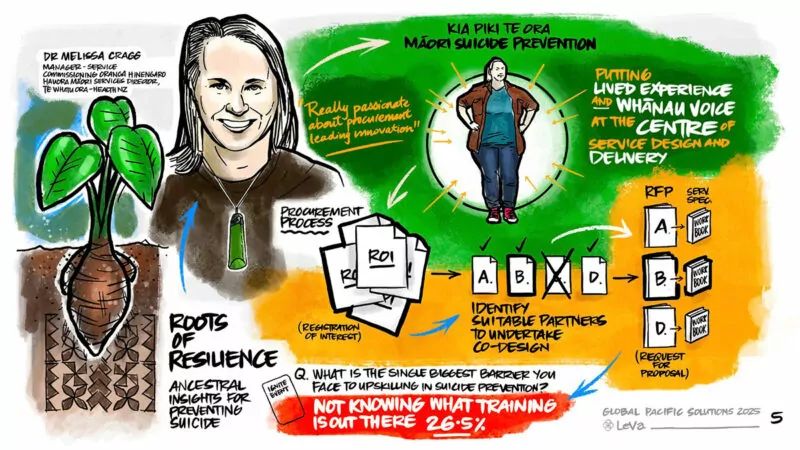
Dr Melissa Cragg brought the clinical lens into conversation with culture, unpacking pathways for integrating Pacific values into systems of care. She presented the Kia Piki Te Ora programme, which puts lived experience and whānau voice at the centre of suicide prevention service design. The procurement process highlights identifying suitable partners for co-design and delivery, emphasising a community-driven, kaupapa Māori approach.
Day Two
Day Two of the Roots of Resilience stream centred around frontline initiatives, lived experienced and unwavering dedication to our communities.
Leilani Clarke opened with the Pasifika for Life programme, underpinned by the FLO community fund which empowers Pasifika groups to lead suicide prevention initiatives. Key metrics include $3.55M invested across 41 groups, engaging more than 590,000 people. She reminded us that “connection is protection” – and that our cultural tools are lifelines. Other initiatives, like Mana Restore, Aunty Dee, and NZ Rugby League Wellbeing Waka partnerships, were highlighted as part of a collective effort to ignite hope and preserve life.
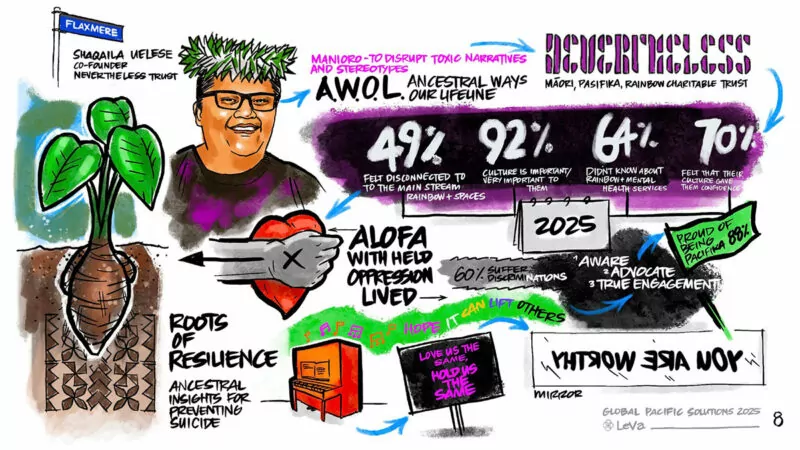
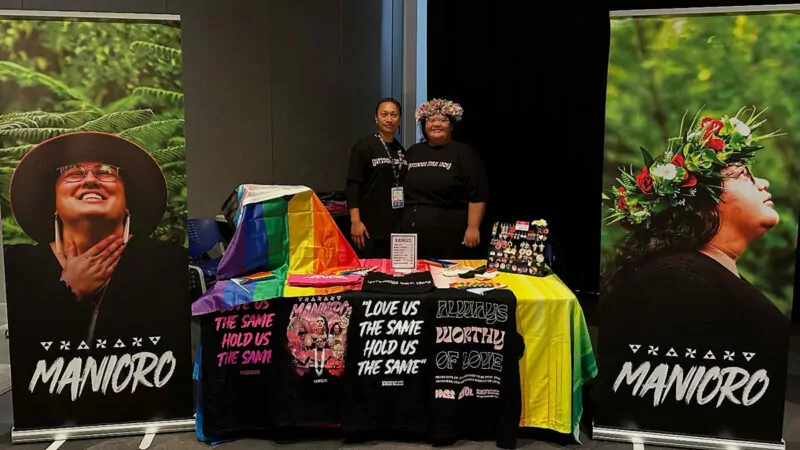
Shaqaila Uelese and the Nevertheless Trust advocate for Rainbow Pasifika youth through the AWOL – Ancestral Ways Our Lifeline challenging toxic narratives and amplifies cultural connection and pride (proud to be Pasifika). Shaqaila bravely shared her personal story, illuminating the power of youth voice and peer leadership in suicide prevention. Her authenticity challenged us to listen deeper and lead differently.
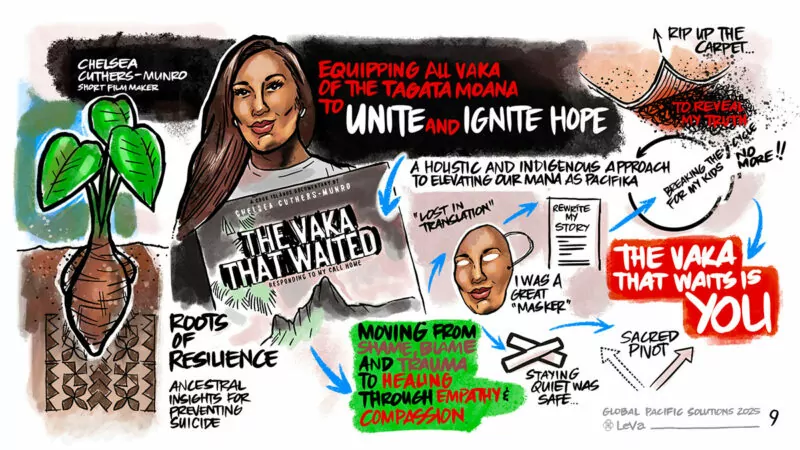
Chelsea Cuthers-Munro’s short film ‘The Vaka That Waited’ is a powerful metaphor for answering the call to reclaim one’s truth. It speaks to the experience of masking trauma and silence, and the sacred pivot toward healing through empathy and compassion. The central message: The vaka that waits is you – a call for collective self-discovery and transformation. Her message was clear: “Don’t wait to be ready – just start.”
Together, the speakers for our Roots for Resilience stream embodied resilience in action – a reminder that suicide prevention is not just a programme, but a movement grounded in aroha, culture and community.
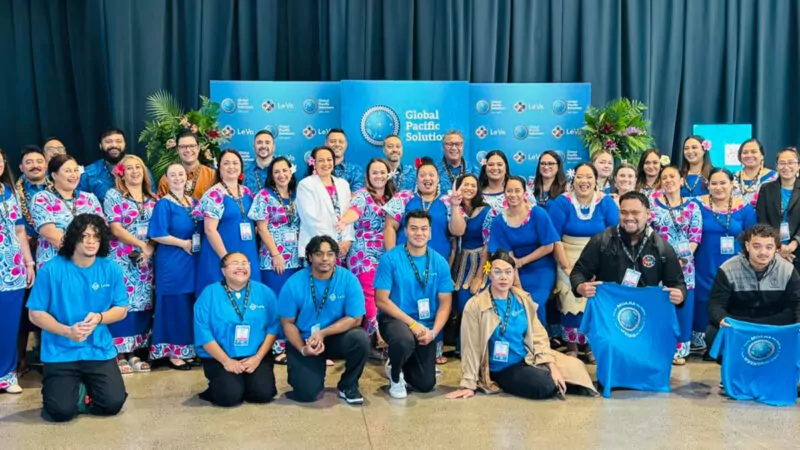
On behalf of our suicide prevention teams and senior managers Leilani Clarke and Tiana Watkins, to our esteemed speakers and our amazing vendors, we would like to extend our warm fa’afetai tele lava, malo ‘aupito, fakaaue lahi and thank you for making our Roots of Resilience stream a highlight at our recent Global Pacific Solutions Conference.
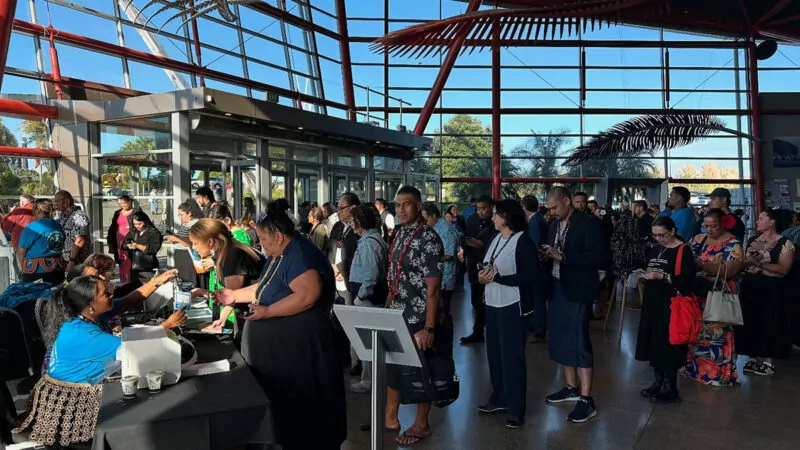
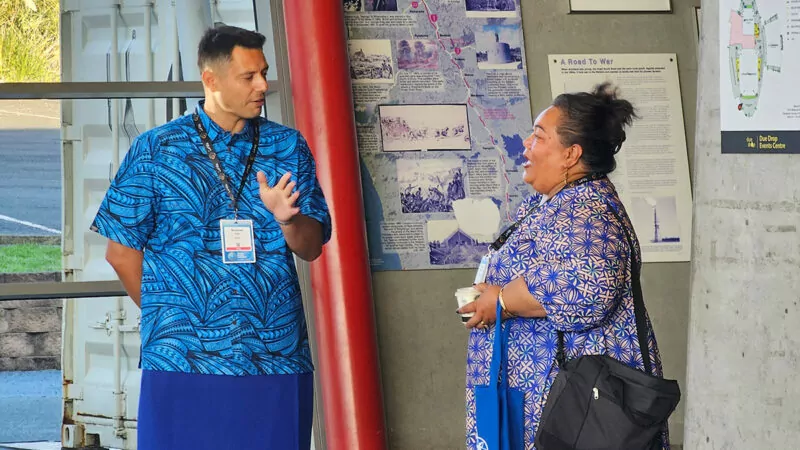
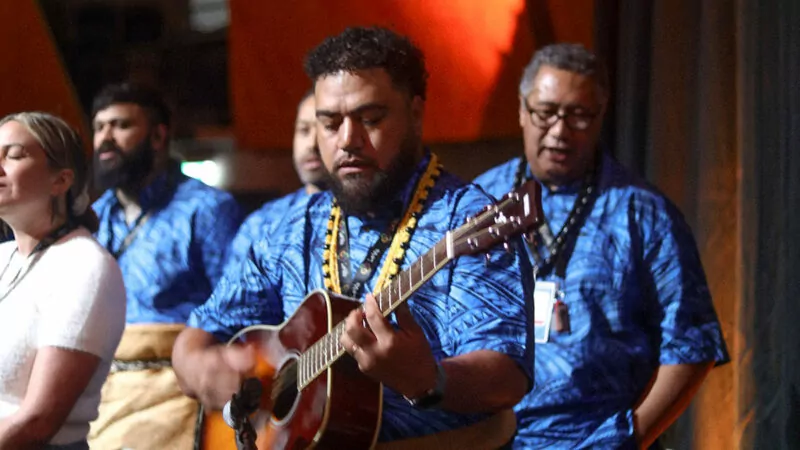
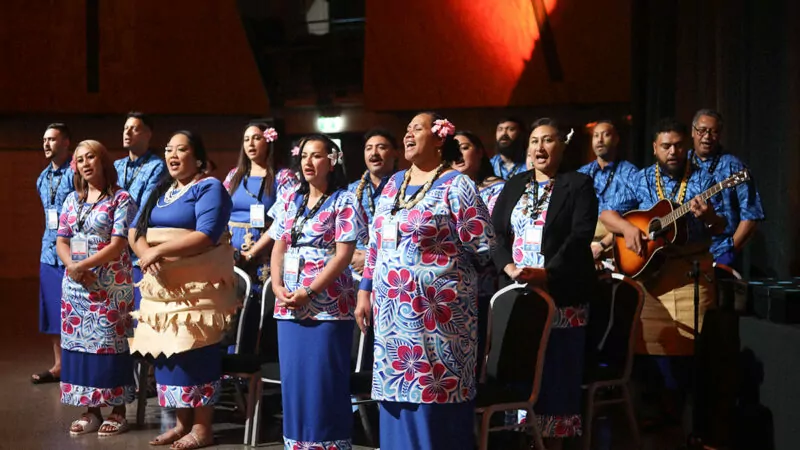
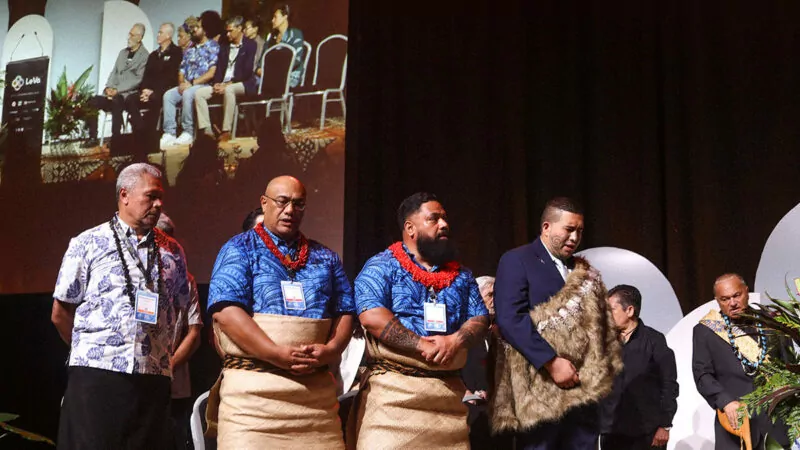
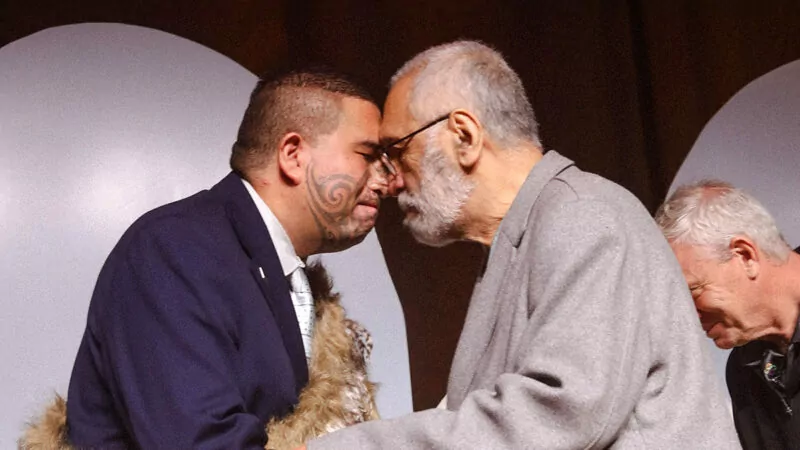
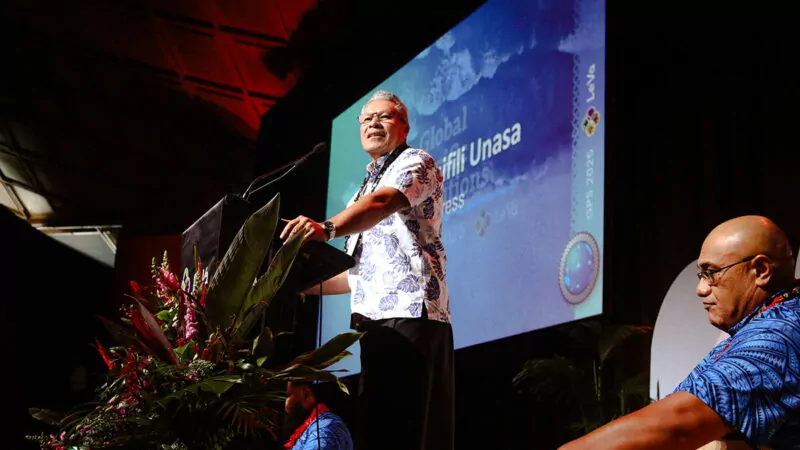
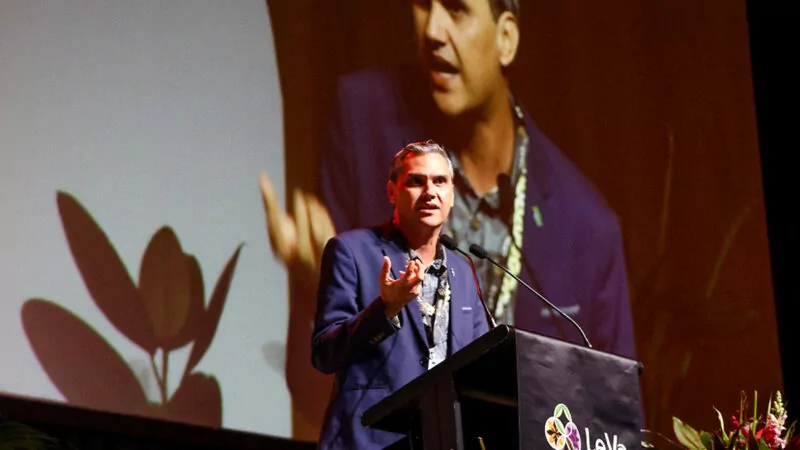
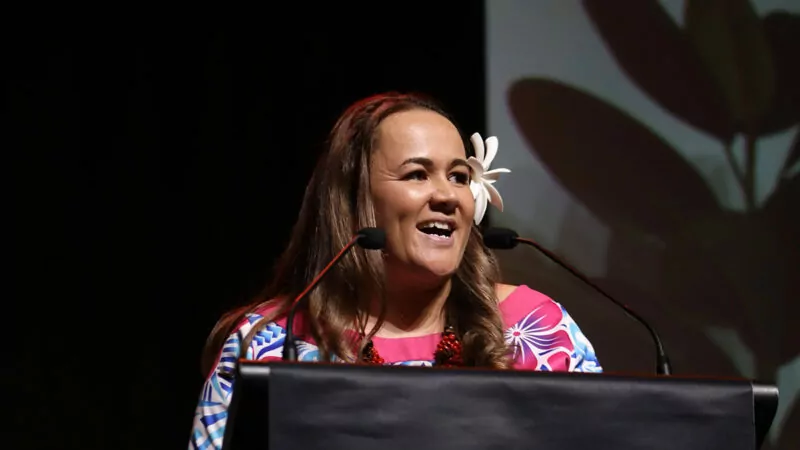
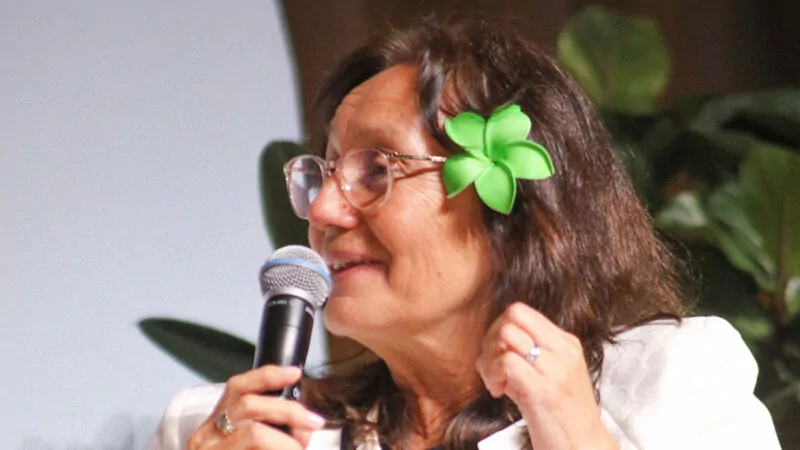
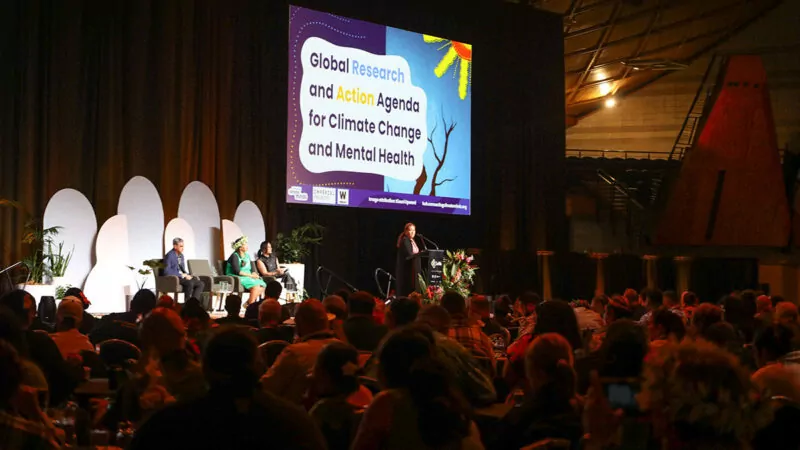
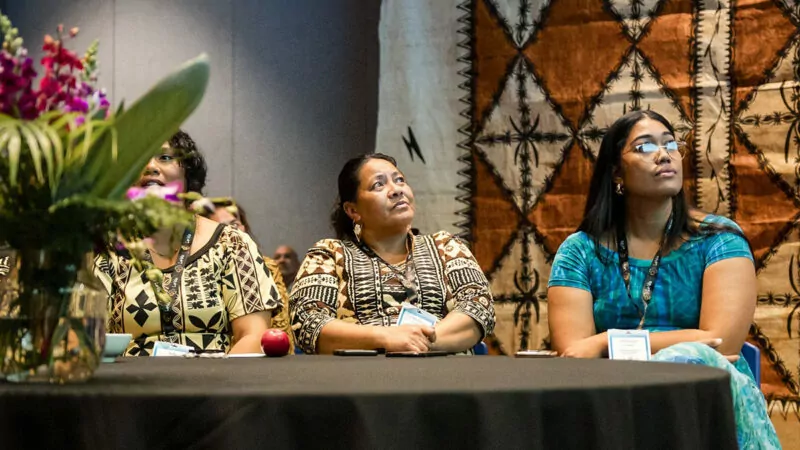
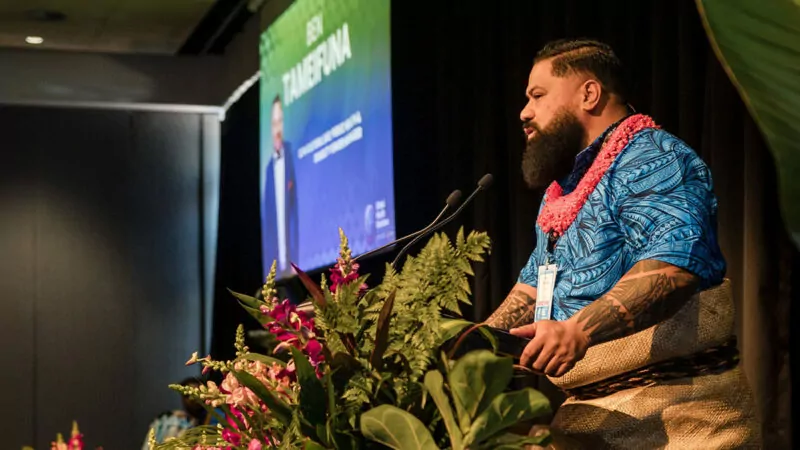
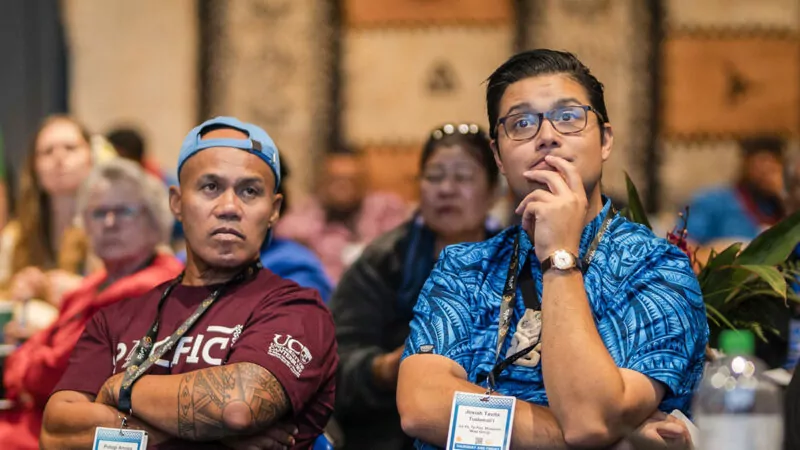
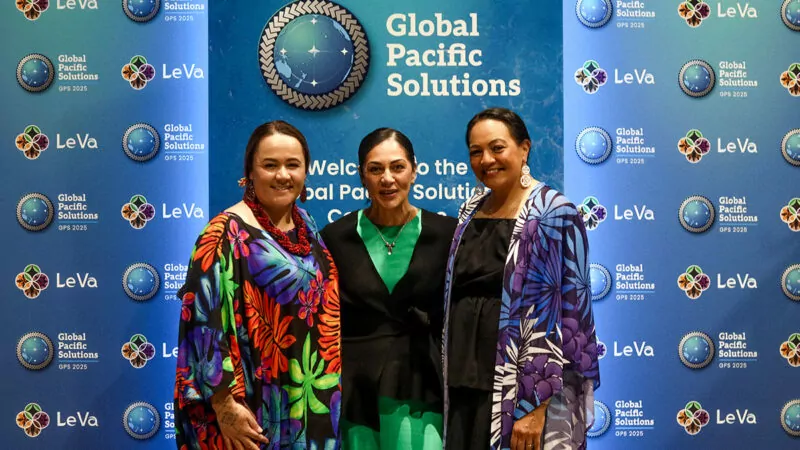
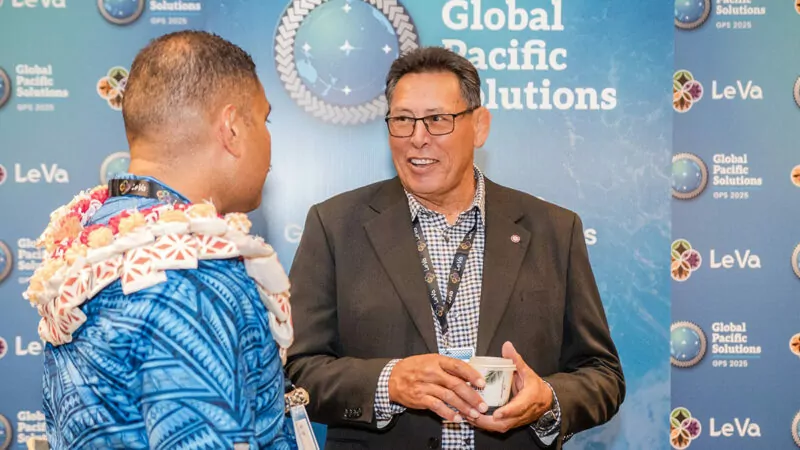
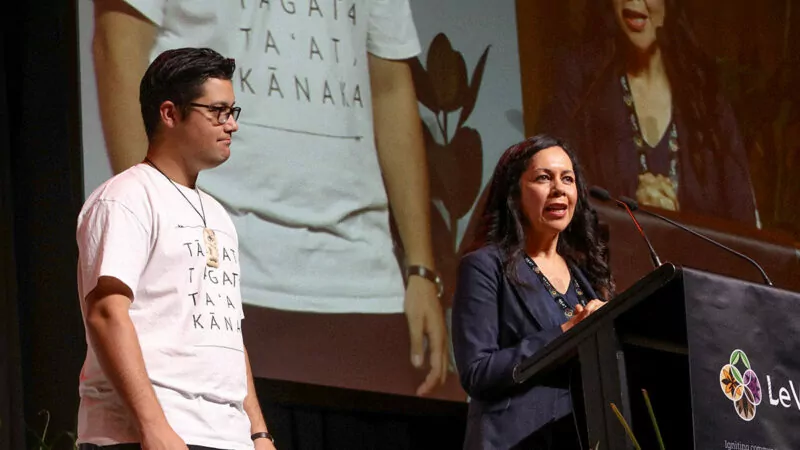
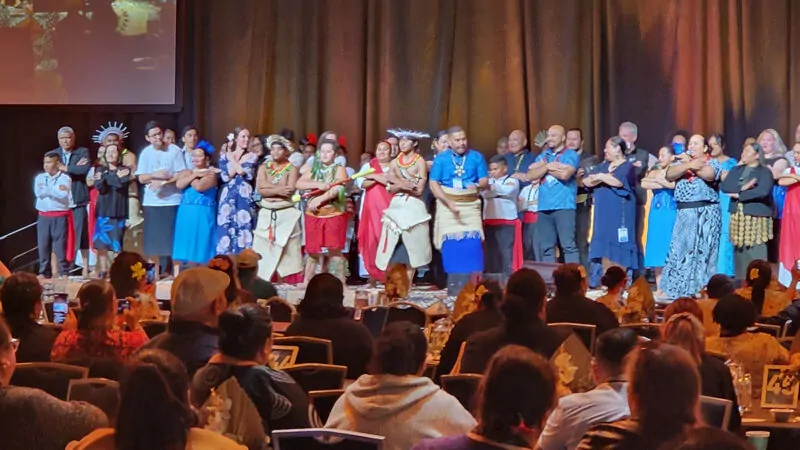
Over two impactful days in April, around 700 people joined together at the Due Drop Events Centre in Manukau for Le Va’s Global Pacific Solutions 2025 conference – uniting Pacific leaders, academics, international guest speakers, workforce and community members in a tour de force of strengths-based solution seeking.
Bringing to light tough topics such as child trafficking, suicide prevention, climate change, child sexual abuse, equity for disabled people and the ever-growing demand for mental health and addiction support workers, GPS 2025 was an event that opened minds, challenged the status quo and inspired hope for all who attended.
At times, the audience was moved to tears upon hearing transformative stories of overcoming adversity, fighting for justice and connecting to culture in a way that enhances our true selves.
Inspirational plenary speakers and breakout presenters communicated passionately, sharing their expertise to advance the knowledge of all who listened.
When opening the ‘Nurturing our Children’ plenary panel at GPS 2025, Le Va’s chief executive, Denise Kingi-‘Ulu’ave, said, “It is both an honour and a solemn responsibility to welcome you to today’s panel discussion on child sexual abuse and child trafficking across the wider Pacific.
“This is a conversation that demands our full attention, our collective expertise and most importantly, our unwavering commitment to action.
“The Pacific is home to diverse and resilient communities, but it is not immune to the global crises of child sexual exploitation and trafficking.”
We know that the solutions lie within our communities – GPS 2025 was an opportunity to bring together into one space the hearts, spirits and minds of hundreds of people, all eager to ignite change and promote the power of Indigenous intelligence.
Over the coming weeks, Le Va will be sharing many of the insights and solutions that were explored throughout Global Pacific Solutions 2025, with gratitude to everyone who was present and contributed to this important kaupapa.
Please subscribe to our eNewsletter to learn more: www.leva.co.nz/subscribe
Mental healthcare in Aotearoa New Zealand is at a crossroads, and Le Va is calling attention to the urgent need for change, with a focus on mental ill-health prevention and mental wellbeing promotion alongside early intervention and recovery support.
In spite of increased government investment and better access to support over the last few decades, more people than ever are experiencing mental health challenges, with high rates of suicide, addiction and mental illness.
Dr Stephen Carbone has a passion for promoting people’s mental wellbeing. The founder and former CEO of Prevention United in Australia visited Pasifika-led organisation Le Va in March to speak about the important role primary prevention has in mental health policy.
Senior executives from across the social and healthcare sectors in Aotearoa New Zealand attended an in-person hui and online webinar, to learn more about what primary prevention is and how it can be a crucial complement to existing mental healthcare services.
Dr Carbone spoke about the effectiveness of mental wellbeing promotion and prevention of mental health conditions as a two-pronged tactic to help reduce the number of people who develop depression, anxiety or substance use conditions.
He said, “Mental health conditions are distressing, potentially disabling and contribute to death by suicide. While efforts to provide better treatments and services are important, there is more that we can do.”
Dr Carbone explained that while effective treatments are now more widely available and used, the number of people affected by conditions like depression and anxiety continues to rise in both Australia and New Zealand.
Ultimately, supporting people’s mental wellbeing and preventing the onset of mental health conditions at a population health level, would likely lead to less pressure on an already over-burdened mental healthcare system in Aotearoa.
Le Va chief executive, Denise Kingi-‘Ulu’ave, said of Dr Carbone’s visit, “We are grateful to Stephen for generously sharing his expertise in the field of primary prevention, an approach that underpins almost everything we do at Le Va.
“We want to keep this conversation going with the leaders of our healthcare systems, so we can develop a shared collective approach to primary prevention to benefit the people we serve.”
Adopting a primary prevention approach for mental health means not waiting until people are unwell before taking action, as is already common for physical health conditions like diabetes or heart disease.
At Le Va we believe this is the way forward for the prevention of serious issues such as mental illness, sexual violence, addiction and suicide.
Le Va’s dedicated LifeKeepers facilitators are gearing up for a busy and impactful March, with seven suicide prevention workshops scheduled across Aotearoa.
We also welcome Wellington Free Ambulance as an organisation that is newly supporting its staff, and in turn their communities, with LifeKeepers training.
From setting up culturally responsive spaces to practising role-play scenarios, our LifeKeepers team members ensure that every participant leaves equipped with the skills and confidence to support those at risk of suicide.
They are constantly reviewing and improving training materials, refining delivery approaches and drawing on their wealth of experience to create safe, engaging and meaningful learning environments.
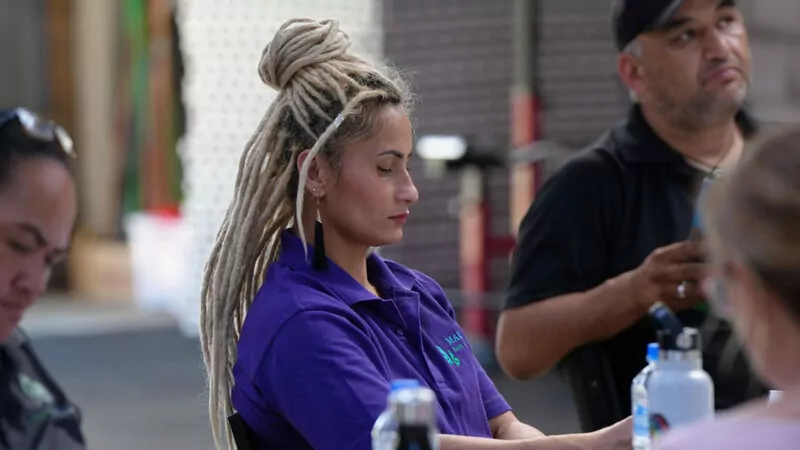
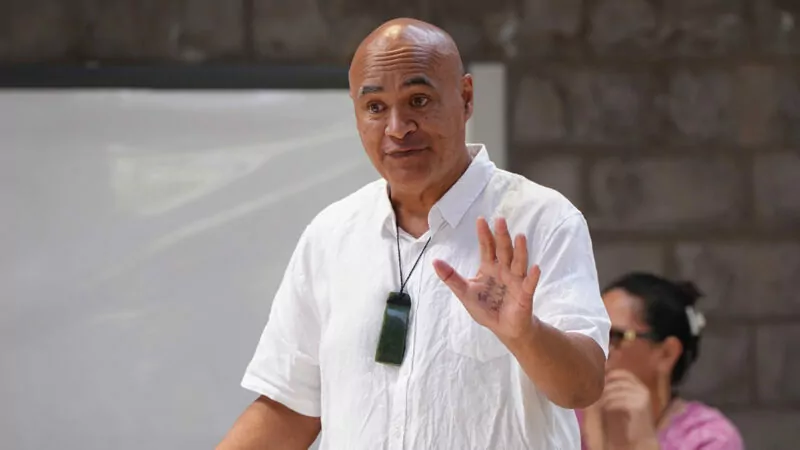
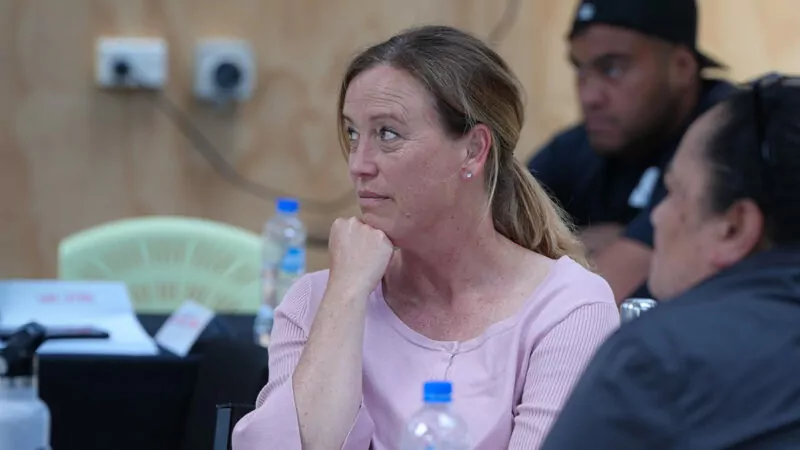
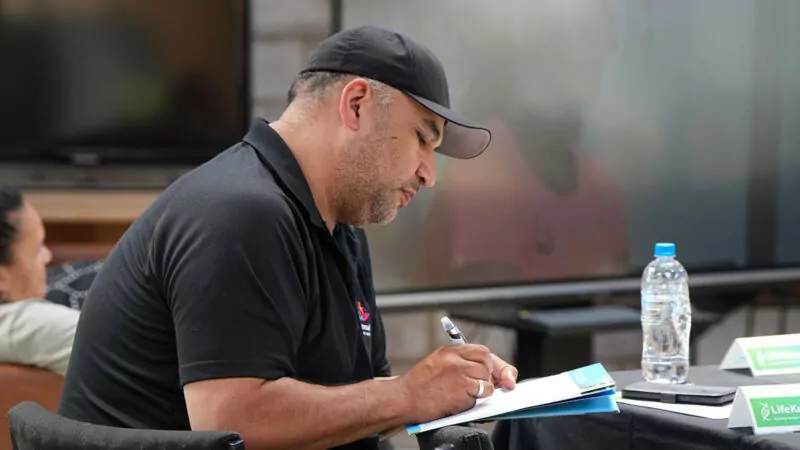
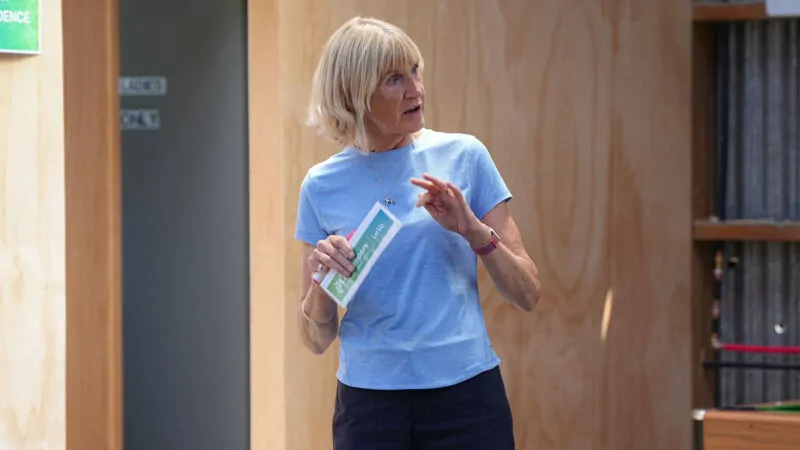
One participant said of our LifeKeepers in-person training, “It was a personal experience that helped me understand how to better identify risk factors and approach whānau who may be at risk. I also appreciated the focus on the importance of words.”
Another said, “I loved the role plays that were incorporated, as they helped me better prepare for those difficult conversations. Ngā mihi to the trainers for making this such a valuable experience!”
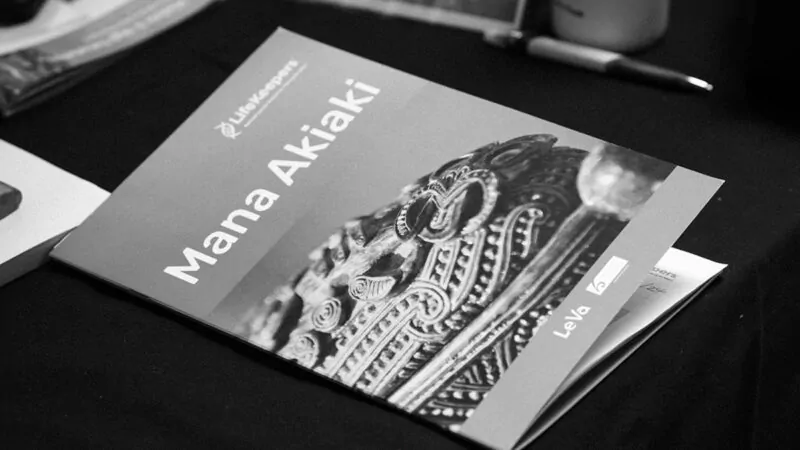
Mana Akiaki: LifeKeepers for Māori is our suicide prevention training delivered through a Māori lens, weaving te reo me ōna tikanga, ngā whakataukī and mātauranga Māori throughout.
A participant described Mana Akiaki as, “A powerful and transformative training session! The delivery was engaging, and I appreciated how the programme incorporated Te Ao Māori values.”
If you are keen to learn more about how to recognise and support those at risk of suicide, you can register online for one of our March face-to-face workshops in your region:
- Hastings – 5 March
- Napier – Mana Akiaki – 6 March
- Kaikoura – Mana Akiaki – 12 March
- Waitematā – 18 March
- Waitara – Mana Akiaki – 20 March
- Foxton – 26 March
- Palmerston North – 27 March
We also offer online training – a flexible alternative for those unable to attend in person.
Visit our LifeKeepers website to register and learn more.
Groundbreaking suicide prevention research led by Le Va’s chief executive, Denise Kingi-‘Ulu’ave, has recently been published in the internationally renowned academic journal Crisis.
It highlights the transformative impact of LifeKeepers – Le Va’s national suicide prevention training programme – an initiative that is funded by the Ministry of Health for all of New Zealand and is changing the suicide prevention landscape in Aotearoa.
The findings are based on nearly 6,000 New Zealanders participating in the study, making it one of the largest gatekeepers suicide prevention research of its kind in Aotearoa and globally.
“Many people at risk of suicide, especially our young people, often do not seek or have access to mental health services or support prior to engaging in suicidal behaviours. That is why it is critical that every person in Aotearoa knows how to spot the signs that someone is in distress and has the confidence to ask them directly if they are thinking about taking their life. It’s not easy but it could save a life and we have evidence the training has equipped people to do just that,” said Denise.
The evidence is clear –
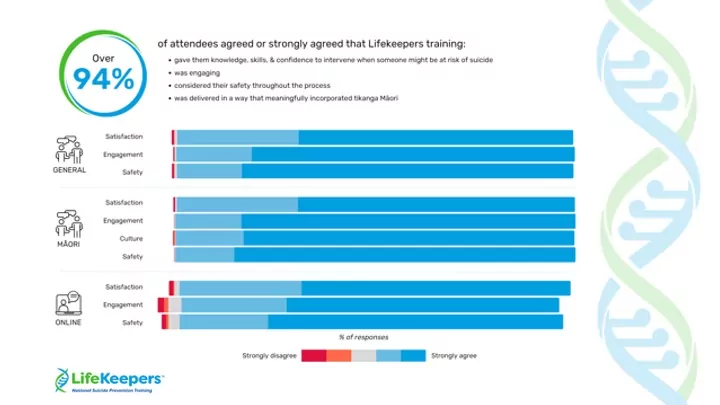
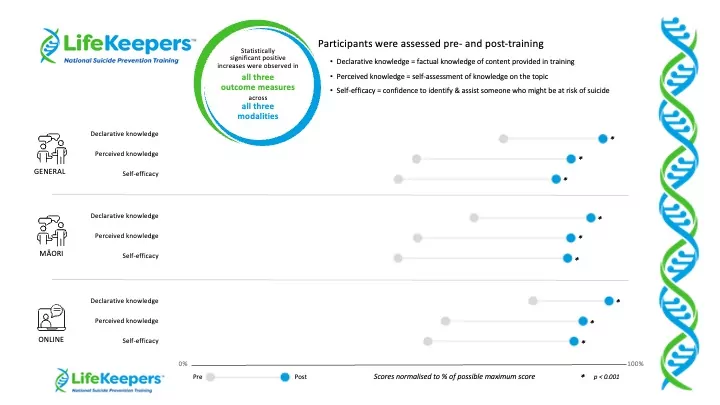
- LifeKeepers training results in immediate and measurable increases in participants’ knowledge, intervention skills, and confidence to act.
- The programme is highly effective and widely accepted, particularly within Māori communities – a critical priority population group for our nation.
What sets LifeKeepers apart is its uniquely New Zealand context.
This research signals an urgent opportunity to expand the reach of LifeKeepers as a cornerstone of Aotearoa’s multifaceted suicide prevention strategy. By doing so, we can ensure that those on the frontlines and everyday community and whānau members are equipped to make a real difference in their communities.
Further research examining the long-term effectiveness of LifeKeepers has also been submitted for publication and Le Va plans to launch a LifeKeepers for Pasifika programme in 2025.
Explore the research article: Evaluating the Impact and Cultural Relevance of LifeKeepers Gatekeeper Training Across Three Training Modalities
On 30 October 2024, the Chief Coroner released the latest annual provisional suicide statistics for Aotearoa.
These figures play a vital role in shaping and guiding suicide prevention efforts across the motu, supporting the work of organisations like Le Va that are dedicated to saving lives.
The data shows that, overall, there has been no change in the rate of suicide. In the financial year to 30 June 2024, 617 people died by suspected suicide and the rate was 11.2 people per 100,000.
Le Va chief executive, Denise Kingi-‘Ulu’ave, said, “While understanding these statistics and monitoring any changes is important to our suicide prevention efforts, we must not lose sight of our people behind the numbers – those who have died by suicide and the individuals, family members, whānau, friends and communities who have tragically lost their loved ones.”
In 2023, Aotearoa witnessed a significant and encouraging decline in the provisional suicide rate among Pacific people, dropping from 9.2 to 5.1 per 100,000 people while this year, there has been a slight increase to 7.7 per 100,000 people.
Community-focused solutions
At Le Va, we believe the solutions to preventing suicide are found within our communities. On 25 October 2024, Le Va held a community fono (meeting), ensuring a safe space for communities to provide insights and recommendations on the government’s draft suicide prevention action plan for 2025-2029.
With more than 20 community members actively contributing, the fono was a successful collaborative event. Co-facilitated by Le Va’s senior managers for suicide prevention – Leilani Clarke and Tiana Watkins – the gathering encouraged open, bold discussions, bringing a grassroots perspective to both health-led and cross-government actions to suicide prevention in Aotearoa.
Feedback from the fono was that in Aotearoa we need to focus on prevention and make sure the voices of those with lived experience are heard. Our communities said that addressing factors like poverty, family violence and mental health is a form of suicide prevention, and we should prioritise support for the people, families, whānau and communities who have experienced suicide.
Suicide prevention training
Le Va has two groundbreaking national suicide prevention training programmes:
LifeKeepers – New Zealand’s national suicide prevention training programme – has trained more than 18,000 everyday people with the knowledge, skills and confidence to intervene when someone is at risk of suicide. These are ordinary people playing their part in the prevention of suicide.
FLO: Pasifika for Life is Aotearoa’s first national Pasifika suicide prevention training, designed to engage and empower Pasifika communities to prevent suicide by enhancing protective factors and reducing risk factors associated to suicide.
These programmes, grounded in evidence and culturally responsive methods, ensure clinically safe, community-driven interventions.
Suicide prevention resources
Recently Le Va launched a new digital resource – ‘After a suicide attempt’ – providing critical guidance for those supporting individuals post-attempt. This resource is freely accessible and aims to bolster support systems during vulnerable recovery periods. Our resource can be downloaded from the Le Va website.
Le Va remains committed to supporting our Pasifika and Māori communities to find their own solutions to suicide, through initiatives such as our Pasifika Suicide Prevention Community Fund, referrals to Te Rau Ora Māori Suicide Prevention Community Fund, and Mana Akiaki: LifeKeepers for Māori.
We will continue to work collaboratively with our communities and other agencies in the suicide prevention sector to help reduce the rates for Pasifika, and for Māori who are still overrepresented in these statistics.
Our approach of enhancing protective factors and mitigating risk factors can foster resilience and lead to improved wellbeing to help prevent suicide. Through our collective efforts we hope to see a reduction in suicide rates for all people of Aotearoa.
For more than ten years, Le Va’s Pasifika Suicide Prevention Community Fund has supported community groups to find their own innovative solutions to preventing suicide.
This year, following a robust application and evaluation process, Le Va has distributed nearly $900,000 across 11 community groups who will develop and deliver their initiatives through to the end of October 2025.
Funded by Health New Zealand – Te Whatu Ora, the fund aims to support Pasifika families and communities to prevent suicide by enhancing protective factors and reducing risk factors associated with suicide.
Although the provisional suicide rate for Pacific people showed a significant reduction in 2023, still too many Pasifika families are affected by the loss of a loved one from suicide.
The Pasifika Suicide Prevention Community Fund prioritises groups who are known to be at higher risk of suicidal distress, including men, youth, Rainbow and rural communities, and people who have lived experience of suicidal behaviour.
Leilani Clarke, Le Va’s senior manager for Pacific suicide prevention, said, “Every year we receive an extremely high calibre of applications from our Pasifika communities, and this year was no exception.
“Grassroots local initiatives like these play such an important role in helping families, whānau and communities to build resilience and work collectively to reduce the risk of suicide.”
Congratulations to our 2024 Pasifika Suicide Prevention Community Fund recipients:
- Bay of Plenty Youth Development Trust
- Moana Vā
- New Zealand Rugby League
- ONE NZ Warriors
- Outline Aotearoa
- PHAB Pasifika
- Potplants Studios
- Sisters United
- Tongan Society South Canterbury
- Without Limits Learning
- Zeal

Learn more about Le Va’s Pasifika Suicide Prevention Community Fund.
Tiana Watkins, senior manager for suicide prevention at Le Va, opened day two of the 2024 Indigenous Wellbeing Conference with her inspiring keynote speech – ‘Empowering communities: LifeKeepers’ culturally responsive approach to suicide prevention in Aotearoa.’
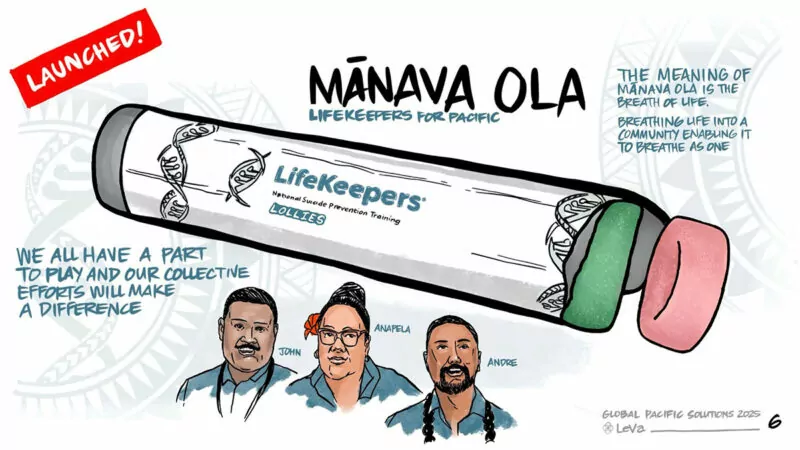
LifeKeepers is Le Va’s national suicide prevention training programme, crafted with deep cultural respect and understanding for the unique needs of local communities.
At its core, LifeKeepers is a holistic kaupapa that blends internationally validated practices with rich local knowledge and cultural insights.
This fusion ensures the programme is clinically sound and closely attuned to the cultural and community contexts of Aotearoa.
Mana Akiaki – LifeKeepers for Māori is a version of LifeKeepers that weaves te reo me ōna tikanga Māori throughout, empowering whānau to build the courage and confidence to prevent suicide.
During her session, Tiana (Ngāi te Rangi, Ngāti Pūkenga, Ngāti Ranginui and Kai Tahu) explored how LifeKeepers empowers key community members – from youth workers and Māori wardens, to sports coaches and caregivers – with the skills to recognise, respond to and support those at risk of suicide.
She shared how LifeKeepers fosters Communities of C.A.R.E. (Connect, Ask, Respond, Engage), creating safer, stronger communities by integrating culture and tradition into suicide prevention strategies.
Attendees agreed it was a powerful session that highlighted the importance of uplifting Indigenous voices and creating lasting change.
The Indigenous Wellbeing Conference celebrates Indigenous community, culture and identity to help advance social and emotional wellbeing for all First Nations Australian, Māori and Pasifika people.
Learn more about our LifeKeepers programme.
Le Va continues to recognise the vital role communities play in reducing suicide and we are proud to engage with many amazing individuals throughout Aotearoa New Zealand championing suicide prevention. These are ordinary people doing extraordinary things – creating communities of C.A.R.E. to prevent suicide. Our LifeKeepers C.A.R.E. Heroes are individuals who embody our LifeKeepers model:
Connect with compassion
Ask about suicide with courage
Respond with confidence
Engage with community supports
We are honoured to introduce this year’s LifeKeepers C.A.R.E. Heroes:
Ruku I’Anson (Ngāti Porou, Ngāti Raukawa ki te Tonga)
A dedicated mental health helpline volunteer for the past three years; Ruku is driven to help those in crisis find a place where they feel heard and validated. LifeKeepers acknowledges Ruku’s commitment to supporting those in distress and empowering them toward safety.
Poutiri Trust (Te Moana Nui ā Toitehuatahi – Bay of Plenty)
The holistic approach of Poutiri Trust values all elements of hauoranga, fostering healthier and more resilient Waiariki communities.LifeKeepers recognises the manaakitanga, arohatanga, and whanaungatanga of Poutiri across the Bay of Plenty. Their unique and tremendous efforts, especially through the “TOMORROW NEEDS YOU” initiative, beautifully demonstrate the love and care for rangatahi, whānau, and hapori.
Quack Pirihi (Ngāpuhi, Ngāti Wai, Ngāti Whātua o Kaipara, Patuharakeke)
Founder of Mana Āniwaniwa in 2023, Quack is committed to preventing and ending suicide within queer and Takatāpui communities. They are passionate about empowering whānau to embrace their mana motuhake and restore tino rangatiratanga. LifeKeepersrecognises Quack’s dedication and grit as a taiohi Māori working tirelessly to support our takatāpui and queer communities.
Raniera Pene (Ngāti Whātua, Ngāti Maniapoto, Ngāti Rangiteaorere, Ngāti Porou, Ngāpuhi, Waikato)
Raniera has organised numerous suicide prevention trainings for Māori communities in the Northland region, inspiring whānau to pursue self-determination. He is devoted to enhancing the social and economic wellbeing of Māori whilst motivating whānau to realise their own definitions of rangatiratanga and mana motuhake. LifeKeepers acknowledges the passion and leadership of Raniera, helping whānau define and pursue their own vision of mana Motuhake.
Gemma Turner (Capital & Coast, Hutt Valley)
As a Year 13 student, Gemma created Gigi’s Diary, a mental health resource for youth that has been used by schools and professionals to support young people in managing their mental health. With over 1,000 copies distributed to date, LifeKeepers celebrates Gemma’s determination and heartfelt care for others. Her resource is a powerful tool, helping youth navigate their inner struggles.
Congratulations to all our LifeKeepers C.A.R.E. Heroes for their outstanding contributions to suicide prevention! We are deeply grateful for your unwavering commitment to making a difference in your communities.
_____________________________________
To learn more about LifeKeepers, or to register for suicide prevention training, visit our LifeKeepers website.
Le Va is part of the Wise Group. Copyright ©2026
