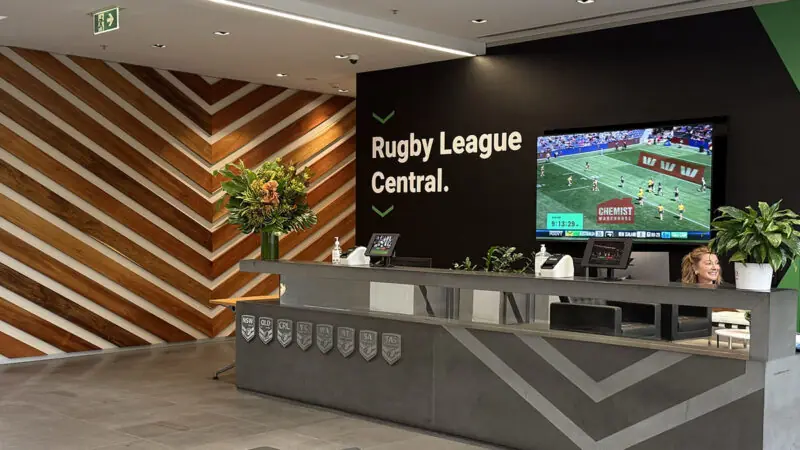
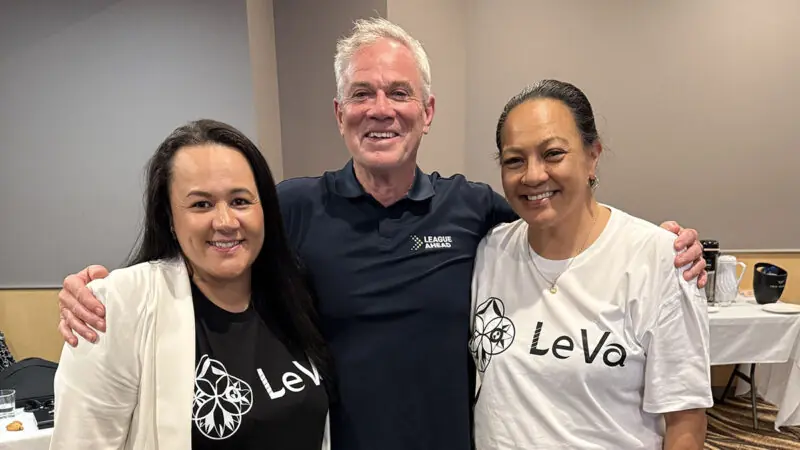
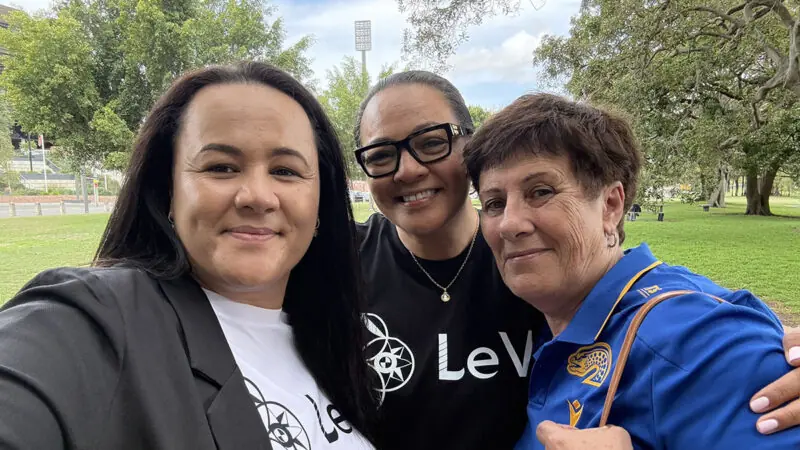
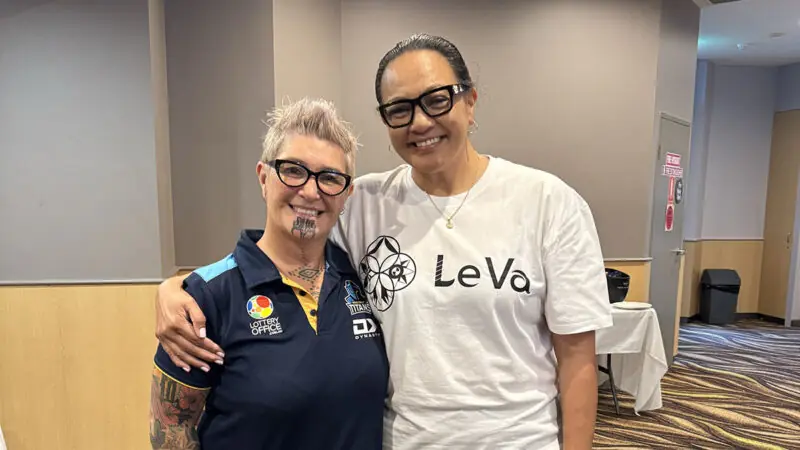
When Le Va chief executive Mati Dr Elizabeth Mati and senior manager Leilani Clarke touched down in Australia this month, they carried something the NRL’s wellbeing teams had been waiting for – a suicide prevention training that considers the needs of Pacific people.
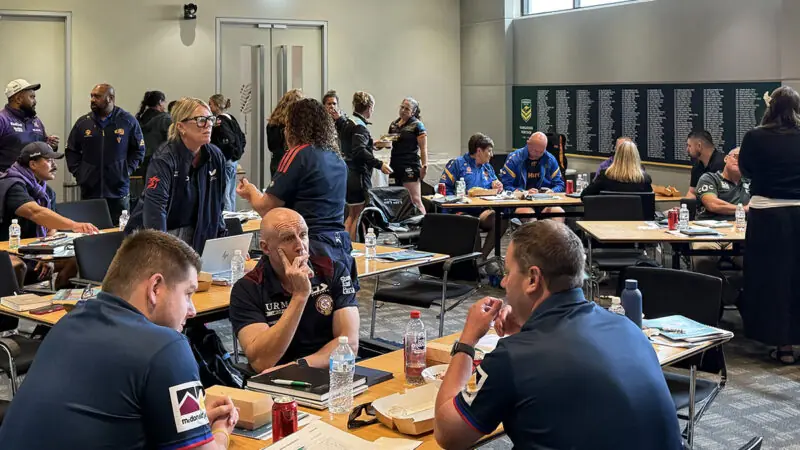
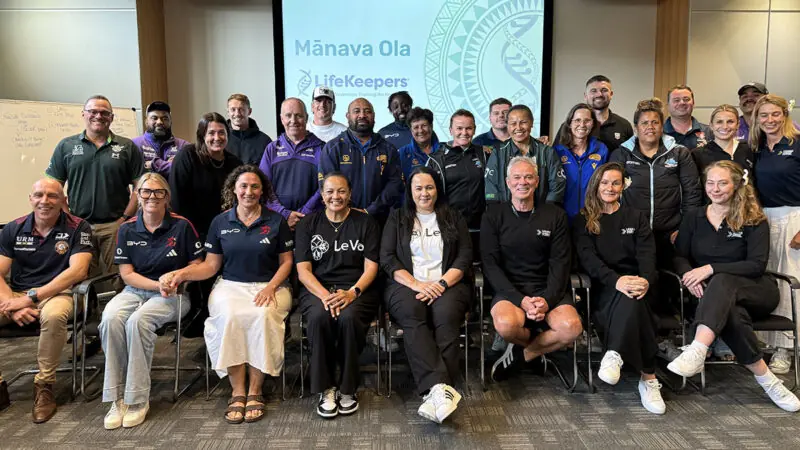
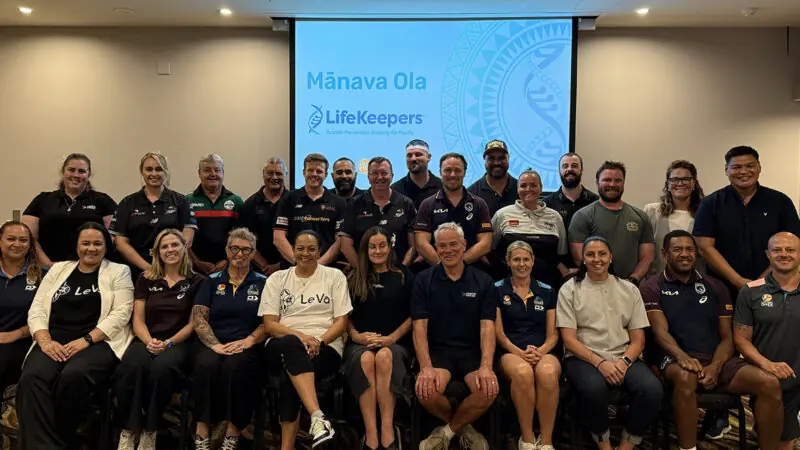
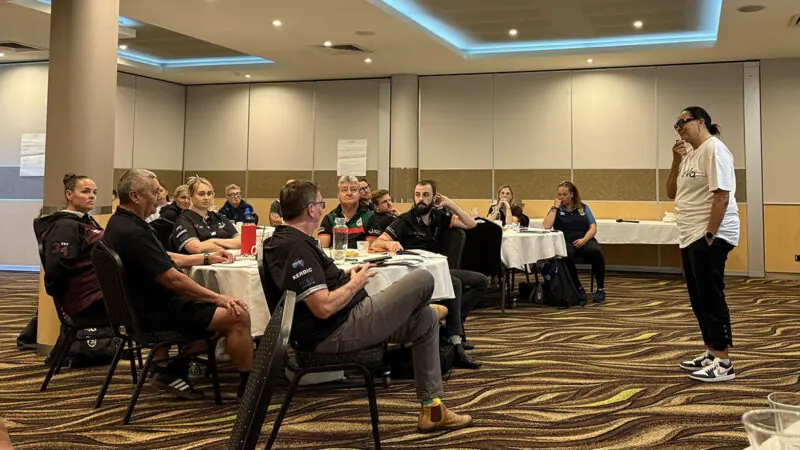
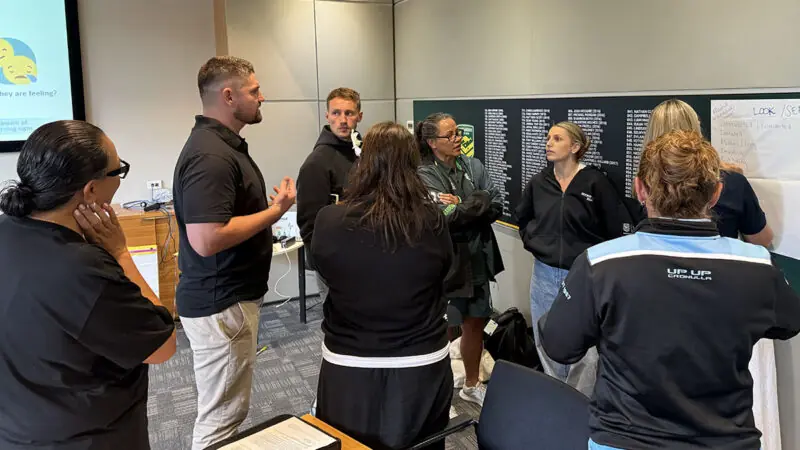
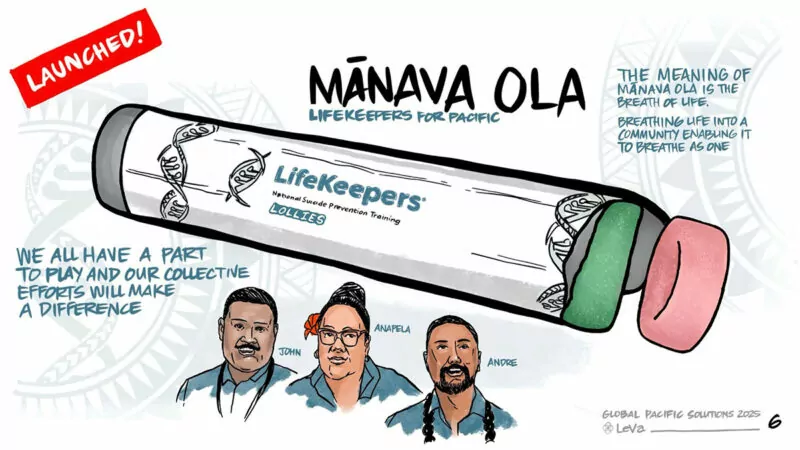
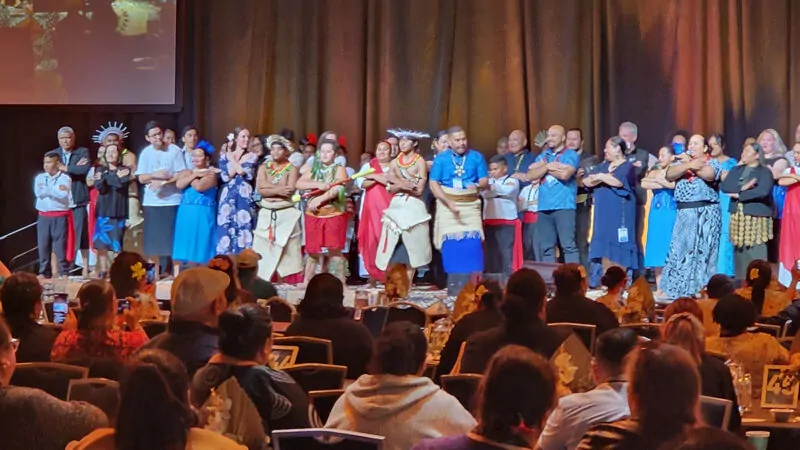
Over two workshops in Sydney and Brisbane, Mati and Leilani delivered Le Va’s Mānava Ola: LifeKeepers for Pacific training to NRL wellbeing managers. These are the staff players turn to when the pressure gets too much, when life on or off the field is feeling hard. They are the people quietly holding some of the most complex conversations in high-performance sport, supporting players, staff and wider club environments.
“Rugby League isn’t just a sport for Pacific communities,” says Mati, “It’s identity, it’s pride, it’s family. That’s what makes it such a powerful space for this kind of work.”
Sydney and Brisbane workshops
Mānava Ola gives participants real, practical suicide prevention skills through a Pacific lens – how to spot warning signs, how to respond with confidence while connecting people to the right support. It also strengthens capability to hold safe conversations in a way that protects dignity, relationships and cultural identity.
In Sydney, participants explored how distress can show up differently across cultures, and how important it is to respond early – before someone reaches crisis point. One participant said, “Love the opportunity for more knowledge around supporting people who are experiencing suicidal thoughts and feelings for our wellbeing managers.”
In Brisbane, the talanoa turned to how wellbeing practice can be strengthened within clubs and embedded across the whole system, rather than resting on a small number of individuals. Feedback included, “This is so important and valuable. Really appreciate the space to take us on a journey that was so real.”
All participants engaged deeply with Le Va’s Mānava Ola model of C.A.R.E. and the chance to practise real-world conversations – a key part of building confidence to act when it matters most.
Overall, the sessions received a Net Promoter Score of 94 – indicating a world-class, exceptional training experience.
Strengthening a long-term partnership
The relationship between Le Va and rugby league runs deep, built over many years on shared values and a genuine commitment to the wellbeing of Pacific peoples on both sides of the Tasman.
This visit strengthened our partnership, not only through the delivery of training, but through reaffirmed relationships and shared purpose. It also highlighted the clear need for culturally grounded approaches in suicide prevention, particularly for Pacific peoples and communities, where context, identity and connection matter.
Looking ahead
Mati and Leilani returned to Aotearoa encouraged by how the NRL’s wellbeing staff showed up with openness, leadership and a willingness to grow their practice. When the people who support others feel equipped and confident, the ripple effect reaches far beyond the training room.
Le Va remains committed to strengthening suicide prevention capability across Aotearoa and the Pacific diaspora, and to continuing partnerships that help create safer, more connected environments.
If you would like suicide prevention training for your organisation, please contact us at admin@leva.co.nz.
People heal in different ways. This gives them different doors to walk through and opportunities to engage with.”
Johnnie Timu, Brown Pride
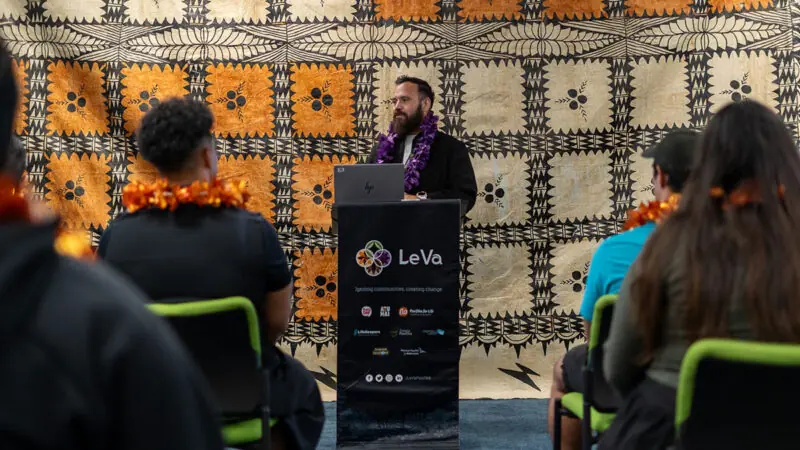
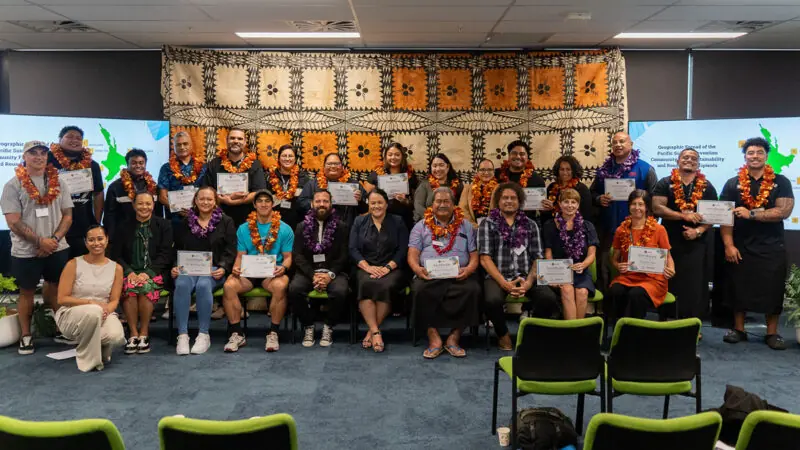
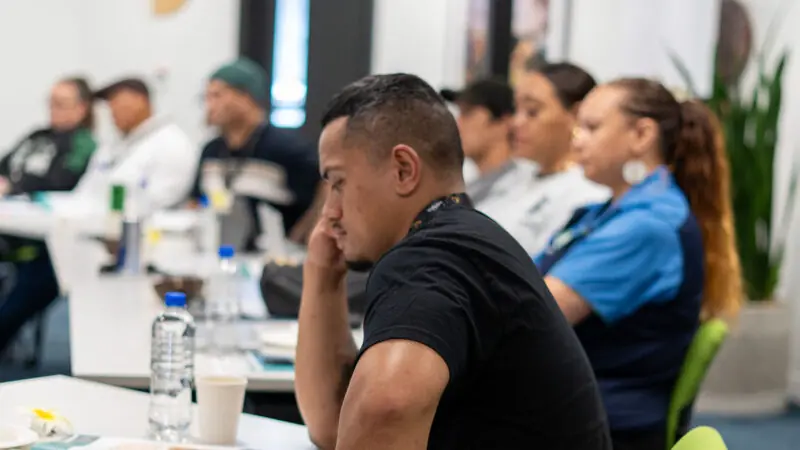
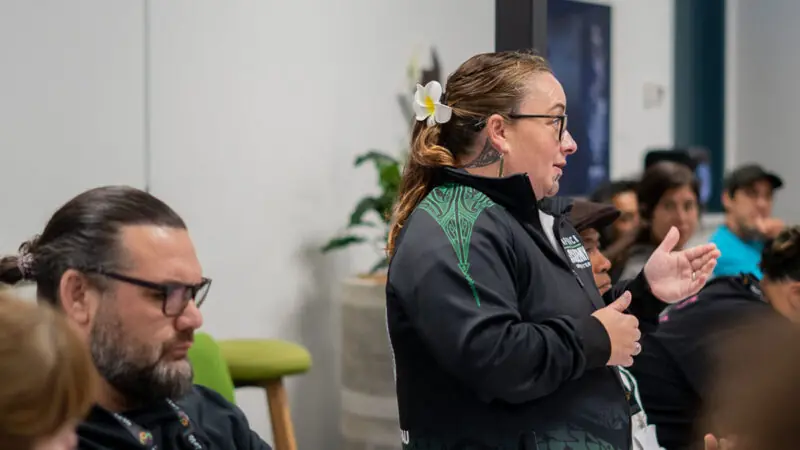
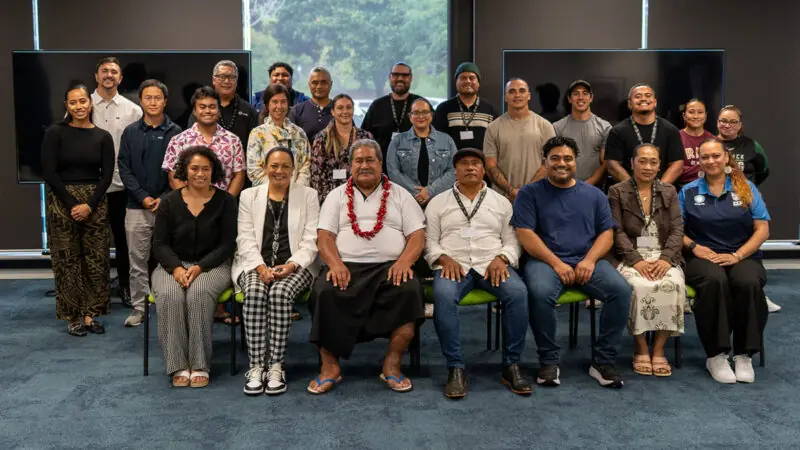
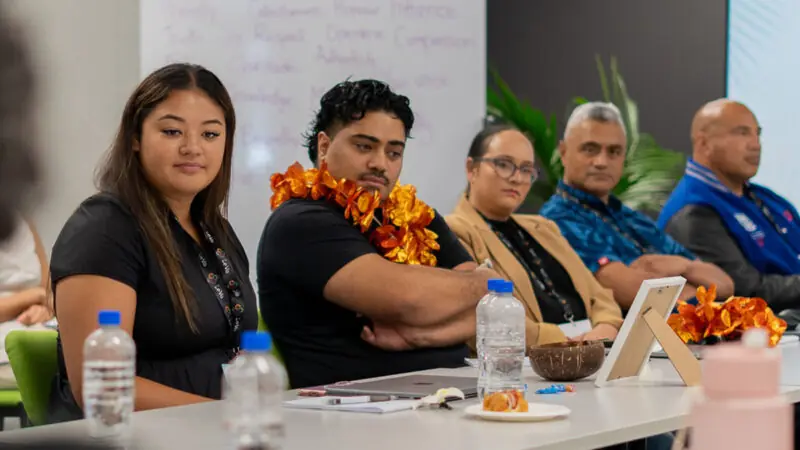
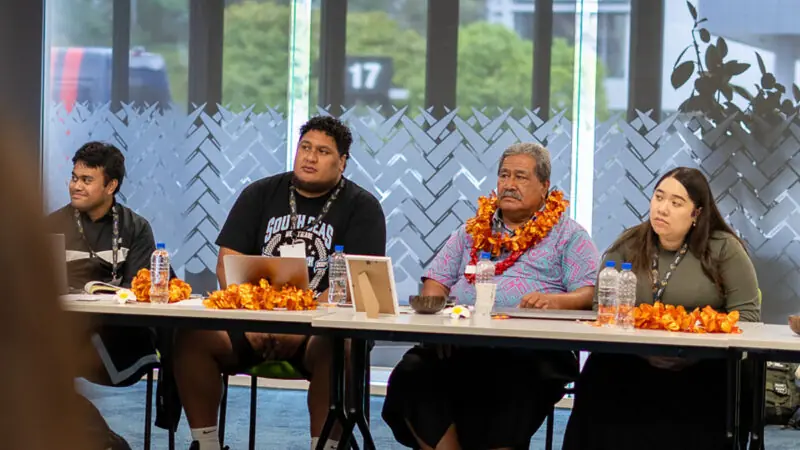
On January 22, Le Va hosted a welcome fono for recipients of the 2026 Pacific Suicide Prevention Community Fund.
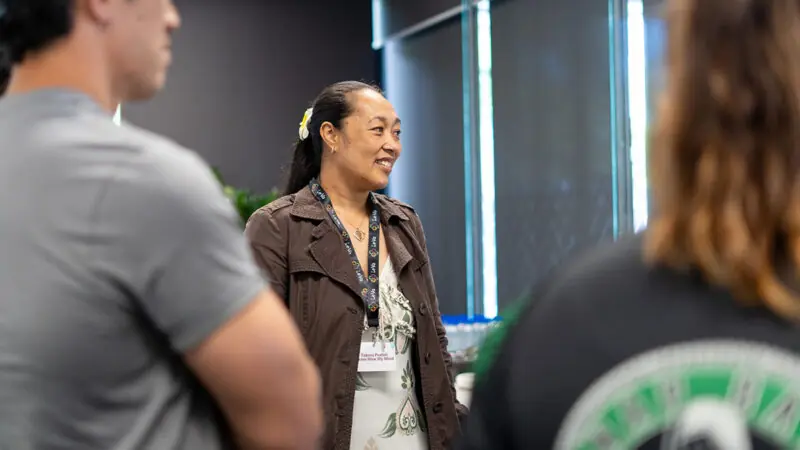
The room was filled with anticipation as Leilani Fina’i Clarke, Le Va’s senior manager for suicide prevention – Pacific, took to the podium to give the warmest Pacific greeting to the representatives who came from across the motu.
Funded by Te Whatu Ora, Le Va’s Pacific Suicide Prevention Community Fund supports communities to create innovative and sustainable solutions to prevent suicide.
The words of Le Va’s chief executive, Mati Dr Elizabeth Mati, carried weight and hope as she acknowledged the community groups stepping up to protect their own.
“This morning is about so much more than a formal welcome. It is a moment of recognition. Recognition of Pacific-led leadership in action. Recognition of the deep cultural knowledge that lives and breathes within our communities. And recognition that when suicide prevention is grounded in our Pacific values it becomes powerful and lifesaving,” she said.
Cliff Thompson from NZRL shared his organisation’s journey of suicide prevention, supported by Le Va. He spoke of creating safe spaces in locker rooms and establishing a network of wellbeing champions throughout Aotearoa to help young athletes navigate into the support they need.
Johnnie Timu from Brown Pride used an analogy from waka ama, his passion for community protection evident in every sentence.
“Waka ama has a cool resemblance to a village mentality – everyone has a role to play, everyone matters, and if one person doesn’t do their job, the waka doesn’t move forward.”
He described the community groups as the pace setters for the suicide prevention fund, Te Whatu Ora as the powerhouse in the centre, and Le Va as the steering and direction.
This wasn’t just a welcome event. It was a promise – that our communities will stand together, that suicide prevention is the responsibility of us all, and that hope can be built one conversation, one connection, one fono at a time.
The next round of Le Va’s Pacific Suicide Prevention Community Fund is open from 10 February 2026 and will close on 3 March. You can find out more and apply here: Pasifika Suicide Prevention Community Fund
2026 Pasifika Suicide Prevention Community Fund recipients:
- Le Afio’aga O Aotearoa Trust – Pacific Village Stewards
- Brown Pride Charitable Trust – Yeah The Boys / Yeah The Girls
- The South Seas Health Care Trust – South Seas Healthcare Suicide Prevention Fund 2025 Application
- LeVaiOfHope – LeVaiOfHope
- Fua Creative Limited – ‘Pikitai kiho ‘ulungaanga faka fonua – Cling to your culture’
- Please Blow My Mind Limited – Suicide Prevention Starts at Home (S.P.S.H.)
- Love Somebody Charitable Trust – Fight the Good Fight – Suicide Prevention
- Flying Geese Trust – Wayfinding for Life
- Snapback Gym ‘Toe a’e se tofa’ Gym Trust – Faasoa Wellbeing Programme: Strengthening Pasifika Youth and Families
- Nevertheless Trust – Rainbow+ Competency Training
- Wellington Fitness Community Trust – Pasifika Power Project
- Bay of Plenty Youth Development Trust – AIGA youth resilience and suicide prevention programme
- New Zealand Rugby League – NZRL Wellbeing Waka & Framework
- Without Limits Learning – Simply L.O.V.E Parenting Programme
- NZ Warriors – ‘Resiliency for Industry’ Wellbeing
- Potplant Studio – Mental Health Plant Workshops
- Tongan Society South Canterbury – Prosperous and Thriving Families
- Moana Vā –Thrive Health and Wellbeing Programme
- Zeal Youth Trust – Aotearoa Lupe – Culture and Identity Programme 2024/25
The latest provisional suicide data released by the Chief Coroner and Te Whatu Ora show that while the overall Aotearoa rate of suspected self-inflicted deaths has not changed significantly, Māori continue to experience the highest suicide rates in Aotearoa, while Pacific peoples experience concerning and inequitable levels of suicide risk compared with other population groups.
For Māori, the rate of suspected self-inflicted deaths has increased slightly, reminding us that inequities persist. Each life lost represents immeasurable mamae for whānau, hapū and iwi across the motu. This ongoing pattern highlights the urgent need to strengthen Māori-led solutions grounded in whakapapa, whanaungatanga and manaakitanga.
“These statistics remind us that suicide prevention must continue to be led from within our communities” says Tiana Watkins, Senior Manager Suicide Prevention – LifeKeepers at Le Va.
“To make lasting change, every part of the system – health, education, justice and social service – must work together so that prevention is stitched into the fabric of how we care for our people.”
Le Va’s Mana Akiaki: LifeKeepers for Māori training supports communities to protect and uplift each other through culturally grounded suicide prevention training and resources – led by Māori, for Māori. When our people are equipped to notice distress, connect and respond in mana-enhancing ways, lives are saved.
For Pacific communities, the data show rates that remain steady. Behind these numbers are families, churches and villages who continue to carry deep grief and powerful resilience. Le Va’s FLO: Pasifika for Life and Mānava Ola: LifeKeepers for Pacific trainings strengthen the protective factors within Pacific culture – connection, faith and family – that help keep our communities safe.
In an interview with PMN News, Leilani Clarke, Le Va’s Senior Manager Suicide Prevention – Pacific, highlighted the importance of these educational and awareness programmes which train both the workforce and communities to recognise signs of distress.
“We teu le vā, we nurture our relationships, because connectedness is a key thing for us as Pacific peoples,” she says. “And when we stay connected, we stay protected. There is hope out there, there is support out there … There’s always hope and help.”
‘Wayfinders of the Digital Moana’ is a Pasifika-inspired story written by Iaheto Ah Hi, a New Zealand author and actor of Samoan and Tokelauan descent.
Created to inspire and support members of Le Va’s Mana Restore Discord server, the digital novel is an innovative concept that continues the kaupapa of supporting the mental wellbeing of Pasifika online gamers.
The story follows characters Maui, Celeste and their crew as they confront fractured families, digital bullying, resilience and the mysteries of an online world.
Blending rhythm, technology and ancestral wisdom, the book offers an engaging narrative designed to resonate with young people and support wellbeing through story.
Mana Restore members can take part in this journey – read the daily episodes, participate in upcoming ‘live’ readings, share their reflections in the community, and connect with others on the chat threads.
Every chapter offers a chance to explore new ideas and contribute to the growing Mana Restore community on Discord.
If you are a gamer wanting to find a balance between time online and other activities that boost your wellbeing, join the Mana Restore Discord Server to become part of the movement and access ‘Wayfinders of the Digital Moana’ now.
Thank you sincerely for ensuring people like me are equipped to support others in their time of need. Every life matters, and because of this kaupapa, more lives are being met with compassion, connection, and hope.
LifeKeepers is Le Va’s national suicide prevention training programme, created especially for communities in Aotearoa New Zealand to support those who may be at risk of suicide to get the help they need.
Recently, one of our LifeKeepers participants reached out to share the impact our National Suicide Prevention Training had on their life and work. With their kind permission, we’re honoured to share part of their story.
“I recently completed the LifeKeepers training and found it incredibly well put together, comprehensive, thoughtful, and accessible to many different learning styles. It provided practical tools and resources, along with confronting statistics that reinforced just how vital this work is to preserving life.
“I have been directly affected by suicide. In my role, it’s critical to be equipped not just to support others with empathy and care, but to recognise and respond to signs in our own mental wellbeing, too. This training has strengthened my confidence in both areas.”
Shortly after completing the training, this learner received a heartfelt gesture, a bouquet of flowers and a handwritten card from someone they had recently supported.
“That moment left a strong impression on me, and I wanted to pass that gratitude forward. Thank you sincerely for ensuring people like me are equipped to support others in their time of need. Every life matters, and because of this kaupapa, more lives are being met with compassion, connection, and hope.”
If you would like to experience the LifeKeepers journey for yourself or know someone who could benefit from it, you can learn more on our website: www.lifekeepers.nz
We don’t bring the answers, we bring our hands. Our job is not to lead the work, but to walk with those who already are.” – Denise Kingi-‘Ulu’ave
Pacific Population Health Summit 2025 | Garapan, Saipan | 16–18 June 2025
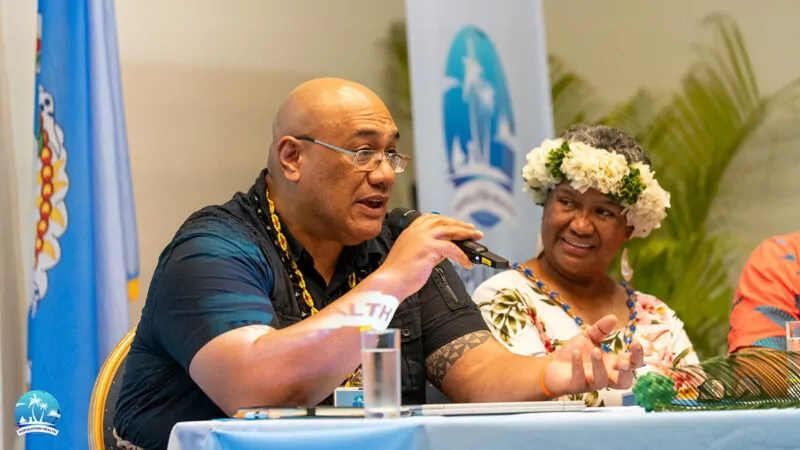
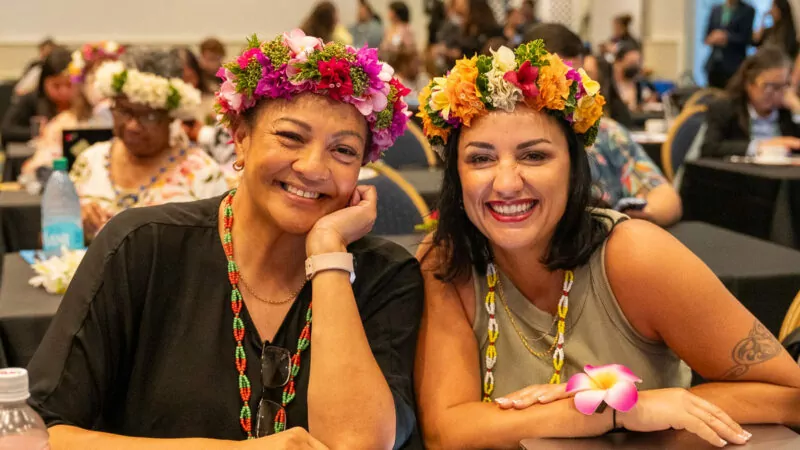
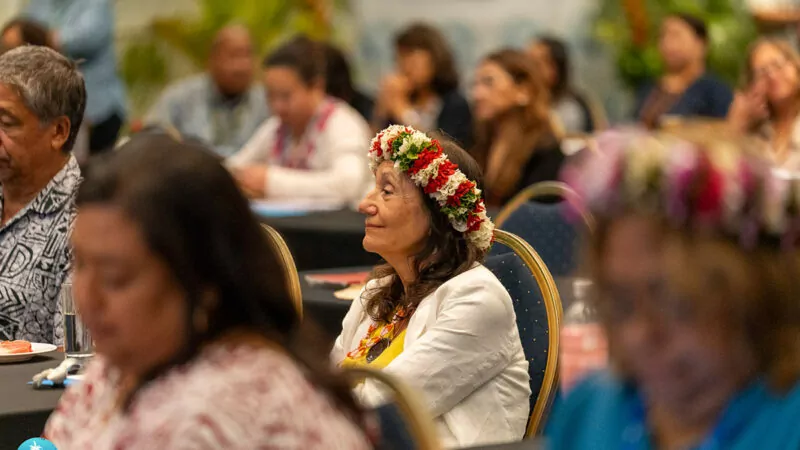
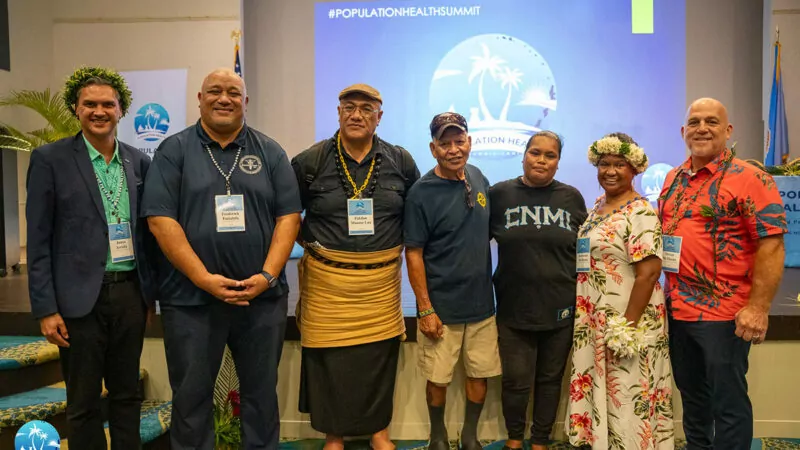
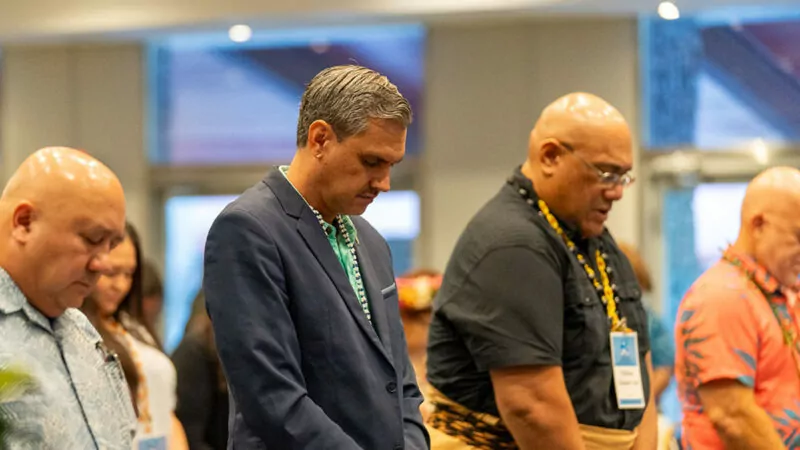
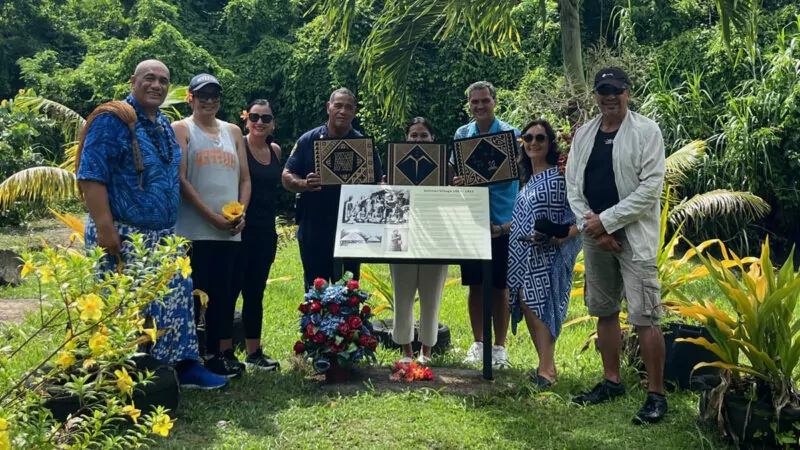
Earlier this month, four members of our Le Va team had the profound honour of travelling to Saipan in the Northern Mariana Islands to attend and contribute to the inaugural Pacific Population Health Summit, with the theme of ‘Navigating Pathways Through the Pacific: Building Healthier and Stronger Island Communities.’
Sponsored to present, be keynote speakers and deliver suicide prevention training, Le Va’s small but mighty contingent from Aotearoa was privileged to share in talanoa and learning alongside passionate changemakers from across the Blue Continent.
Our team
Representing Le Va were chief executive Denise Kingi-‘Ulu’ave, Pasifika equity lead Pakilau o Aotearoa Manase Lua, and senior managers for suicide prevention Leilani Clarke and Tiana Watkins. Each brought a depth of cultural knowledge, lived experience and professional leadership in suicide prevention and mental wellbeing. The strength of their presence went beyond their knowledge and expertise, manifested in their shared commitment to cultural integrity, aroha and collective uplift.
Keynotes, talanoa and wānanga
Denise and Pakilau opened the event with a powerful plenary session titled ‘Culture and Wellness’, weaving insights into the enduring value of Indigenous ways of knowing and doing, and how they must sit at the centre of any sustainable wellbeing system. Their talanoa echoed throughout the summit, reverberating through sessions on healing, data equity and behavioural health.
Leilani and Tiana participated in the panel session ‘Addressing Suicide Prevention Strategies in the Blue Continent’, where they presented on Le Va’s LifeKeepers and FLO: Pasifika for Life suicide prevention programmes. Their contributions highlighted the critical importance of aligning clinical safety with cultural and community responsiveness. The kōrero was both sobering and inspiring, shedding light on the persistent suicide rates across Pacific nations while uplifting the strength of collective action, cultural reconnection and enduring hope.
Together, Leilani and Tiana brought forward voices grounded in the va – relationships, connection, and sacred space. They reminded us that suicide prevention does not begin within systems alone, but in the everyday spaces that shape our lives: the home, the village, the church, the school. Their kōrero affirmed that lived stories carry the same weight as data, and that community wisdom must sit at the heart of any meaningful response to suicide.
Mana Akiaki: LifeKeepers for Māori
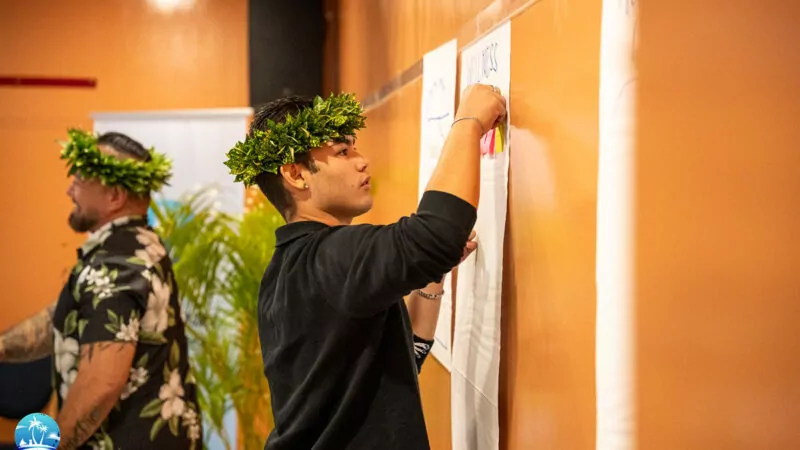
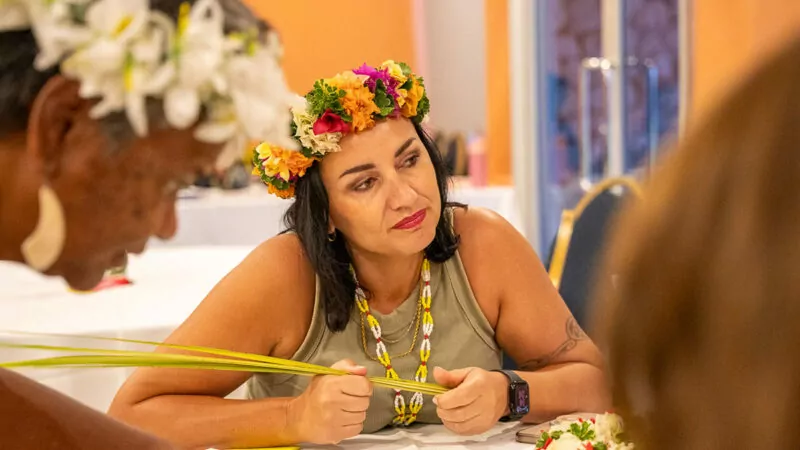
After the summit, more than twenty first responders and crisis response workers gathered with intention and purpose to participate in Mana Akiaki: LifeKeepers for Māori training. Our team delivered this full-day training to showcase how suicide prevention can be meaningfully grounded in Indigenous knowledge systems and relational practice. Their hope was to witness firsthand how a culturally tailored programme could look and feel, so they might explore how to do the same for the rich diversity of their own island communities across the Pacific.
The wairua in the room was deeply felt and participants honoured the kaupapa with humility and fierce dedication, many moved to tears by the cultural integrity of the programme and how closely it resonated with their own Indigenous worldviews. The sharing was raw, real and restorative, reminding us all that cultural identity is not just a foundation for wellbeing, but a powerful pathway to healing.
The ties that bind
This journey reminded us that although our island homes are scattered across vast oceans, our roots run deep and are interwoven. Whether in Saipan, Aotearoa, Samoa, Guam, Tonga, or Hawai‘i, our ancestors speak through us and our shared struggles and strengths call us to act collectively.
Our heartfelt thanks to the CNMI Commonwealth Healthcare Corporation (CHCC), the Pacific Behavioral Health Collaborating Council, and all those who made this summit possible. Si yu’us ma’ase, ghilisow, fa’afetai tele lava, malo ‘aupito, ngā mihi nui.
As Denise said in her closing words, “We don’t bring the answers, we bring our hands. Our job is not to lead the work, but to walk with those who already are.”
Over the past two months, our LifeKeepers journey has taken our team across the motu to Huntly, Manukau, Ōtaki, Rotorua, Tauranga, Hamilton and Papakura – each visit a reminder of the strength and heart within our communities.
From heartfelt kōrero to moments of deep reflection, our team is grateful to everyone who welcomed them and leaned into the suicide prevention wānanga with openness and courage.
Here is what some participants had to say about our LifeKeepers and Mana Akiaki trainings:
“Faafetai Le Va LifeKeepers for your kaupapa. It has given me knowledge and awareness about a topic that is hurting our family and community.”
“Great workshop, yummy kai, loved that we danced to whakanoa. Followed tikanga practices, karakia, whakawhanaungatanga, manaakitanga.”
“I came in with an outcome I wanted to achieve and I got it. Kei te mihi ki a kōrua mō tō kaupapa.”
“I am feeling confident in responding to critical situations, gained knowledge and skills to deal with emergency situations related to suicide.”
We look forward to continuing this important mahi and strengthening connections within our communities.
Upcoming training opportunities
Our July to December training calendar will be live in the first week of July, keep an eye on lifekeepers.nz for upcoming trainings in your region. We’re especially looking forward to connecting with communities across the South Island in the months ahead!
If you’re unable to attend in person, our free online training offers a flexible alternative you can complete anytime, at your own pace.
Le Va’s FLO: Pasifika for Life suicide prevention team released two important reports at our Global Pacific Solutions 2025 conference – the Aunty Dee ‘Community Insights Summary’ highlighting this powerful digital support tool, and ‘Empowering Pasifika Communities’ focusing on how community-led solutions can strengthen wellbeing.
Aunty Dee Community Insights Summary report
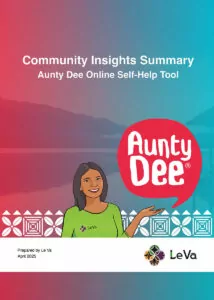
Aunty Dee is a free online self-help tool designed by Le Va primarily for Pasifika young people, guiding users through a process of structured problem solving that is clinically safe, culturally grounded and accessible to all.
The report highlights the transformational journey of the Aunty Dee tool across more than four years, as it has supported thousands of Pasifika people in Aotearoa through tough times.
It focuses on the problem statements of more than 1,500 Pasifika users of the Aunty Dee tool from March 2016 to December 2021, exploring differences between genders and age groups.
From its reach into our communities to insights on how digital tools can bridge support for those less likely to access face-to-face services, the report highlights how innovation, compassion, and culture can work hand in hand to improve mental wellbeing.
It is our intention that this report ensures Aunty Dee users can engage with and reflect on the collective insights gathered. We honour every voice, every user and every champion who helped shape Aunty Dee into a trusted space of hope and clarity.
Empowering Pasifika Communities report
“E fofō e le alamea le alamea” – the solutions for our issues lie within our own communities.
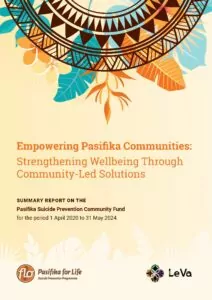
‘Empowering Pasifika Communities: Strengthening Wellbeing Through Community-Led Solutions’ is a report that encompasses the collective wisdom, innovation, dedication and unwavering commitment of our Pasifika communities across Aotearoa.
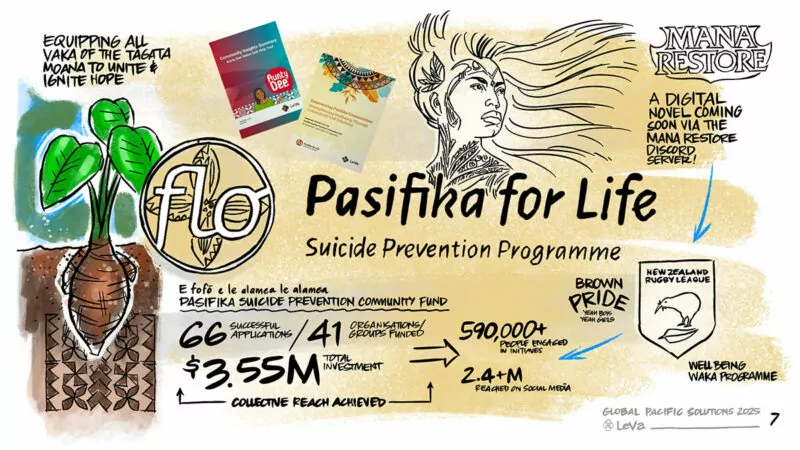
The report acknowledges their crucial role in advancing suicide prevention efforts through Le Va’s Pasifika Suicide Prevention Community Fund, with $3.55M invested across 41 groups and engaging more than 590,000 people from April 2020 to May 2024.
It celebrates community-led approaches that are culturally grounded, clinically safe, family-centred and sustainable, equipping our Pasifika families and community members with innovative solutions to enhance mental health and wellbeing.
We believe we all have a part to play in suicide prevention and we share this report to acknowledge and uplift the resilience and strength of Pasifika peoples within Aotearoa New Zealand, ensuring that the work done within these communities is recognised and celebrated.
Le Va would like to thank every fund recipient, champion and community member who helped shape this vital work, equipping all vaka of tagata moana to unite and ignite hope using our cultural tools as lifelines.
Day One
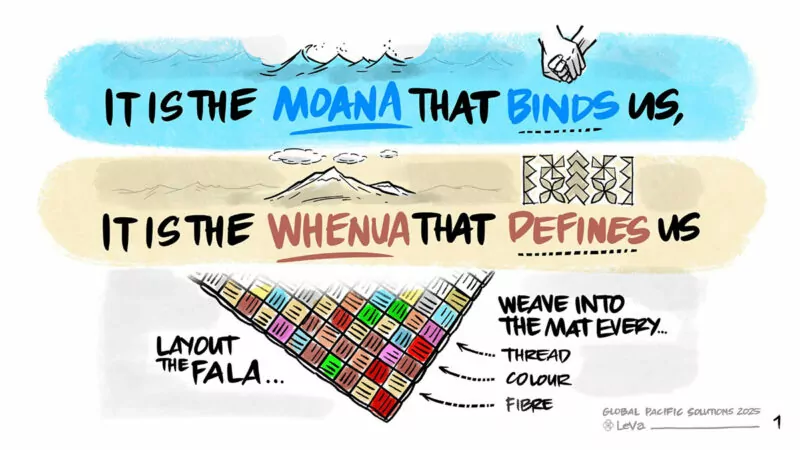
In the Roots of Resilience stream our aim was to discover ancestral insights for preventing suicide and to empower and equip Pasifika communities with culturally relevant knowledge and tools to prevent suicide and respond safely and effectively when a suicide occurs.
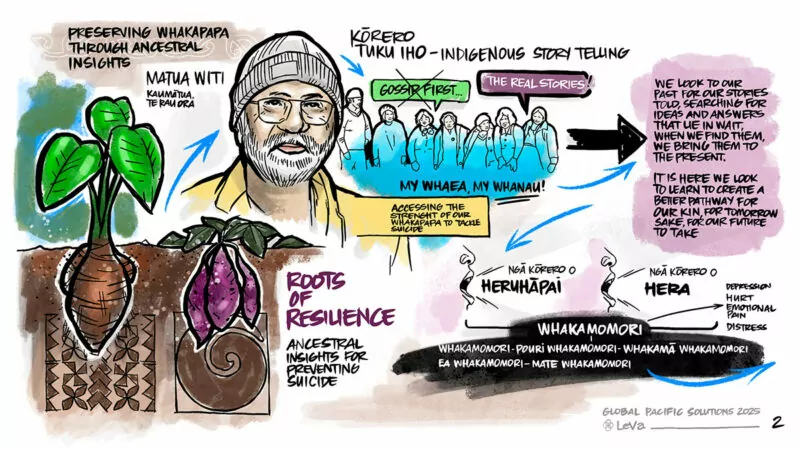
In this talanoa of suicide prevention, the Roots of Resilience stream opened with Matua Witi’s deep reflections on indigenous storytelling.
Matua Witi equipped the audience to explore how indigenous storytelling and whakapapa (genealogy) can strengthen communities to confront and prevent suicide. Matua Witi highlighted how gossip often precedes truth in communal narratives and he emphasised returning to ancestral knowledge to forge better pathways for future generations, using real voices (Heruhāpai and Hera) to surface issues like emotional pain and depression (whakamomori).
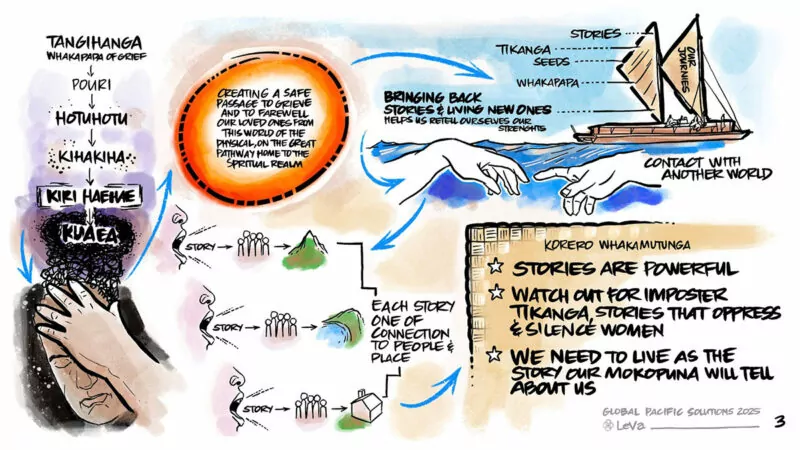
Matua Witi talked to the tangihanga (Māori grieving process), showing how expressions of grief (pouri, hotuhotu, etc.) allow emotional release (kua ea). The transformational power of storytelling, reconnecting with identity through tikanga, and warning against oppressive narratives. Matua Witi advocated living lives worthy of the stories our mokopuna (descendants) will tell about us.
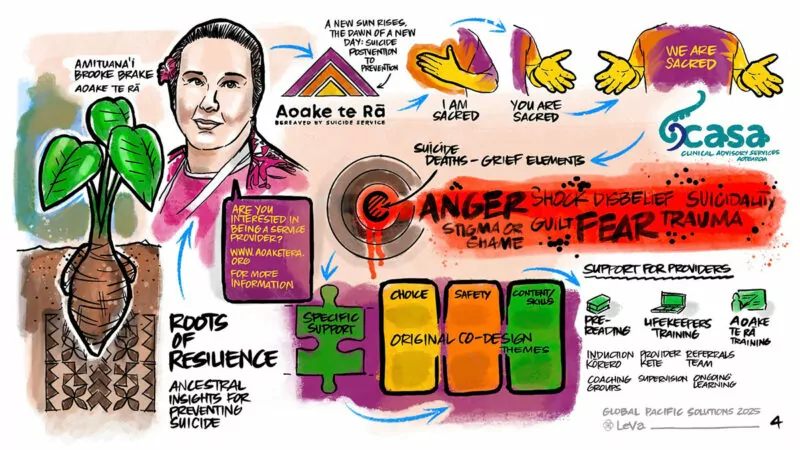
Amituana’i Brooke Brake spoke to the Aoake te Rā suicide postvention service, which honours grief and offers culturally grounded support. Amituana’i Brooke spoke to how emotions like anger, guilt, trauma and fear surface in suicide loss and outlined a framework of co-design themes (choice, safety, content) and provider support (training, coaching, kete) for healing communities and building resilience.
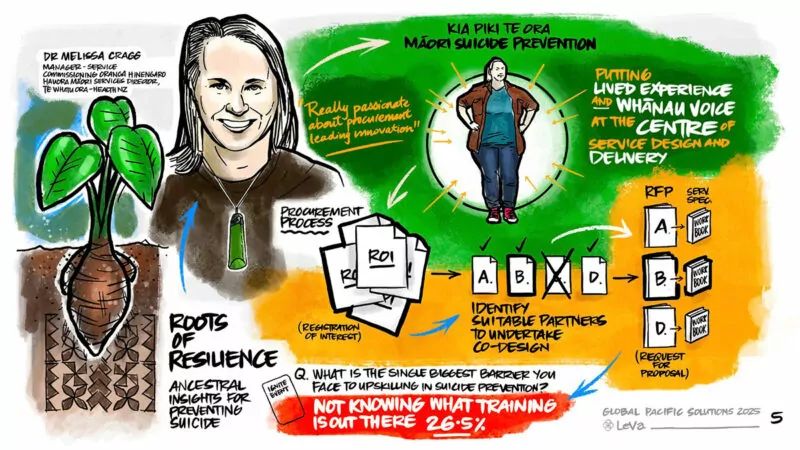
Dr Melissa Cragg brought the clinical lens into conversation with culture, unpacking pathways for integrating Pacific values into systems of care. She presented the Kia Piki Te Ora programme, which puts lived experience and whānau voice at the centre of suicide prevention service design. The procurement process highlights identifying suitable partners for co-design and delivery, emphasising a community-driven, kaupapa Māori approach.
Day Two
Day Two of the Roots of Resilience stream centred around frontline initiatives, lived experienced and unwavering dedication to our communities.
Leilani Clarke opened with the Pasifika for Life programme, underpinned by the FLO community fund which empowers Pasifika groups to lead suicide prevention initiatives. Key metrics include $3.55M invested across 41 groups, engaging more than 590,000 people. She reminded us that “connection is protection” – and that our cultural tools are lifelines. Other initiatives, like Mana Restore, Aunty Dee, and NZ Rugby League Wellbeing Waka partnerships, were highlighted as part of a collective effort to ignite hope and preserve life.
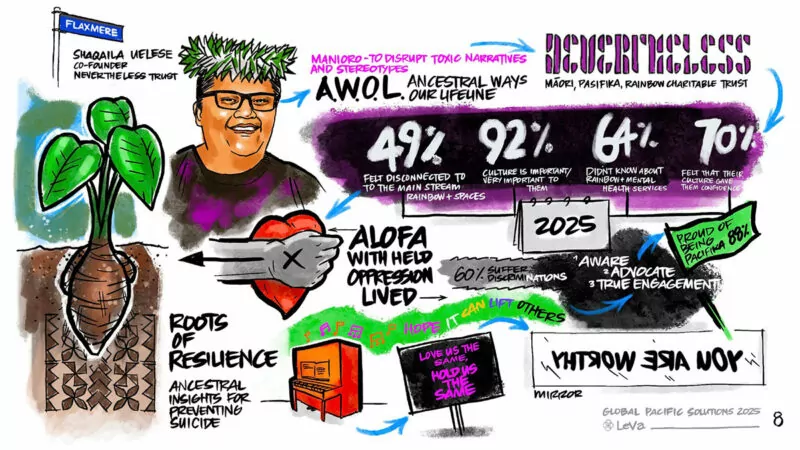
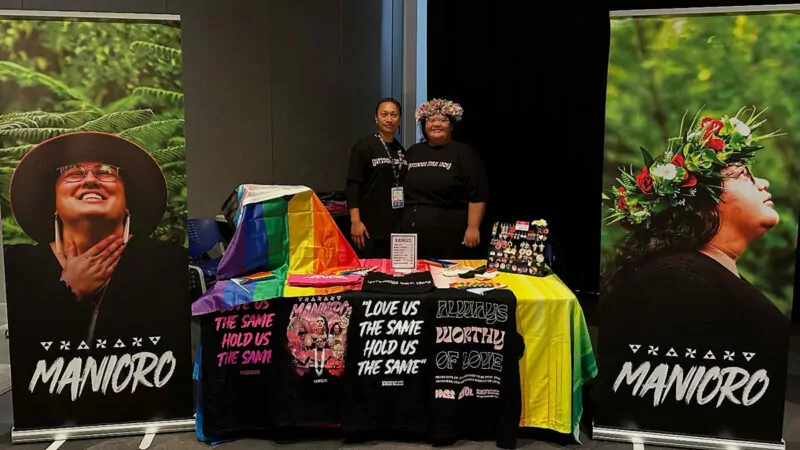
Shaqaila Uelese and the Nevertheless Trust advocate for Rainbow Pasifika youth through the AWOL – Ancestral Ways Our Lifeline challenging toxic narratives and amplifies cultural connection and pride (proud to be Pasifika). Shaqaila bravely shared her personal story, illuminating the power of youth voice and peer leadership in suicide prevention. Her authenticity challenged us to listen deeper and lead differently.
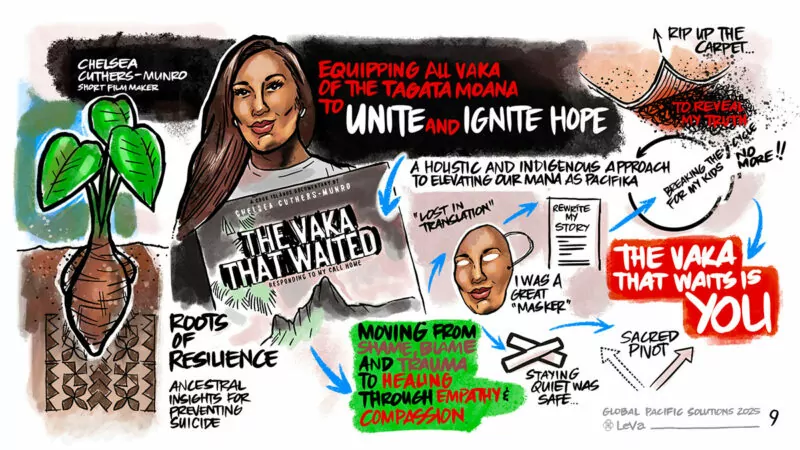
Chelsea Cuthers-Munro’s short film ‘The Vaka That Waited’ is a powerful metaphor for answering the call to reclaim one’s truth. It speaks to the experience of masking trauma and silence, and the sacred pivot toward healing through empathy and compassion. The central message: The vaka that waits is you – a call for collective self-discovery and transformation. Her message was clear: “Don’t wait to be ready – just start.”
Together, the speakers for our Roots for Resilience stream embodied resilience in action – a reminder that suicide prevention is not just a programme, but a movement grounded in aroha, culture and community.
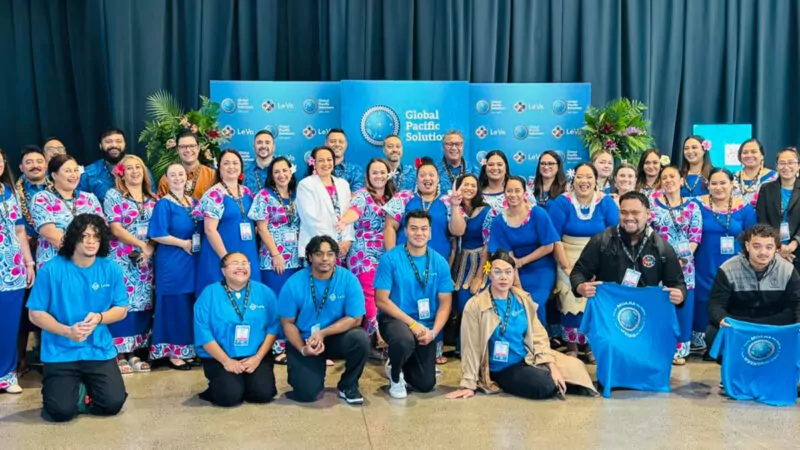
On behalf of our suicide prevention teams and senior managers Leilani Clarke and Tiana Watkins, to our esteemed speakers and our amazing vendors, we would like to extend our warm fa’afetai tele lava, malo ‘aupito, fakaaue lahi and thank you for making our Roots of Resilience stream a highlight at our recent Global Pacific Solutions Conference.
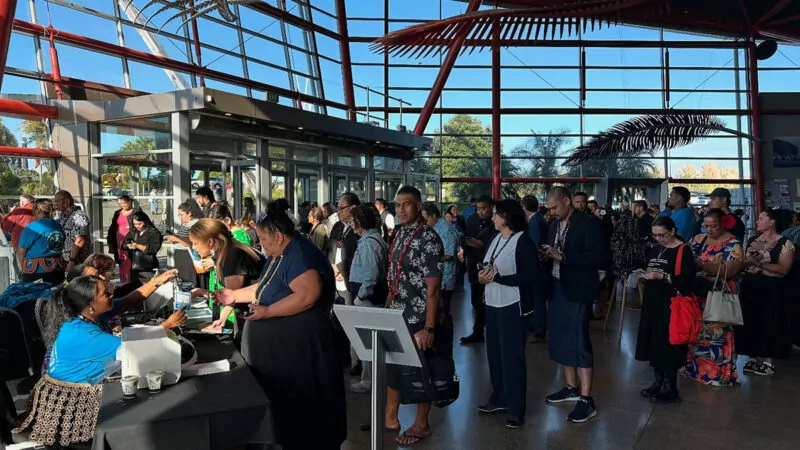
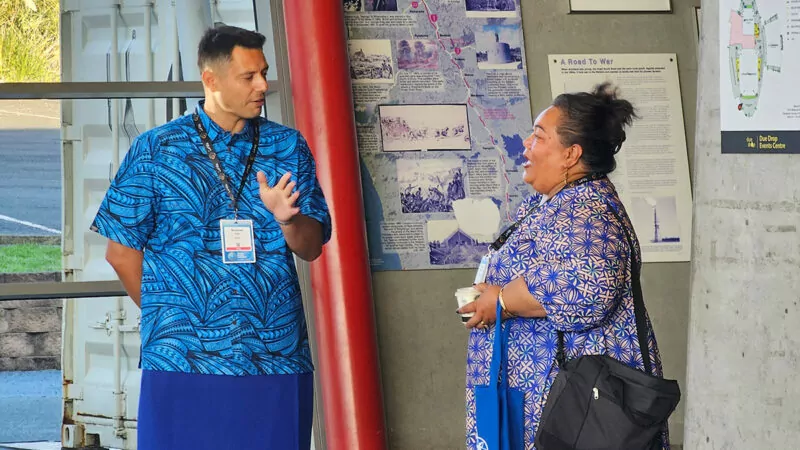
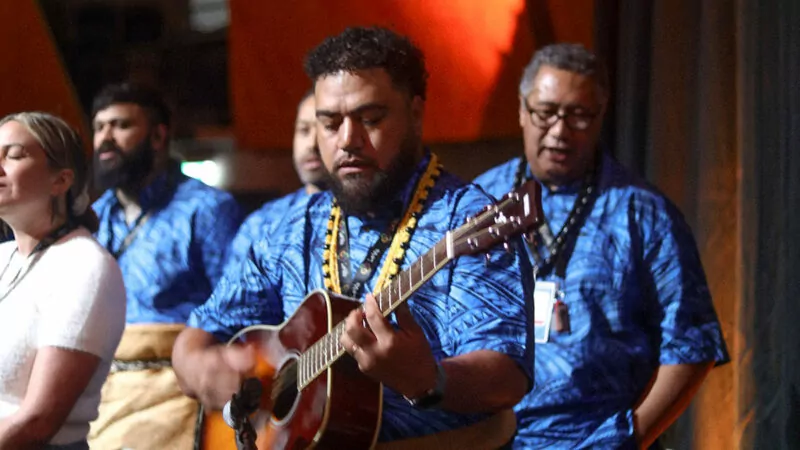
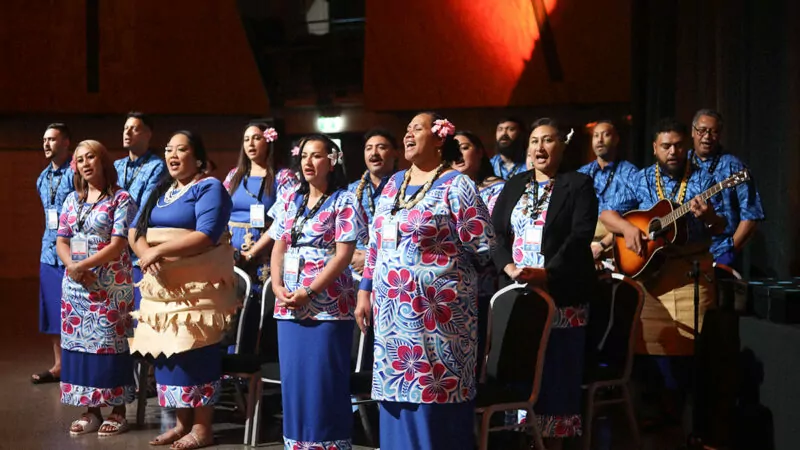
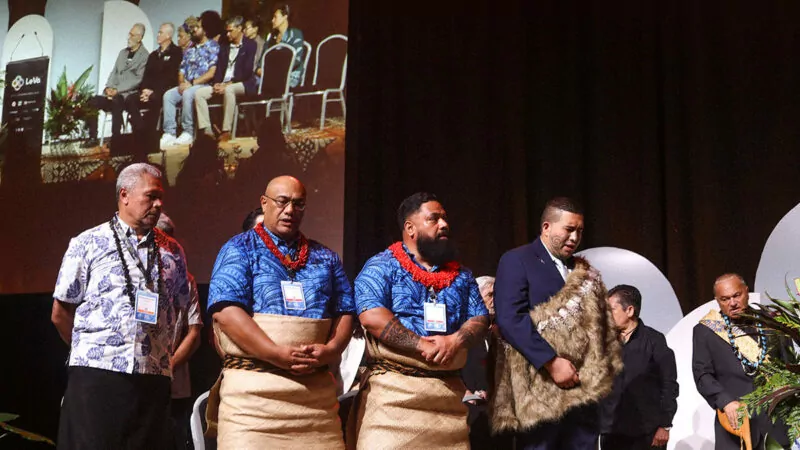
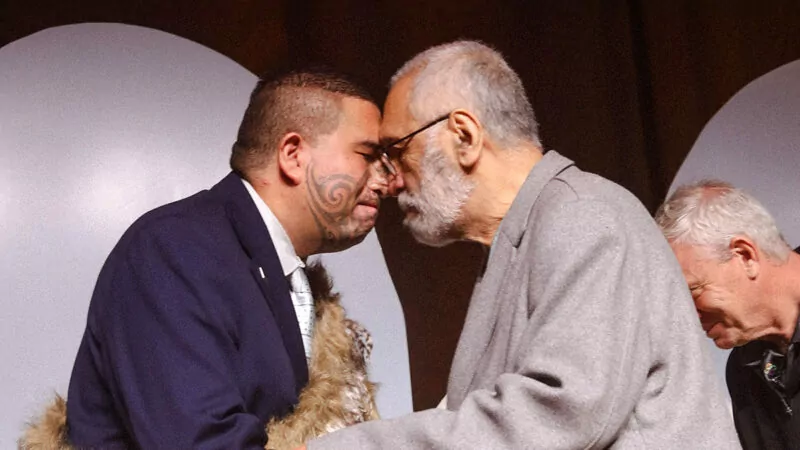
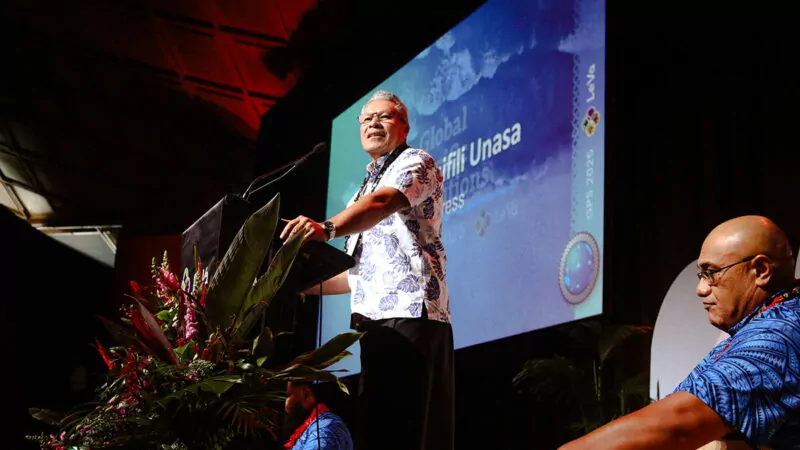
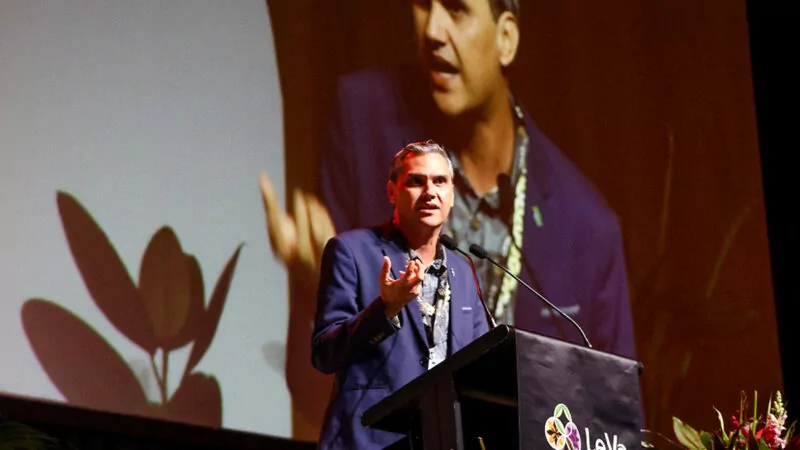
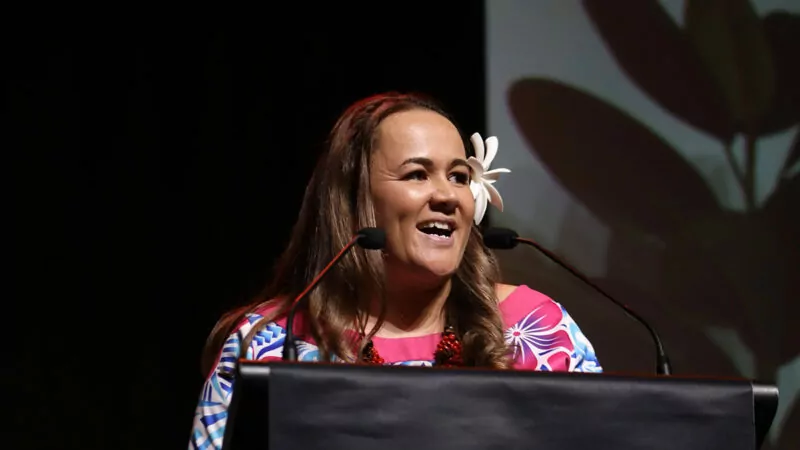
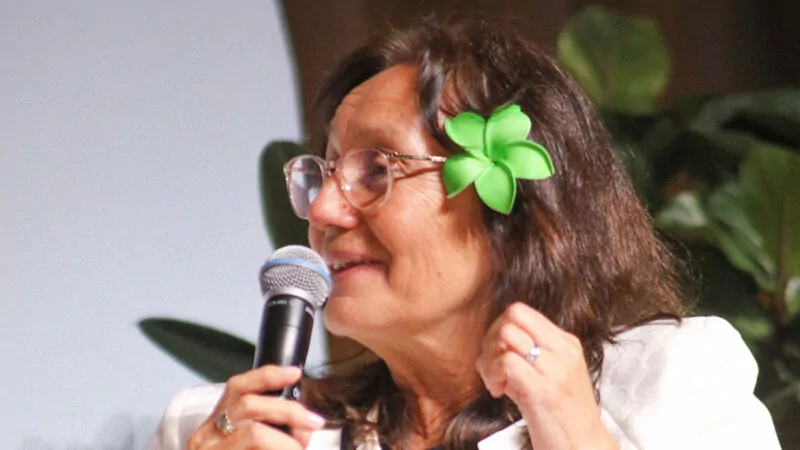
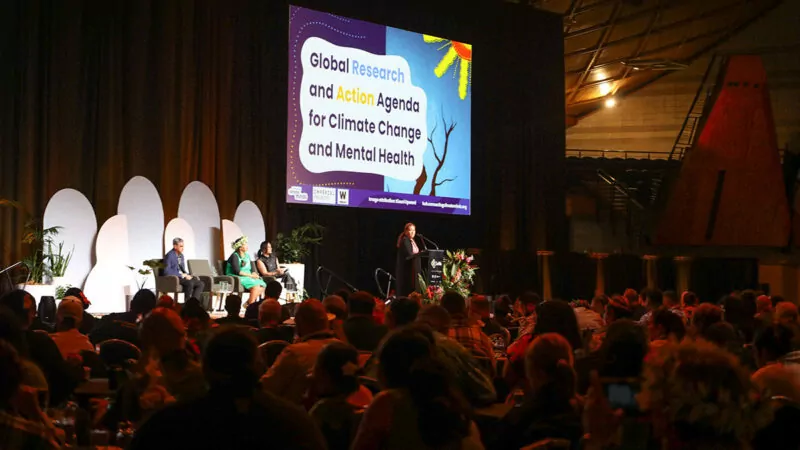
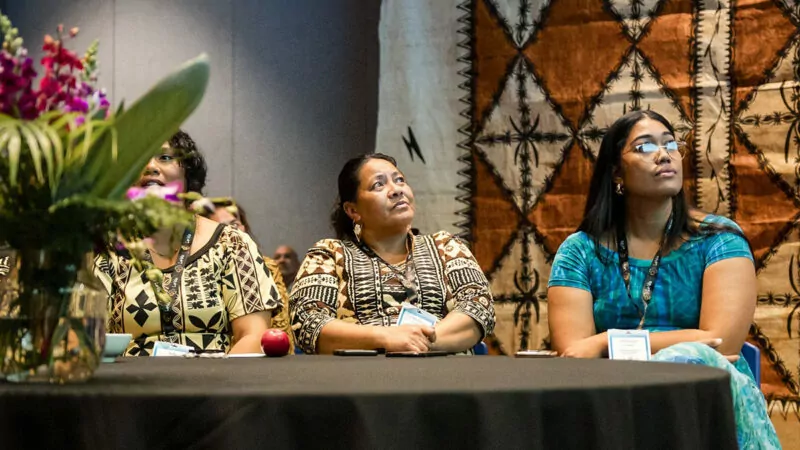
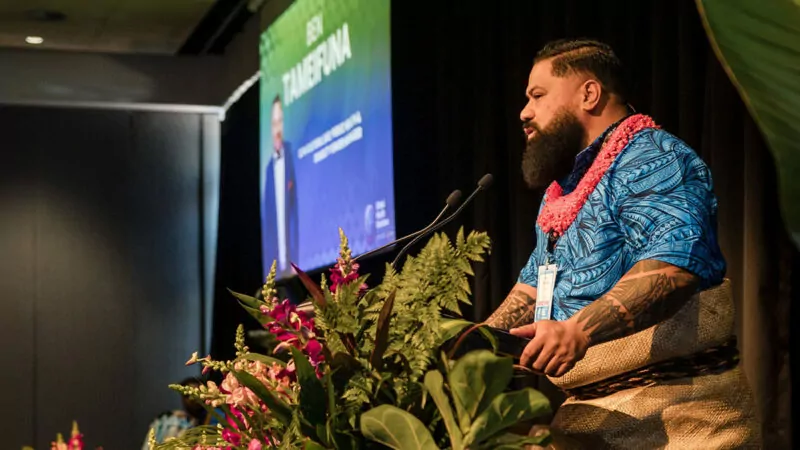
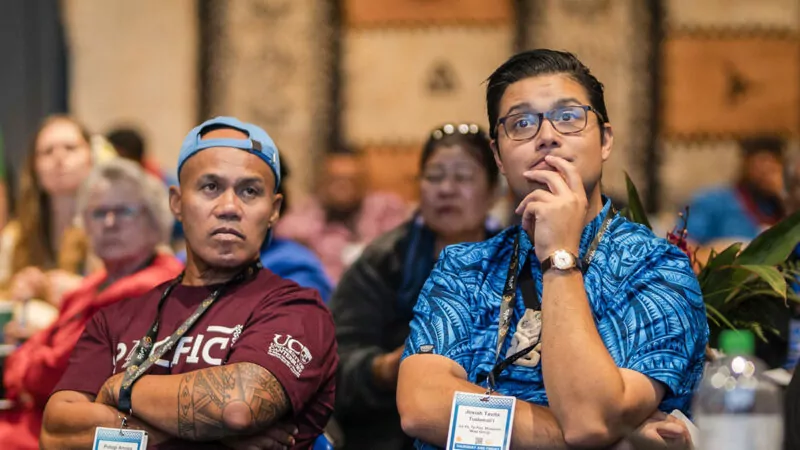
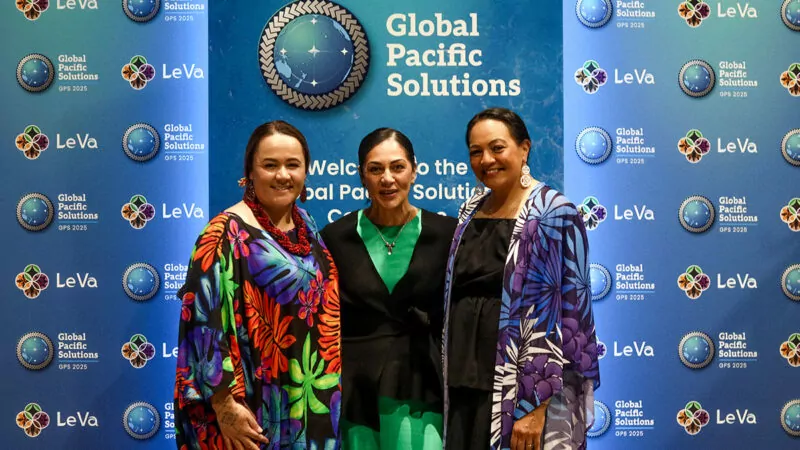
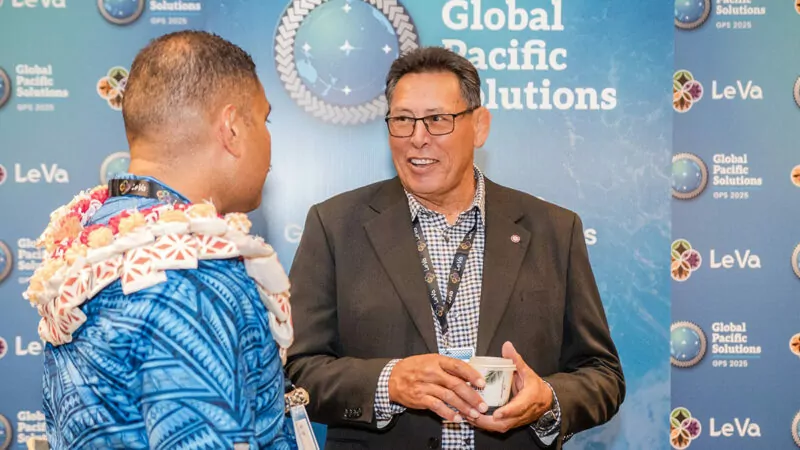
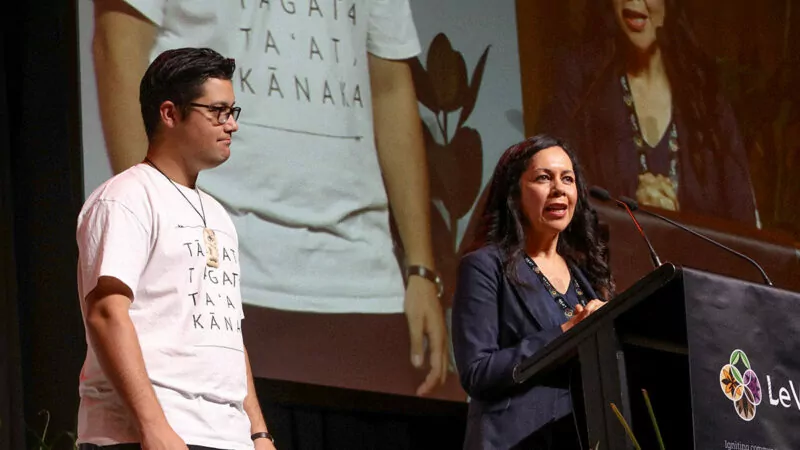
Over two impactful days in April, around 700 people joined together at the Due Drop Events Centre in Manukau for Le Va’s Global Pacific Solutions 2025 conference – uniting Pacific leaders, academics, international guest speakers, workforce and community members in a tour de force of strengths-based solution seeking.
Bringing to light tough topics such as child trafficking, suicide prevention, climate change, child sexual abuse, equity for disabled people and the ever-growing demand for mental health and addiction support workers, GPS 2025 was an event that opened minds, challenged the status quo and inspired hope for all who attended.
At times, the audience was moved to tears upon hearing transformative stories of overcoming adversity, fighting for justice and connecting to culture in a way that enhances our true selves.
Inspirational plenary speakers and breakout presenters communicated passionately, sharing their expertise to advance the knowledge of all who listened.
When opening the ‘Nurturing our Children’ plenary panel at GPS 2025, Le Va’s chief executive, Denise Kingi-‘Ulu’ave, said, “It is both an honour and a solemn responsibility to welcome you to today’s panel discussion on child sexual abuse and child trafficking across the wider Pacific.
“This is a conversation that demands our full attention, our collective expertise and most importantly, our unwavering commitment to action.
“The Pacific is home to diverse and resilient communities, but it is not immune to the global crises of child sexual exploitation and trafficking.”
We know that the solutions lie within our communities – GPS 2025 was an opportunity to bring together into one space the hearts, spirits and minds of hundreds of people, all eager to ignite change and promote the power of Indigenous intelligence.
Over the coming weeks, Le Va will be sharing many of the insights and solutions that were explored throughout Global Pacific Solutions 2025, with gratitude to everyone who was present and contributed to this important kaupapa.
Please subscribe to our eNewsletter to learn more: www.leva.co.nz/subscribe
Le Va is part of the Wise Group. Copyright ©2026
